
Tennis Elbow Treatment in Salt Lake City & South Jordan
You Don’t Need More Rest. You Need the Right Plan.
Outer elbow pain that flares every time you grip, lift or swing? Our South Jordan team pinpoints the irritated tendon with ultrasound, then builds a non-surgical plan to restore its strength so the pain stops coming back.
- Non-surgical first
- Ultrasound-guided precision
- Physician-led care
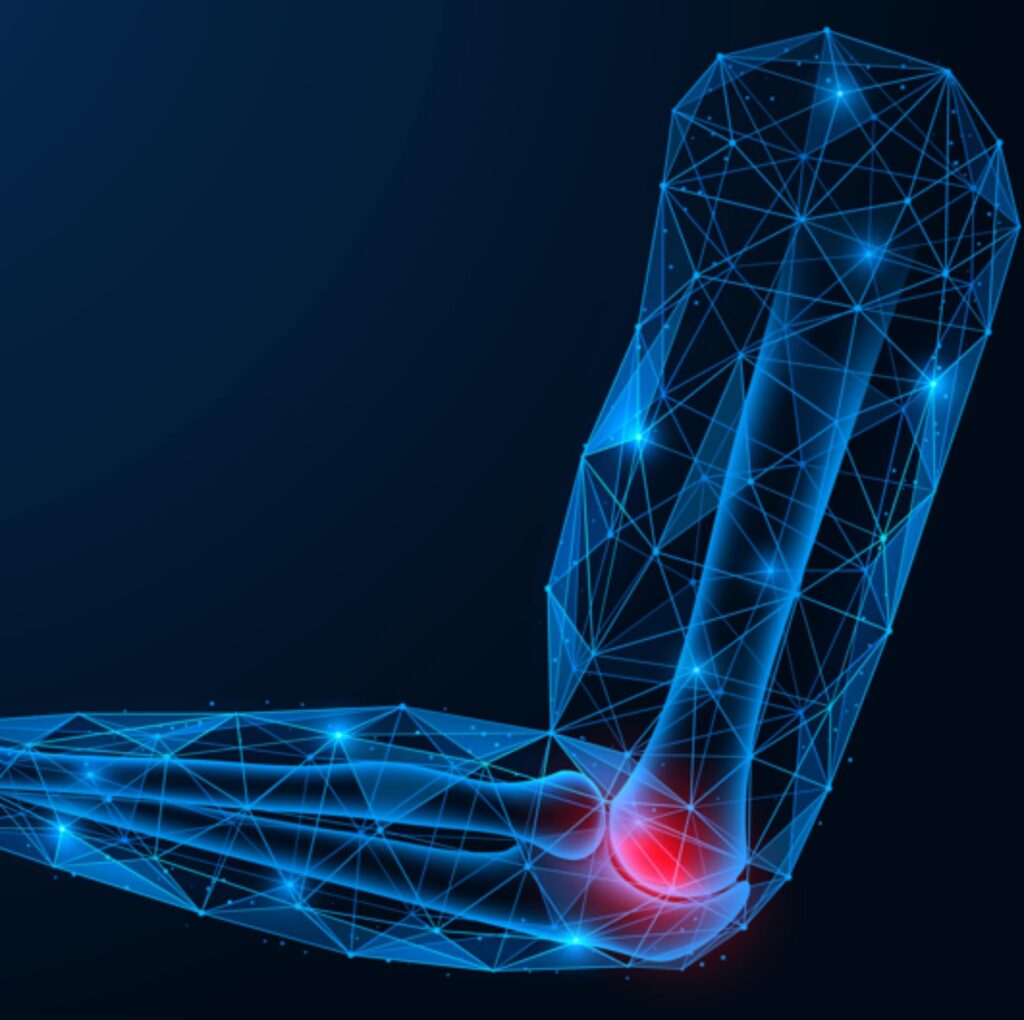
- Diagnosis first Musculoskeletal ultrasound pinpoints the tissue behind your pain.
- Evidence-based Loading, shockwave, biologics and tenotomy, matched to your tendon.
- Physician-led Care directed by sports medicine physician Robert Engelen, DO.
- South Jordan clinic Serving Salt Lake City and the entire Salt Lake Valley.
01 · Overview
What is tennis elbow?

Utah Tendon Institute · Care led by Robert Engelen, DO
Updated November 2026
Tennis elbow, known medically as lateral epicondylitis or lateral elbow tendinopathy, is a painful overload problem in the tendon that anchors your wrist-extensor muscles to the bony bump on the outside of your elbow. The tendon most often involved is the extensor carpi radialis brevis, according to the American Academy of Orthopaedic Surgeons. Every time you grip, lift with your palm down or steady your wrist, that tendon takes load.
Despite the name, most people we see in South Jordan don’t play tennis. Pickleball, golf, weight training, carpentry, plumbing, painting, hairstyling and long hours on a mouse can all overload the same tissue. Tennis elbow is most common between the ages of 30 and 50, and it usually builds over weeks to months rather than from a single injury.
Tendinopathy, not just “tendinitis”
Long-standing tennis elbow is rarely a simple inflammation problem. Under ultrasound, a stubborn tendon often shows thickening, disorganized fibers and new blood vessels: signs of a tendon that has lost its capacity to handle load. That’s why international tendon researchers now recommend the term tendinopathy for persistent tendon pain, and why anti-inflammatory strategies alone often disappoint.
The good news: roughly 80% to 95% of patients succeed with nonsurgical treatment. The key is choosing the right non-surgical treatment for your tendon, in the right order. If your pain is on the inside of the elbow instead, read about golfer’s elbow, its mirror-image condition.
02 · Symptoms
Tennis elbow symptoms
Tennis elbow usually starts as a mild ache on the outside of the elbow and gradually becomes harder to ignore. These are the patterns we see most often.
- 01
Pain on the outside of the elbow
A burning or aching spot over the bony bump on the outer elbow that is tender to the touch.
- 02
Pain when gripping or lifting
Shaking hands, lifting a coffee mug, carrying groceries or holding a paddle, especially with your palm facing down.
- 03
Weak or unreliable grip
Jars, doorknobs, tools and wrenches feel harder to manage, and you may drop things unexpectedly.
- 04
Pain that travels into the forearm
Discomfort can spread from the elbow down the top of the forearm toward the wrist.
- 05
Stiffness after rest
The elbow feels tight first thing in the morning or after sitting, then loosens with gentle movement.
- 06
Flare-ups after activity
Symptoms may feel manageable during a match or workday, then spike that evening or the next morning.
Could it be something else?
Outer elbow pain can also come from a pinched nerve in the neck, radial tunnel syndrome, elbow arthritis or a ligament injury. Those problems need different care, which is why every plan at Utah Tendon Institute starts with a hands-on exam and musculoskeletal ultrasound, not a guess.
03 · Causes & risk factors
What causes tennis elbow?
Tennis elbow develops when the load on the extensor tendon outpaces its ability to recover. A little tendon stress after hard use is normal; with enough recovery and progressive strength, tendons adapt and get stronger. When repetitive gripping continues day after day without that adaptation, the tendon’s structure starts to break down and becomes painful.
Load spikes are a classic trigger: a new pickleball habit, a weekend of home projects, a heavier lifting program or a new job that involves tools. Grip size, paddle or racquet setup, wrist position and shoulder strength all change how much stress reaches the elbow.
Common risk factors
- Repetitive gripping, twisting or wrist extension at work, from the trades to cooking and hairstyling
- Racquet and paddle sports, especially after a sudden jump in playing time
- Weight training with heavy grip work such as rows, pull-ups and deadlifts
- Being between 30 and 50, when tendons adapt more slowly to new demands
- Weakness in the shoulder blade, rotator cuff and forearm, which shifts load to the elbow
- Previous cortisone injections, which research links to higher recurrence rates
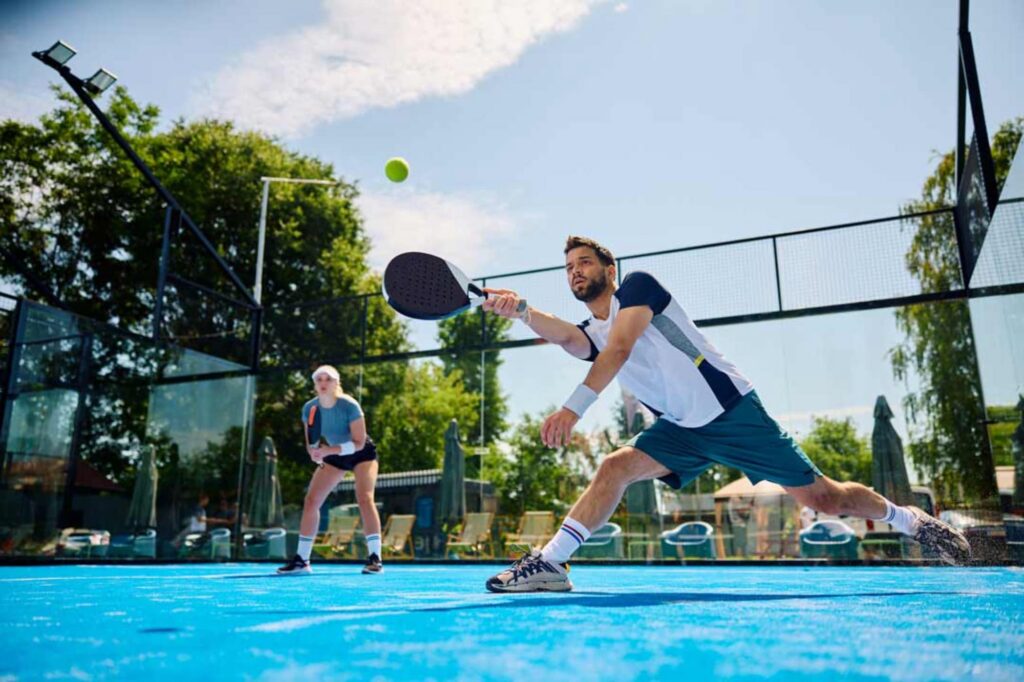
Who we see for tennis elbow
- Pickleball players
- Tennis players
- Golfers
- Weightlifters
- Climbers
- Carpenters & plumbers
- Painters
- Hairstylists
- Desk & mouse users
- Parents lifting kids
Most tennis elbow patients have already tried rest, a strap or an injection before they see us, often after months of on-and-off pain.
04 · Why it lingers
Why rest, straps and cortisone often fall short
Resting a painful tendon calms symptoms, but it also lets the tendon lose even more capacity. When you return to normal activity, the same tissue meets the same demands and the pain returns. Here’s how our plan breaks that cycle.
| Topic | The usual cycle | Utah Tendon Institute plan |
|---|---|---|
| Diagnosis | Assumed from symptoms; imaging only after months of failed care | Hands-on exam plus musculoskeletal ultrasound at your first visit |
| Pain relief | Rest, a strap and a cortisone shot that often wears off within weeks | Pain-calming strategies that protect long-term tendon health |
| The tendon itself | Left weaker after weeks of rest | Rebuilt with progressive, measured loading |
| Root cause | Grip, technique and shoulder strength rarely assessed | Grip demands, mechanics and the full kinetic chain evaluated |
| Stubborn cases | Surgery discussed as the next step | Shockwave, biologics or minimally invasive tenotomy considered first |
One-year recurrence after a cortisone injection compared with a placebo injection, in a randomized trial of 165 adults with tennis elbow.
Coombes et al., JAMA 2013 · View studyIn a 198-person trial, cortisone gave the best results at six weeks but poorer long-term outcomes than physiotherapy, and most early successes relapsed.
Bisset et al., BMJ 2006 · View studyDr. Engelen explains the research in plain language in Why I Stopped Recommending Steroid Injections for Tendinopathy.
05 · Our approach
Our 4-step plan for tennis elbow
The same clinical algorithm behind every Utah Tendon Institute treatment plan, tailored to the outer elbow.
- 1
Accurate diagnosis
Hands-on testing and musculoskeletal ultrasound show tendon thickening, tearing and blood-flow changes, and rule out nerve, joint and ligament causes.
Visit one - 2
Load & movement analysis
We measure grip strength and look at wrist position, paddle or tool setup, shoulder blade control and how your work or sport loads the elbow.
Find the why - 3
Targeted treatment plan
Your plan matches the stage of your tendon: calm an irritable tendon first, then build capacity, then add advanced options only if needed.
Staged & specific - 4
Regenerative + rehab integration
When needed, shockwave, PRP or percutaneous tenotomy is paired with rehab so the healing tendon is trained to handle load again.
Prevent recurrence
06 · Treatment options
Tennis elbow treatment options
Most patients start with a structured loading program. When a tendon has stalled, we add advanced therapies, always guided by what the ultrasound shows.
 Foundation
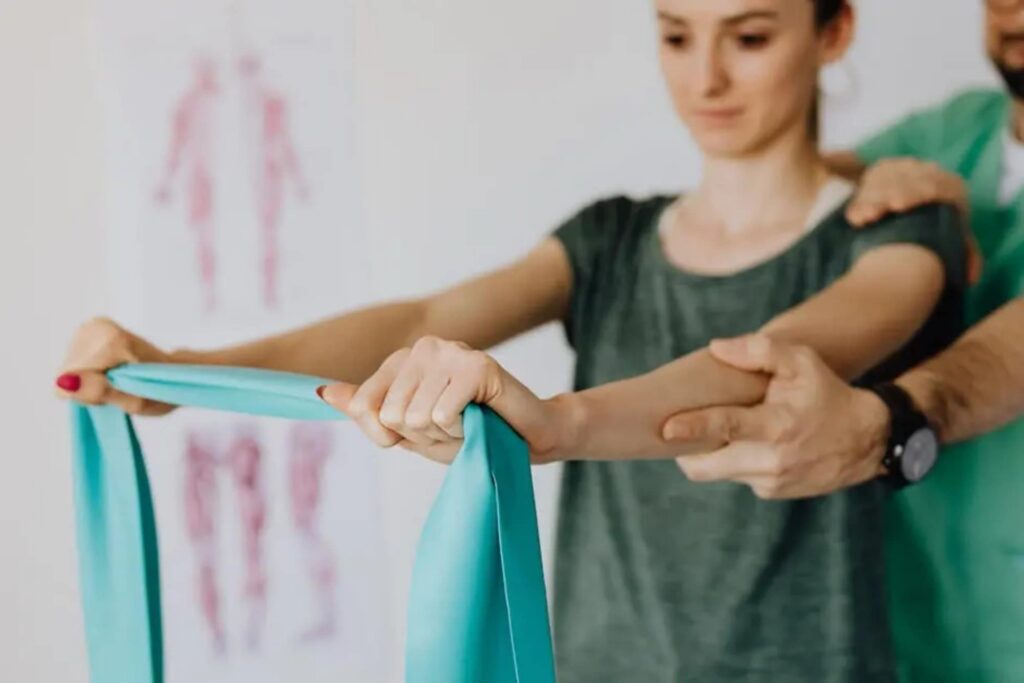
Progressive Tendon Loading Rehab
A progressive program of isometric holds, slow heavy wrist-extensor work and grip training, plus shoulder and shoulder-blade strength. Clinical practice guidelines for lateral elbow pain make exercise-based care a cornerstone.
Best for: Nearly everyone, as the base of every plan
 Non-invasive
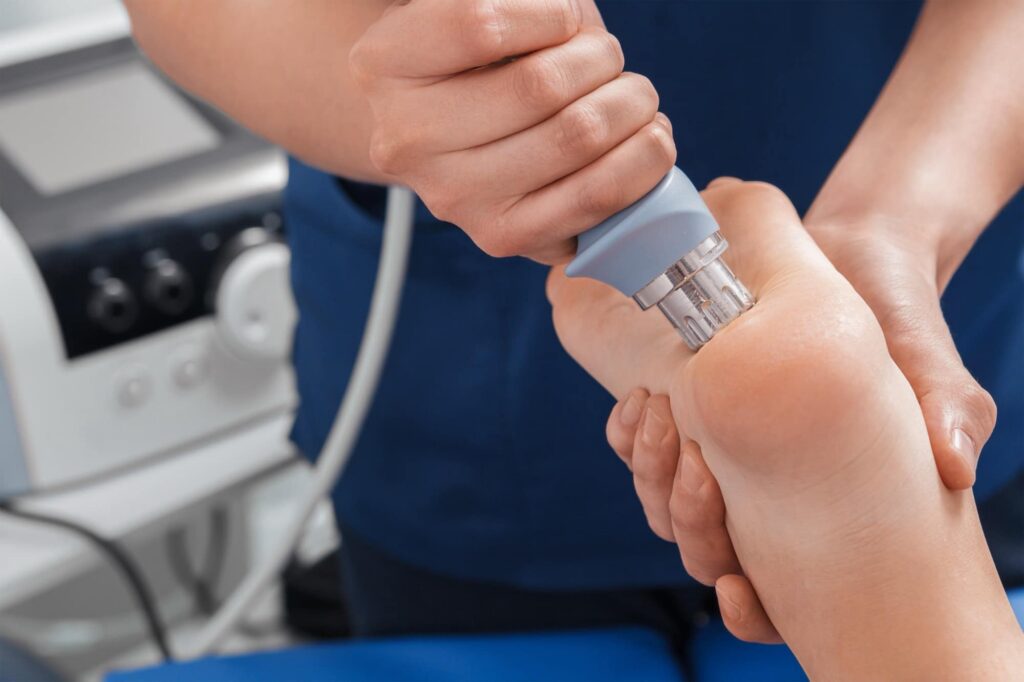
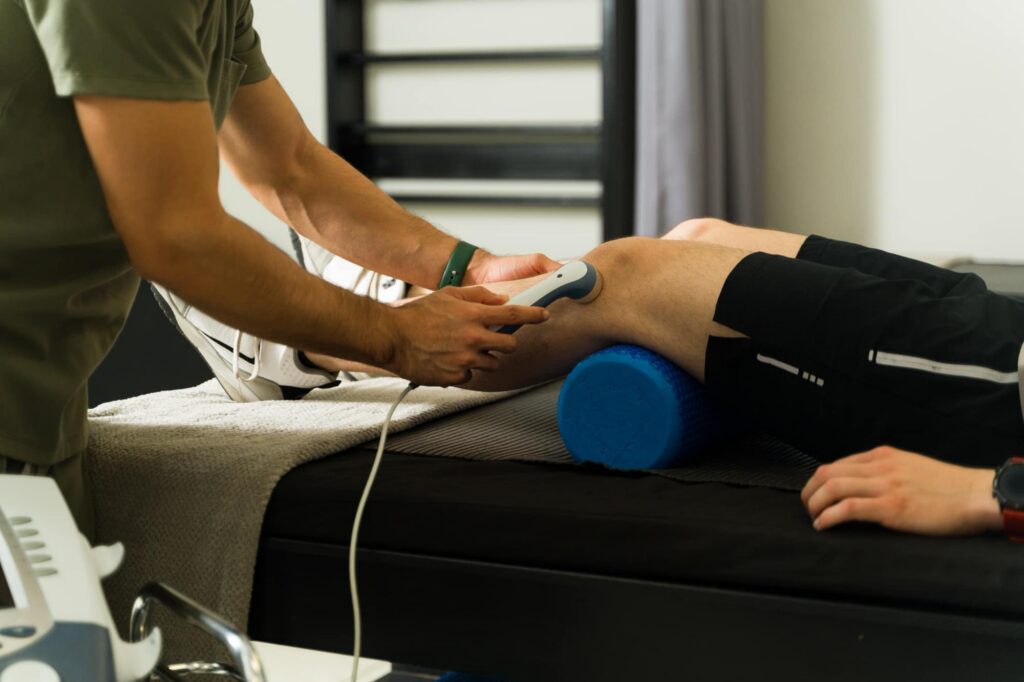
Focused Shockwave Therapy (Wolf Piezowave)
Focused acoustic pressure waves are delivered precisely to the painful tendon to stimulate a healing response and ease pain, with no needles and no downtime. It is usually given as a short series of brief sessions.
Best for: Persistent pain after several weeks of rehab
 Minimally invasive
Percutaneous Needle Tenotomy (Tenex, TendoNova)
Under ultrasound guidance, a tiny instrument breaks up and removes degenerated tendon tissue through a small puncture, using local anesthetic. In published studies of ultrasonic tenotomy for stubborn tennis elbow, improvements held at one- and three-year follow-up.
Best for: Chronic cases that have failed other care, as an alternative to surgery
 Regenerative
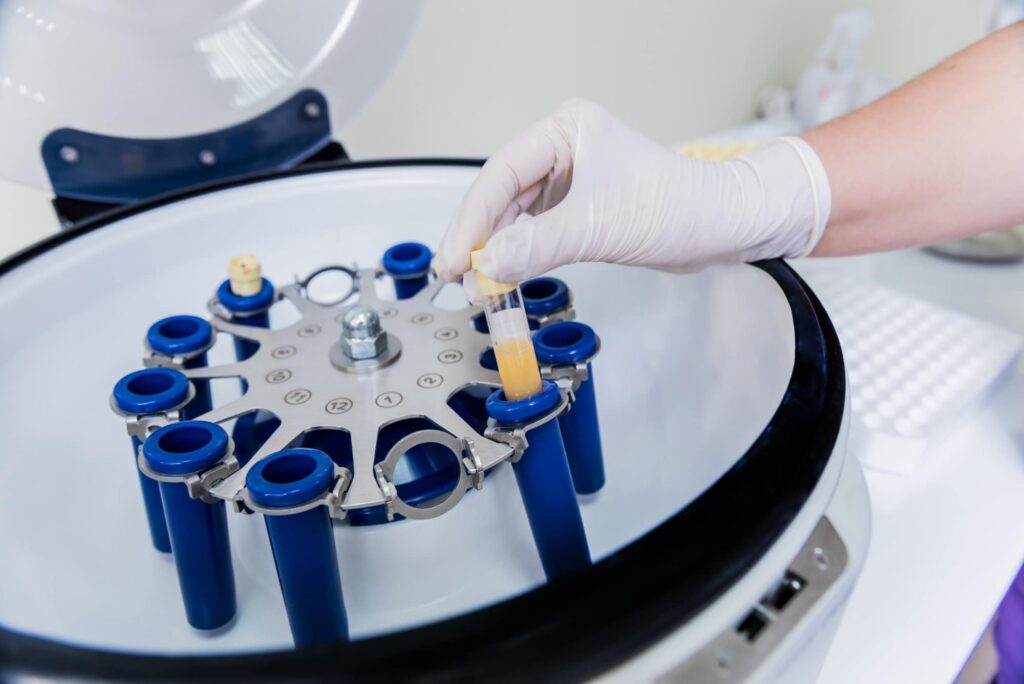
Biologics: PRP, BMAC & MFAT
Concentrated healing factors from your own blood (PRP) or bone marrow (BMAC), or micro-fragmented fat tissue (MFAT), placed precisely into the damaged tendon. In a 230-patient trial, PRP outperformed an active control for chronic tennis elbow at 24 weeks.
Best for: Partial tears or tendons not responding to loading
 Precision
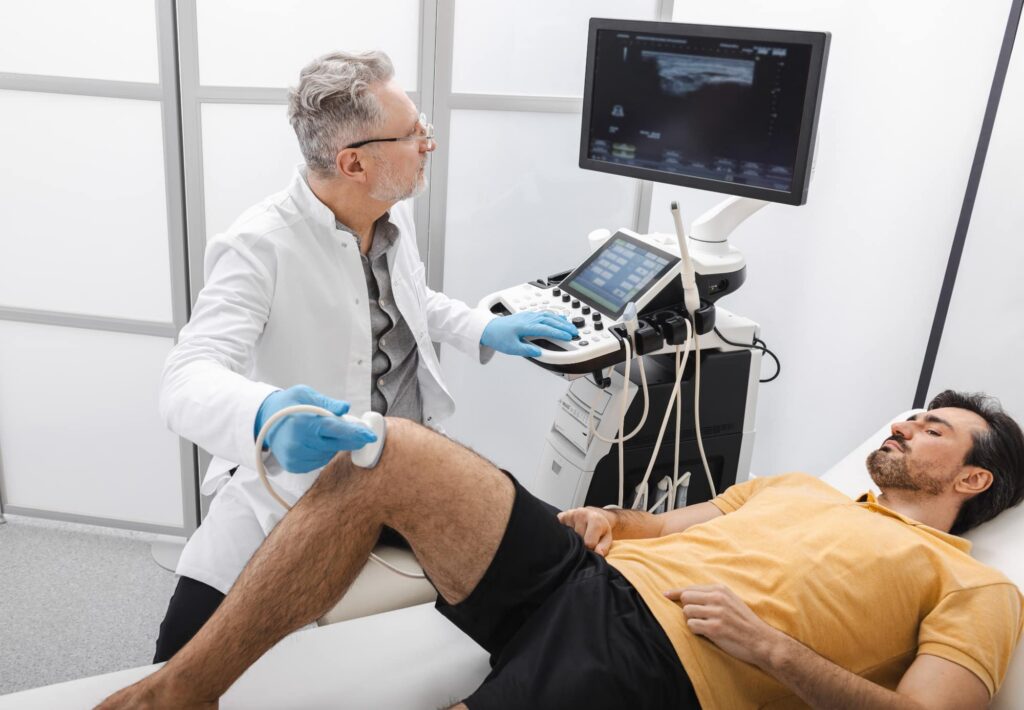
Ultrasound-Guided Diagnosis & Procedures
Ultrasound lets us see the tendon in real time: to confirm the diagnosis, grade the damage, track healing and guide every needle to the exact spot that needs treatment.
Best for: Every patient, from first visit to follow-up
 Adjunct
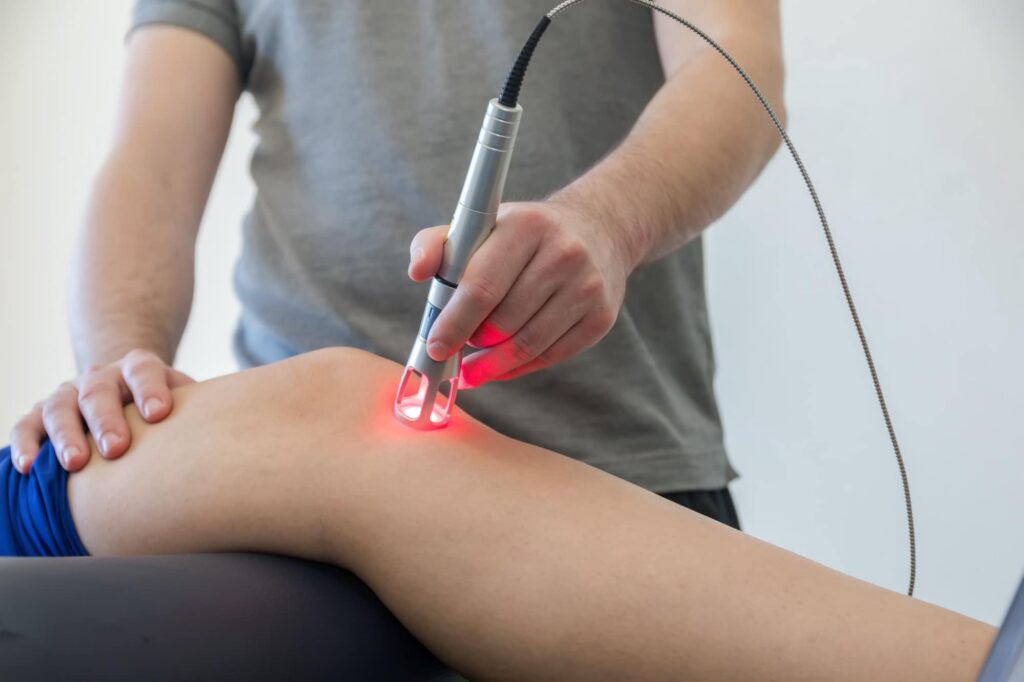
MLS Laser Therapy
High-intensity MLS laser therapy can be added to help manage pain and support circulation while you progress through rehab.
Best for: Calming an irritable elbow so you can keep training
Not sure which option fits? Bring your imaging, past treatments and goals, and we’ll map out a plan together.
Find my best option07 · Recovery
Your tennis elbow recovery roadmap
Tendons adapt slowly. Knowing what each phase looks like makes it easier to stay consistent and avoid the setbacks that come from doing too much too soon.
- Phase 1
Calm & protect
Weeks 0–2Lower irritability with activity changes, isometric holds and grip modifications, without complete rest.
- Phase 2
Rebuild capacity
Weeks 2–6Progressive wrist-extensor and grip strengthening, plus shoulder and shoulder-blade work.
- Phase 3
Load & adapt
Weeks 6–12Heavier, slower strength work and sport- or job-specific drills. Advanced treatments are added if progress stalls.
- Phase 4
Return & prevent
3 months +Full return to sport and work with a maintenance routine, equipment tweaks and a plan for future load spikes.
Timelines are typical ranges, not guarantees. Recovery depends on how long symptoms have been present, the condition of the tendon and the treatments used.
What you can do right now
- Keep moving, but cut back on the activities that spike your pain the next day
- Lift and carry with your palm facing up when you can
- Try gentle, pain-free isometric wrist holds a few times a day
- Use a counterforce strap during aggravating tasks if it helps, not all day
- Check your grip size, paddle or tool handles and workstation setup
- Think twice before another cortisone shot; research links it to more recurrences
Get checked promptly if you notice
- Elbow pain after a fall or a sudden pop
- Numbness or tingling in the hand or fingers
- You can’t fully straighten or bend the elbow
- Significant swelling, warmth, redness or fever
- Pain that wakes you every night or keeps getting worse
08 · Your physician
Expert tendon care in South Jordan
Meet the physician
Robert Engelen, DO
Physical Medicine & Rehabilitation · Sports Medicine
Dr. Engelen leads every treatment plan at Utah Tendon Institute. After nearly a decade as a non-operative sports medicine physician, he focuses on finding why a tendon keeps failing and fixing that cause, with imaging, targeted procedures and structured rehab.
- Residency in Physical Medicine & Rehabilitation, University of Utah
- Doctor of Osteopathic Medicine, Kansas City University
- Former U.S. Navy medical officer, 1st Battalion, 6th Marines
- Team physician experience with the Utah Royals and Real Salt Lake
Serving the Salt Lake Valley
Utah Tendon Institute913 Baxter Dr., Suite 100
South Jordan, UT 84095385-419-0692
Patients visit us for tennis elbow care from:
- South Jordan
- Salt Lake City
- Sandy
- Draper
- Riverton
- Herriman
- West Jordan
- Murray
- Midvale
09 · FAQs
Tennis Elbow FAQs
Straight answers to the questions we hear most. Still unsure? Ask us directly.
Is tennis elbow only caused by tennis?
No. Most people with tennis elbow don’t play tennis at all. Any activity that involves repetitive gripping, lifting or wrist extension can overload the tendon, including pickleball, golf, weightlifting, carpentry, plumbing, painting, cooking and computer work.
Can tennis elbow heal without surgery?
Yes. The American Academy of Orthopaedic Surgeons reports that roughly 80% to 95% of patients succeed with nonsurgical treatment. For the small group that doesn’t, minimally invasive options such as ultrasound-guided percutaneous tenotomy or biologic injections are usually considered before open surgery.
Do steroid injections fix tennis elbow?
They can reduce pain for a few weeks, but they don’t rebuild the tendon. In a randomized trial published in JAMA, patients who received a cortisone injection had worse one-year outcomes and a much higher recurrence rate than patients who received a placebo injection. We favor treatments that improve tendon health over time.
How long does tennis elbow take to heal?
It depends on how long you’ve had it and how irritable the tendon is. Many recent cases improve within a few months on the right loading program. Tennis elbow that has lingered for six months or more usually needs a longer, more structured plan, sometimes combined with shockwave, PRP or tenotomy. You’ll get a realistic timeline after your ultrasound evaluation.
Should I wear a tennis elbow brace?
A counterforce strap can reduce pain during specific tasks for some people, but it doesn’t heal the tendon. Use it as a tool during aggravating activities while you rebuild strength, not as a long-term fix.
Is PRP or Tenex better for chronic tennis elbow?
They solve different problems. PRP delivers concentrated healing factors to stimulate repair, while percutaneous tenotomy removes degenerated tissue that is blocking recovery. The right choice depends on what your ultrasound shows, how long you’ve had symptoms and your goals, which is why we decide together after imaging.
Do you treat tennis elbow near Salt Lake City?
Yes. Utah Tendon Institute is at 913 Baxter Dr., Suite 100 in South Jordan, an easy drive from Salt Lake City, Sandy, Draper, Riverton, Herriman, West Jordan, Murray and Midvale. Call 385-419-0692 or request an evaluation online.
10 · Get started
Schedule a tennis elbow evaluation
If outer elbow pain is limiting your grip, workouts, work or sport, it’s time for a more precise plan. Start with the right diagnosis.
- 1A real diagnosis History, hands-on exam and musculoskeletal ultrasound of the painful tendon.
- 2The why behind the pain We look at load, strength and movement patterns that keep irritating the tissue.
- 3A clear, staged plan You leave knowing your options, your timeline and what to do next.
Prefer to talk? 385-419-0692
Request your evaluation
Tell us where it hurts and how we can reach you. Our team will follow up to schedule.
Your information stays private and is only used to contact you.
More conditions
Other tendon conditions we treat
Tendon pain rarely lives in just one place. Explore the other conditions our South Jordan team evaluates and treats every week.
- Golfer’s Elbow
 Rotator Cuff Tendinopathy
 Achilles Tendinopathy
 Plantar Fasciitis
 Patellar Tendinopathy
 Hamstring Tendinopathy
- Gluteal Tendinopathy
- Not sure what’s causing your pain?Get a precise diagnosis
Sources & further reading
- American Academy of Orthopaedic Surgeons (OrthoInfo). Tennis Elbow (Lateral Epicondylitis).
- Cleveland Clinic. Tennis Elbow (Lateral Epicondylitis).
- Lucado AM, et al. Lateral Elbow Pain and Muscle Function Impairments: Clinical Practice Guidelines. J Orthop Sports Phys Ther. 2022.
- Coombes BK, et al. Effect of corticosteroid injection, physiotherapy, or both on clinical outcomes in patients with unilateral lateral epicondylalgia. JAMA. 2013.
- Bisset L, et al. Mobilisation with movement and exercise, corticosteroid injection, or wait and see for tennis elbow: randomised trial. BMJ. 2006.
- Mishra AK, et al. Efficacy of platelet-rich plasma for chronic tennis elbow. Am J Sports Med. 2014.
- Seng C, et al. Ultrasonic percutaneous tenotomy for recalcitrant lateral elbow tendinopathy: sustainability and sonographic progression at 3 years. Am J Sports Med. 2016.
- Scott A, et al. ICON 2019: International Scientific Tendinopathy Symposium Consensus: Clinical Terminology. Br J Sports Med. 2020.
This page is for general education and is not a substitute for medical advice. Every tendon problem is different; your diagnosis and treatment plan should come from a qualified clinician who has examined you. Results vary, and no treatment is guaranteed to work for every patient.