
Golfer’s Elbow Treatment in Salt Lake City & South Jordan
You Don’t Need More Rest. You Need the Right Plan.
Inner elbow pain that grabs every time you swing, climb, lift or grip a tool? We pinpoint the irritated tendon with ultrasound, rule out nerve and ligament problems, and build a non-surgical plan that makes the tendon strong again.
- Non-surgical first
- Ultrasound-guided precision
- Physician-led care
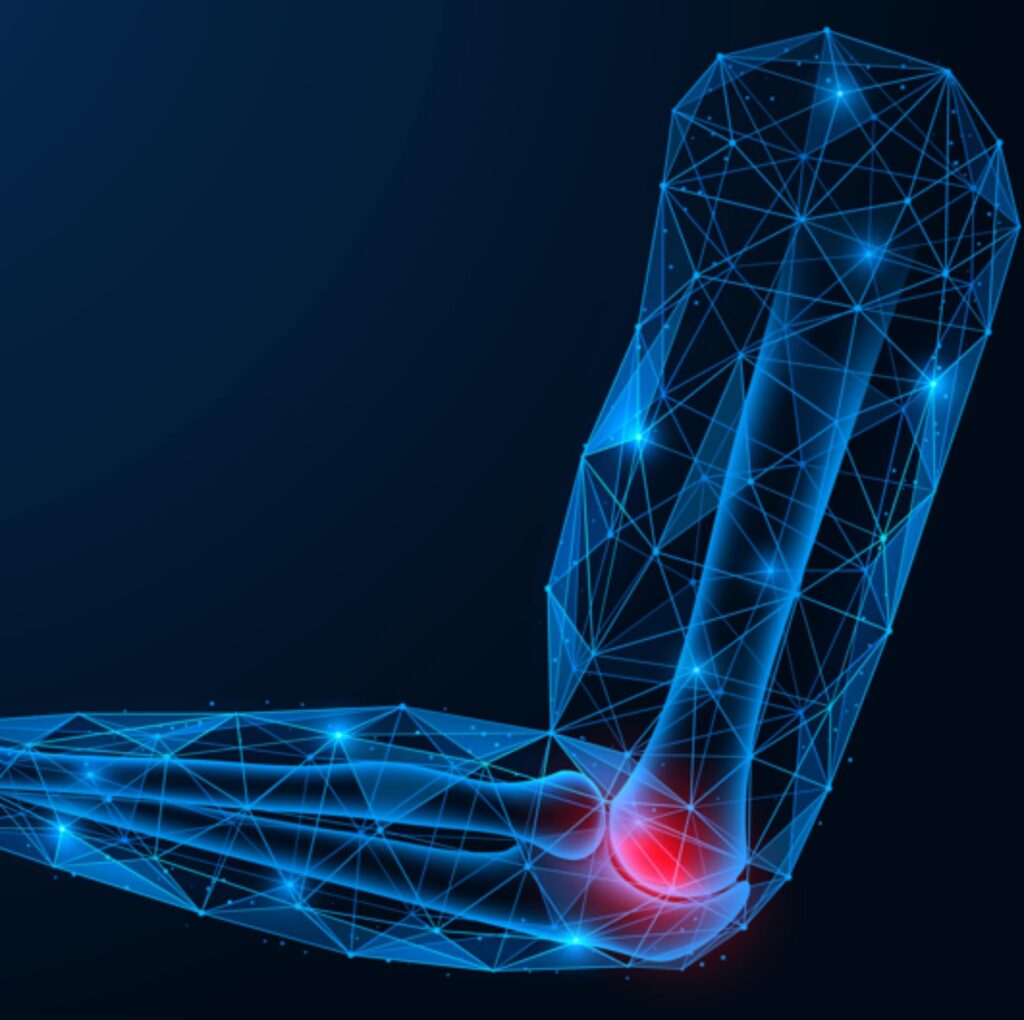
- Diagnosis first Musculoskeletal ultrasound pinpoints the tissue behind your pain.
- Evidence-based Loading, shockwave, biologics and tenotomy, matched to your tendon.
- Physician-led Care directed by sports medicine physician Robert Engelen, DO.
- South Jordan clinic Serving Salt Lake City and the entire Salt Lake Valley.
01 · Overview
What is golfer’s elbow?

Utah Tendon Institute · Care led by Robert Engelen, DO
Updated November 2026
Golfer’s elbow, known medically as medial epicondylitis or medial elbow tendinopathy, is the inner-elbow cousin of tennis elbow. It affects the common flexor-pronator tendon, which anchors the muscles that bend your wrist, curl your fingers and turn your palm down to the bony bump on the inside of your elbow. According to the American Academy of Orthopaedic Surgeons, the pronator teres is the tendon most often involved.
You don’t need to play golf to get it. Climbing, weightlifting, throwing sports, racquet and paddle sports, and hands-on jobs that involve gripping or tools are all common sources. It most often affects adults between 40 and 60, and it usually builds over weeks to months rather than from one bad swing.
Why the inner elbow is different
The ulnar nerve, your “funny bone” nerve, runs just behind the inner elbow. When it gets irritated along with the tendon, you may notice tingling or numbness in your ring and little fingers. The ulnar collateral ligament, a key stabilizer for throwing athletes, sits right next to the tendon too. Sorting out which structure is actually causing your pain is exactly what musculoskeletal ultrasound does well.
Most golfer’s elbow cases improve without surgery when the tendon is loaded the right way. If your pain is on the outside of the elbow, read about tennis elbow. Our sister practice, Engelen Sports & Orthobiologics, also treats other causes of elbow pain.
02 · Symptoms
Golfer’s elbow symptoms
Golfer’s elbow tends to creep up gradually, then becomes hard to ignore during grip-heavy activities. Here’s what patients describe most often.
- 01
Pain on the inside of the elbow
Aching or burning over the bony bump on the inner elbow that is tender when you press on it.
- 02
Pain with gripping and wrist curling
Lifting with your palm up, wringing a towel, carrying bags or gripping a club, racquet or climbing hold.
- 03
Pain when turning the forearm
Turning a doorknob, using a screwdriver or rotating your palm down can set it off.
- 04
Weak, fatiguing grip
Your grip tires quickly, and heavier lifts or longer climbs feel harder to hold.
- 05
Pain that runs down the forearm
Discomfort can travel along the inner forearm toward the wrist, sometimes as a sharp, shooting pain.
- 06
Tingling in the ring and little fingers
A sign the ulnar nerve may be irritated alongside the tendon, and a reason to get checked promptly.
Inner elbow pain has several possible causes
Ulnar nerve irritation (cubital tunnel), an ulnar collateral ligament sprain, joint problems and pain referred from the neck can all mimic golfer’s elbow. An ultrasound evaluation helps separate them so you treat the right problem from day one.
03 · Causes & risk factors
What causes golfer’s elbow?
Golfer’s elbow is an overload problem. Repeated gripping, wrist bending and forearm rotation stress the flexor-pronator tendon where it attaches to the inner elbow. When that load climbs faster than the tendon can adapt, its fibers fray, and the tissue becomes painful and less able to handle force.
On the course, hitting behind the ball, a death-grip on the club or poorly fitted equipment can concentrate force at the inner elbow. In the gym and on the wall, high-volume pulling, curls and crimping are frequent triggers. At work, hammering, power tools and lifting with your palms up add up over a long shift.
Common risk factors
- Golf, especially swing faults that increase impact or an overly tight grip
- Climbing and bouldering, particularly crimping and high-volume pulling
- Weight training with heavy curls, pull-ups and rows
- Overhead throwing and serving in baseball, softball, tennis and pickleball
- Manual work with hammers, power tools or repetitive lifting
- Being between 40 and 60, the age range most often affected
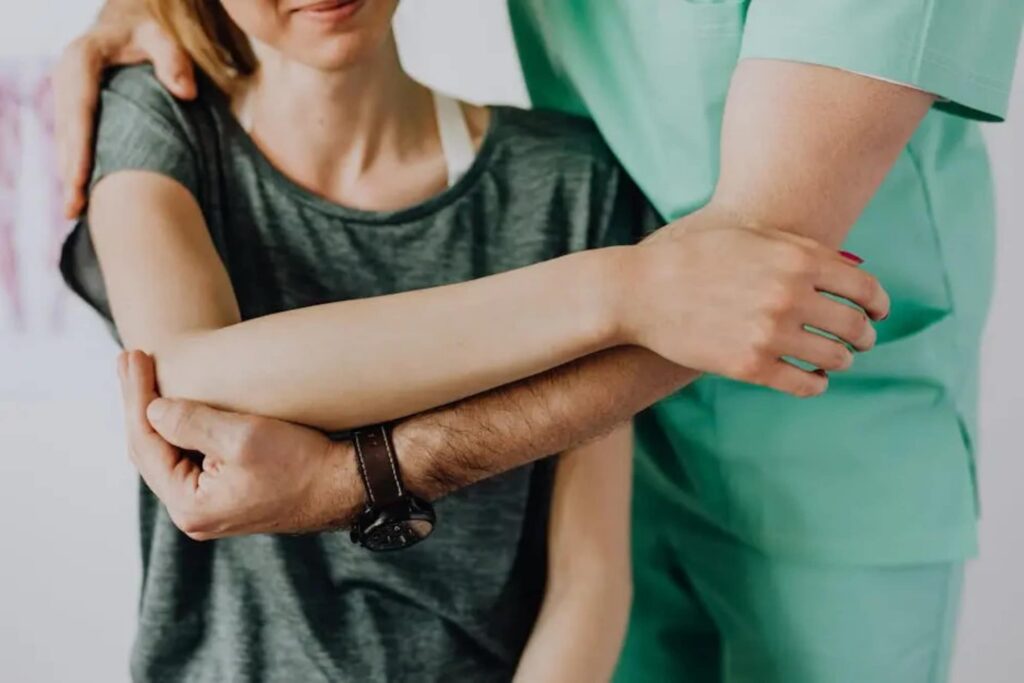
Who we see for golfer’s elbow
- Golfers
- Climbers
- Weightlifters
- Pickleball & tennis players
- Baseball & softball players
- Carpenters & electricians
- Mechanics
- Gardeners
- Desk workers
- Parents & caregivers
Climbers and lifters often push through inner elbow pain for months before getting help. Earlier evaluation usually means a shorter road back.
04 · Why it lingers
Why golfer’s elbow keeps coming back
Rest quiets the pain, but the tendon is usually weaker when you return, and the swing, grip or training load that started the problem is still there.
| Topic | The usual cycle | Utah Tendon Institute plan |
|---|---|---|
| Diagnosis | Assumed to be “tendinitis”; nerve and ligament problems missed | Ultrasound checks the tendon, ulnar nerve and ligament at your first visit |
| Pain relief | Cortisone shots that may delay rehab and weaken the tendon | Pain-calming strategies that protect long-term tendon health |
| The tendon itself | Stretching alone, or weeks of complete rest | Progressive wrist-flexor and pronator strengthening |
| Root cause | Swing, grip and training load rarely addressed | Technique, grip, equipment and training volume reviewed |
| Stubborn cases | Surgery offered as the next step | Shockwave, biologics or tenotomy considered first |
Cortisone injections may relieve pain at first, but some research suggests they can prolong rehabilitation and worsen tendon damage in golfer’s elbow.
AAOS OrthoInfo · Read moreOnce pain-free motion returns, progressive strengthening of the wrist flexors and pronators, with eccentric exercise, is thought to be particularly beneficial.
AAOS OrthoInfo · Read moreWhy does Dr. Engelen avoid repeated steroid shots for tendon pain? Read his Tendon Journal article for the research behind that decision.
05 · Our approach
Our 4-step plan for golfer’s elbow
Our clinical algorithm, applied to the inner elbow, where nerves and ligaments sit right next to the painful tendon.
- 1
Accurate diagnosis
Ultrasound images the flexor-pronator tendon, ulnar nerve and ulnar collateral ligament side by side, so we know exactly which tissue is driving your pain.
Visit one - 2
Load & movement analysis
We test grip and forearm strength and review your swing, climbing or lifting habits, equipment, tools and training volume.
Find the why - 3
Targeted treatment plan
Your program progresses from pain-calming isometrics to heavier wrist-flexor and pronator strength, matched to your sport or job.
Staged & specific - 4
Regenerative + rehab integration
If the tendon stalls, shockwave, PRP or percutaneous tenotomy is paired with continued loading to rebuild durable tissue.
Prevent recurrence
06 · Treatment options
Golfer’s elbow treatment options
Research on golfer’s elbow is still catching up with tennis elbow, so we lean on what works for tendons generally: structured loading first, advanced therapies when the tendon has stalled.
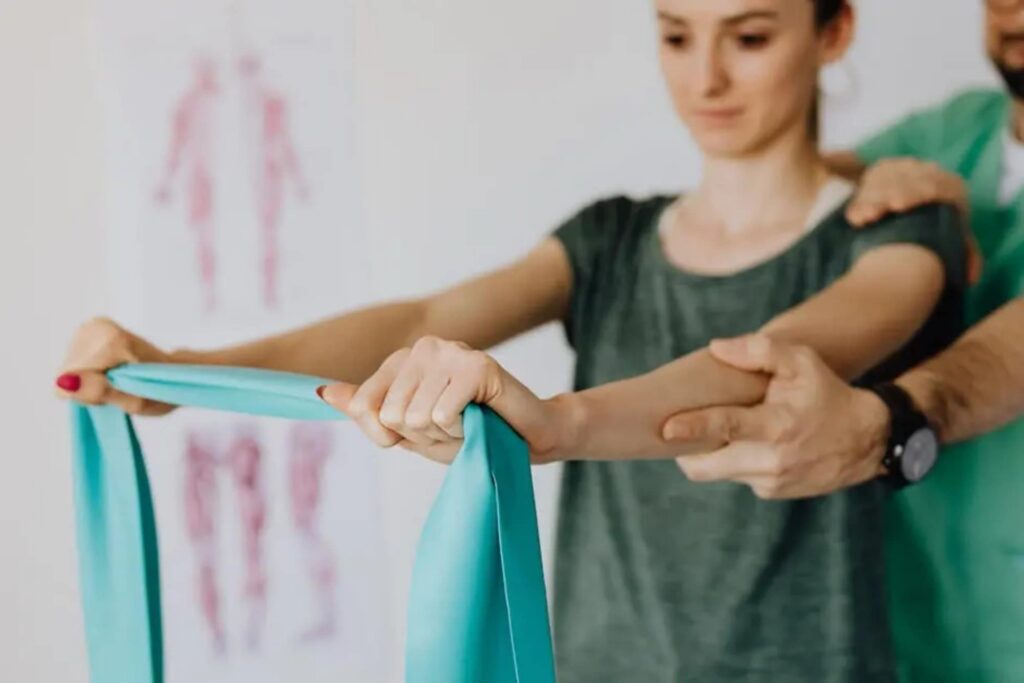 Foundation
Progressive Tendon Loading Rehab
Isometric holds for pain relief, then progressive wrist-flexor, finger-flexor and pronator strengthening with an eccentric emphasis, plus grip and shoulder work tailored to your sport.
Best for: Every patient, as the foundation of care
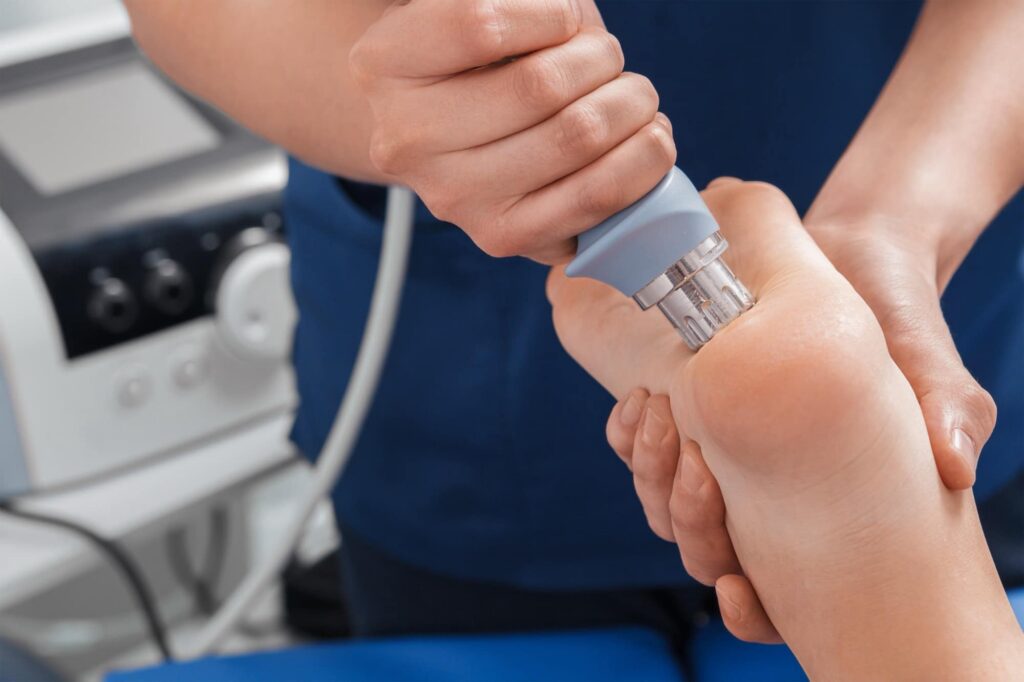 Non-invasive
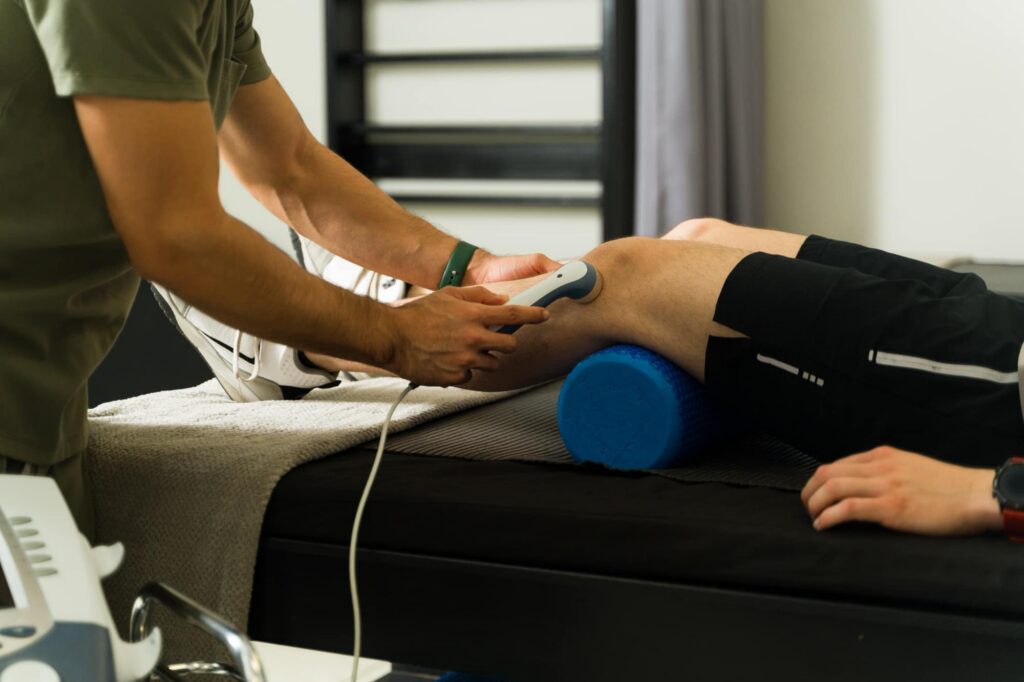
Focused Shockwave Therapy (Wolf Piezowave)
Focused shockwave delivers acoustic energy to the irritated tendon to stimulate repair and calm pain, with no injections and no downtime.
Best for: Tendons that are slow to respond to rehab alone
 Minimally invasive
Percutaneous Needle Tenotomy (Tenex, TendoNova)
An ultrasound-guided, needle-sized instrument removes degenerated tendon tissue through a tiny incision under local anesthetic, offering an alternative to open surgery for chronic cases.
Best for: Long-standing pain with clear degeneration on ultrasound
 Regenerative
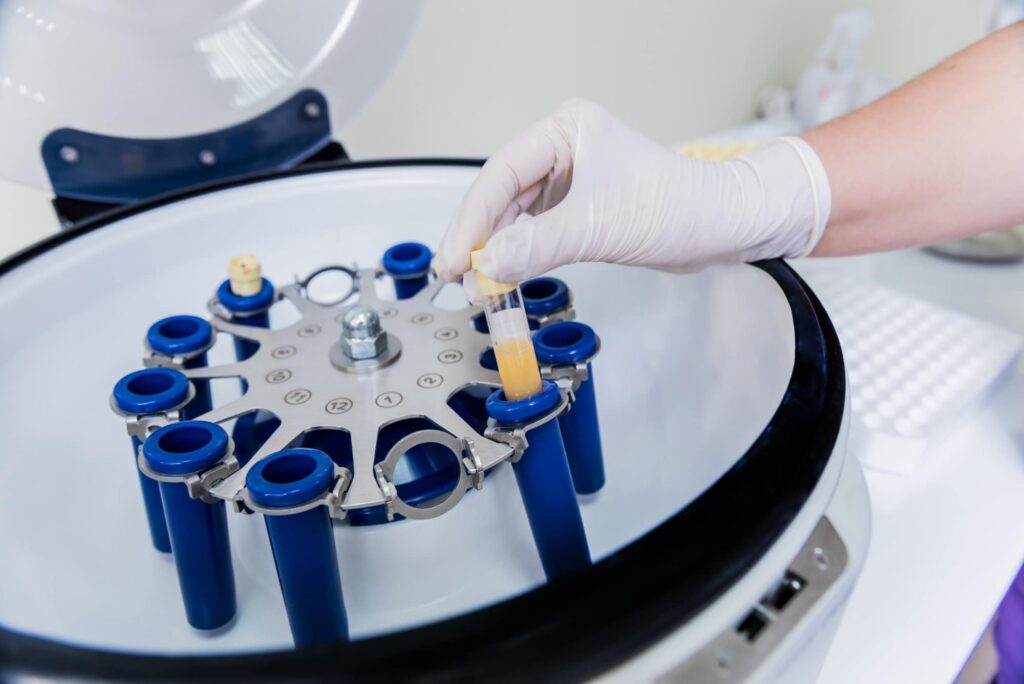
Biologics: PRP, BMAC & MFAT
PRP, bone marrow concentrate (BMAC) or micro-fragmented adipose tissue (MFAT) can be placed precisely into a damaged tendon to support healing when loading alone isn’t enough.
Best for: Partial tears or tendons not improving after months of care
 Precision
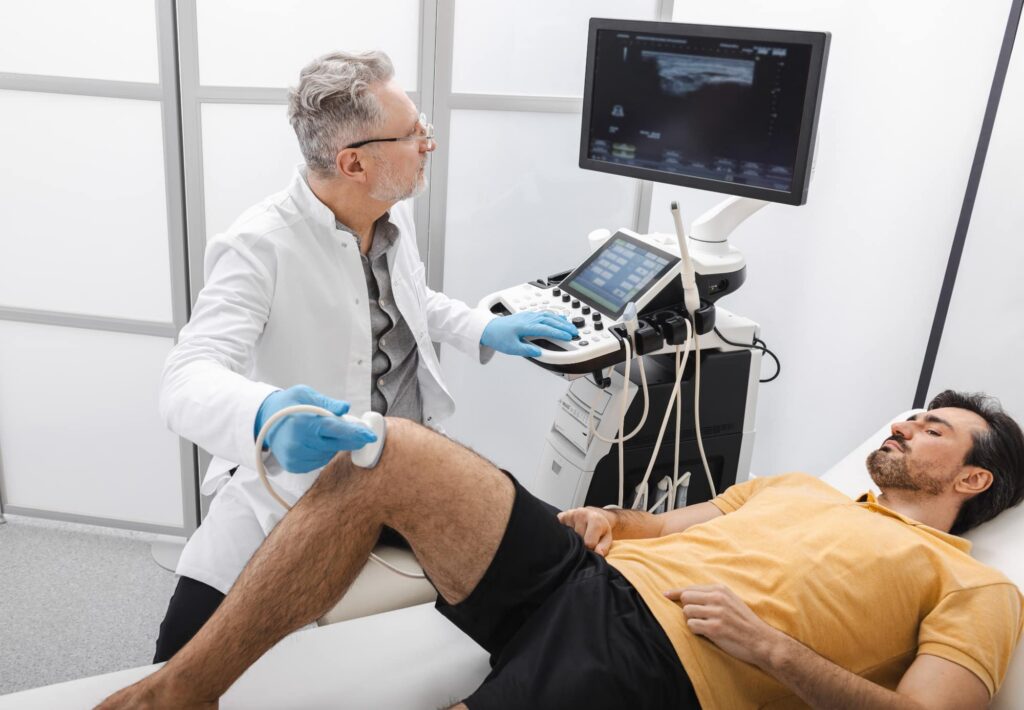
Ultrasound-Guided Diagnosis & Procedures
Ultrasound separates tendon problems from ulnar nerve and ligament injuries, then guides every procedure to the exact target.
Best for: Every patient, especially if your fingers tingle
 Adjunct
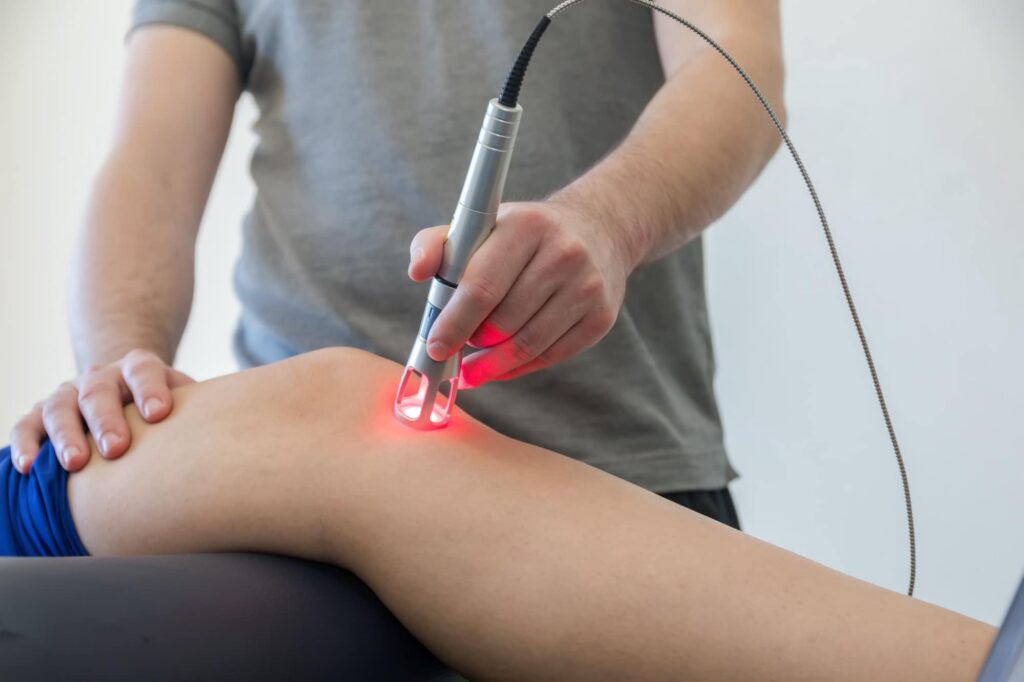
MLS Laser Therapy
MLS laser therapy may be added to help settle pain so you can stay consistent with your strengthening program.
Best for: Flare-ups that make rehab hard to tolerate
Already tried rest, a brace or an injection? Bring your history and we’ll build the plan from where you are today.
Find my best option07 · Recovery
Your golfer’s elbow recovery roadmap
Most golfer’s elbow recoveries follow a predictable arc. The pace depends on how irritable the tendon is and how long it has been painful.
- Phase 1
Settle symptoms
Weeks 0–2Modify grip-heavy tasks, use pain-free isometric holds and restore comfortable wrist and elbow motion.
- Phase 2
Strengthen
Weeks 2–6Progressive wrist-flexor and pronator strengthening with an eccentric emphasis, plus grip and shoulder work.
- Phase 3
Sport & work prep
Weeks 6–12Heavier loading and a graded return to swinging, climbing, lifting or tool use. Advanced options are added if needed.
- Phase 4
Return & maintain
3 months +Full return with technique and equipment tweaks and a short routine that keeps the tendon resilient.
Timelines are typical ranges, not guarantees. Recovery depends on symptom duration, tendon condition, nerve involvement and the treatments used.
What you can do right now
- Cut back on the grip-heavy activities that flare your pain, without stopping everything
- Loosen your grip on clubs, tools and steering wheels
- Try gentle, pain-free isometric wrist-curl holds a few times a day
- Space out climbing or lifting sessions so the tendon can recover
- Check club grips, racquet handles and tool handles for size and comfort
- Avoid repeated cortisone shots, which may weaken the tendon
Get checked promptly if you notice
- Numbness, tingling or weakness in the ring and little fingers
- A pop or sudden sharp inner-elbow pain while throwing
- Swelling, bruising or a feeling of instability after an injury
- Fever, redness or warmth around the elbow
- Pain that wakes you at night or keeps getting worse
08 · Your physician
Expert tendon care in South Jordan
Meet the physician
Robert Engelen, DO
Physical Medicine & Rehabilitation · Sports Medicine
Dr. Engelen leads every treatment plan at Utah Tendon Institute. After nearly a decade as a non-operative sports medicine physician, he focuses on finding why a tendon keeps failing and fixing that cause, with imaging, targeted procedures and structured rehab.
- Residency in Physical Medicine & Rehabilitation, University of Utah
- Doctor of Osteopathic Medicine, Kansas City University
- Former U.S. Navy medical officer, 1st Battalion, 6th Marines
- Team physician experience with the Utah Royals and Real Salt Lake
Serving the Salt Lake Valley
Utah Tendon Institute913 Baxter Dr., Suite 100
South Jordan, UT 84095385-419-0692
Patients visit us for golfer’s elbow care from:
- South Jordan
- Salt Lake City
- Sandy
- Draper
- Riverton
- Herriman
- West Jordan
- Murray
- Midvale
09 · FAQs
Golfer’s Elbow FAQs
Straight answers to the questions we hear most. Still unsure? Ask us directly.
What’s the difference between golfer’s elbow and tennis elbow?
Location. Golfer’s elbow (medial epicondylitis) affects the tendon on the inside of the elbow that bends the wrist and turns the forearm. Tennis elbow (lateral epicondylitis) affects the outside of the elbow and the wrist extensors. Both are overload tendinopathies, and both respond best to a precise diagnosis and progressive loading. Learn more about tennis elbow treatment.
Can you get golfer’s elbow without playing golf?
Absolutely. Climbers, weightlifters, throwing athletes, pickleball and tennis players, and people in hands-on jobs such as carpentry and auto repair develop golfer’s elbow all the time.
How long does golfer’s elbow take to heal?
Recent, mild cases often improve over several weeks with the right loading program. Golfer’s elbow that has lingered for months usually needs a longer, structured plan, and sometimes shockwave, PRP or tenotomy. Your ultrasound findings help us set a realistic timeline.
Should I stop climbing, lifting or golfing?
Usually not completely. Most people do better by reducing the volume and intensity of the activities that flare symptoms while they strengthen the tendon. We’ll give you clear guidelines on what to keep, what to modify and when to progress.
Why are my ring and little fingers tingling?
The ulnar nerve runs right behind the inner elbow and can become irritated along with golfer’s elbow. Tingling, numbness or weakness in those fingers should be evaluated, because nerve problems need a different plan.
Do I need an MRI for golfer’s elbow?
Often not. A hands-on exam plus musculoskeletal ultrasound can show tendon damage, check the ulnar nerve and screen the ulnar collateral ligament in one visit. If something needs a closer look, we’ll explain why before ordering more imaging.
Where can I get golfer’s elbow treatment near Salt Lake City?
Utah Tendon Institute is at 913 Baxter Dr., Suite 100 in South Jordan, serving Salt Lake City, Sandy, Draper, Riverton, Herriman, West Jordan, Murray and Midvale. Call 385-419-0692 or request an evaluation online.
10 · Get started
Schedule a golfer’s elbow evaluation
Inner elbow pain holding back your swing, your climbing or your workday? Let’s find the cause and build a plan to fix it.
- 1A real diagnosis History, hands-on exam and musculoskeletal ultrasound of the painful tendon.
- 2The why behind the pain We look at load, strength and movement patterns that keep irritating the tissue.
- 3A clear, staged plan You leave knowing your options, your timeline and what to do next.
Prefer to talk? 385-419-0692
Request your evaluation
Tell us where it hurts and how we can reach you. Our team will follow up to schedule.
Your information stays private and is only used to contact you.
More conditions
Other tendon conditions we treat
Tendon pain rarely lives in just one place. Explore the other conditions our South Jordan team evaluates and treats every week.
- Tennis Elbow
 Rotator Cuff Tendinopathy
 Achilles Tendinopathy
 Plantar Fasciitis
 Patellar Tendinopathy
 Hamstring Tendinopathy
- Gluteal Tendinopathy
- Not sure what’s causing your pain?Get a precise diagnosis
Sources & further reading
- American Academy of Orthopaedic Surgeons (OrthoInfo). Medial Epicondylitis (Golfer’s Elbow).
- Amin NH, et al. Medial epicondylitis: evaluation and management. J Am Acad Orthop Surg. 2015.
- Hoogvliet P, et al. Does effectiveness of exercise therapy and mobilisation techniques offer guidance for the treatment of lateral and medial epicondylitis? A systematic review. Br J Sports Med. 2013.
- Cook JL, Purdam CR. Is tendon pathology a continuum? A pathology model to explain the clinical presentation of load-induced tendinopathy. Br J Sports Med. 2009.
- Scott A, et al. ICON 2019: International Scientific Tendinopathy Symposium Consensus: Clinical Terminology. Br J Sports Med. 2020.
This page is for general education and is not a substitute for medical advice. Every tendon problem is different; your diagnosis and treatment plan should come from a qualified clinician who has examined you. Results vary, and no treatment is guaranteed to work for every patient.