
Achilles Tendinopathy Treatment in Salt Lake City & South Jordan
You Don’t Need More Rest. You Need the Right Plan.
Stiff, sore Achilles every morning, or pain that flares after runs and hikes? We identify exactly which part of the tendon is failing with ultrasound and build a non-surgical plan that rebuilds its strength, often while you stay active.
- Non-surgical first
- Ultrasound-guided precision
- Physician-led care
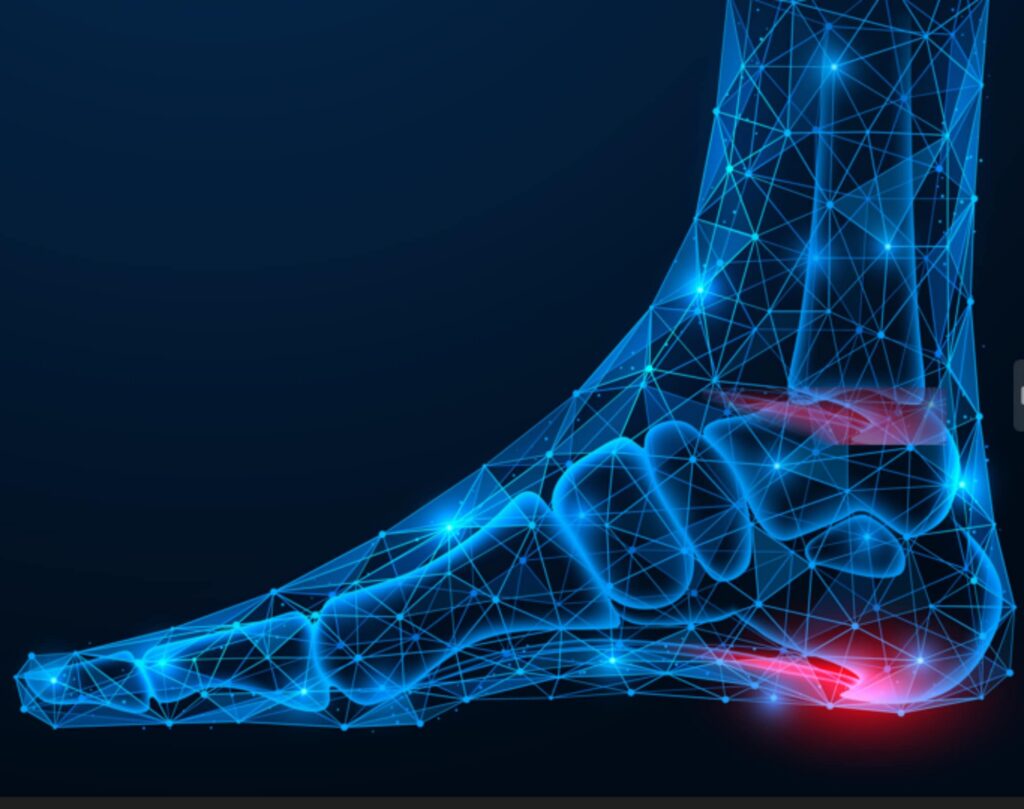
- Diagnosis first Musculoskeletal ultrasound pinpoints the tissue behind your pain.
- Evidence-based Loading, shockwave, biologics and tenotomy, matched to your tendon.
- Physician-led Care directed by sports medicine physician Robert Engelen, DO.
- South Jordan clinic Serving Salt Lake City and the entire Salt Lake Valley.
01 · Overview
What is Achilles tendinopathy?

Utah Tendon Institute · Care led by Robert Engelen, DO
Updated November 2026
Your Achilles tendon is the largest and strongest tendon in your body, connecting your calf muscles to your heel bone. It stores and releases energy every time you walk, run, jump or climb stairs. Achilles tendinopathy, often called Achilles tendinitis, is a painful overload condition in which the tendon loses its ability to handle those forces.
There are two main types, and they’re treated differently. Mid-portion (non-insertional) tendinopathy affects the middle of the tendon, a few centimeters above the heel, and is especially common in runners and active adults. Insertional tendinopathy affects the spot where the tendon attaches to the heel bone and often comes with a bone spur or bump at the back of the heel, as the American Academy of Orthopaedic Surgeons describes.
Why the type matters
Some classic Achilles exercises, such as dropping the heel below a step, can aggravate insertional tendinopathy. Getting the diagnosis right on day one, with ultrasound rather than guesswork, means your plan loads the tendon in a way that helps instead of irritating it.
Achilles pain often travels with other foot and lower-leg problems. If your pain is under the heel rather than behind it, read about plantar fasciitis. If it’s just below the kneecap, see patellar tendinopathy.
02 · Symptoms
Achilles tendinopathy symptoms
Achilles tendinopathy usually announces itself in the morning and after activity. These are the signs we see most often.
- 01
Morning pain and stiffness
The first steps out of bed feel stiff and sore along the back of the ankle, then ease as you warm up.
- 02
Pain that builds after activity
Running, hiking or jumping may feel okay at first, but pain is often worse later that day or the next morning.
- 03
Thickening or a tender lump
The tendon can feel thicker, swollen or knotted when you gently pinch it.
- 04
Pain at the back of the heel
With insertional tendinopathy, pain sits right where the tendon meets the heel, and shoes may rub.
- 05
Pain on hills and stairs
Uphill walking, stairs and pushing off feel weaker or more painful than they should.
- 06
Lost spring and calf strength
Single-leg heel raises are harder, and running or jumping feels flat.
Sudden pop? Get seen right away
A sudden pop, the feeling of being kicked in the back of the leg, or trouble pushing off can signal an Achilles rupture, which needs urgent care. Heel stress fractures, bursitis and nerve irritation can also mimic Achilles tendinopathy, which is why we confirm the diagnosis with ultrasound.
03 · Causes & risk factors
What causes Achilles tendinopathy?
Most Achilles tendinopathy has no single injury behind it. It develops when the load on the tendon outpaces its ability to adapt, usually from doing too much, too soon. Running is the classic example, but hiking, court sports, jumping and even a new job that keeps you on your feet all day can do it.
Here in Utah, we often see it after a jump in trail mileage, a spring return to running, a new pair of shoes, or a big hiking or ski-touring season. Calf strength, foot mechanics and training patterns all influence how much stress reaches the tendon.
Common risk factors
- Sudden increases in running mileage, speed work, hills or jumping
- Changes in footwear or training surfaces
- Weak or tight calf muscles
- A bony bump at the back of the heel (Haglund’s deformity), linked to insertional pain
- Middle age, when tendons adapt more slowly to sudden changes
- Fluoroquinolone antibiotics, which carry an FDA warning for tendon problems
Who we see for Achilles tendinopathy
- Runners
- Trail runners
- Hikers
- Pickleball & tennis players
- Basketball players
- Skiers
- Dancers
- CrossFit athletes
- On-your-feet workers
- Weekend warriors
Runners often try to “run through” Achilles pain. A precise plan early can keep you training while the tendon rebuilds.
04 · Why it lingers
Why Achilles pain keeps coming back
Rest calms the pain, but a deconditioned tendon is even less ready for running and jumping when you return. The fix is the right load, not no load.
| Topic | The usual cycle | Utah Tendon Institute plan |
|---|---|---|
| Diagnosis | Generic “tendinitis” label; type not identified | Ultrasound identifies mid-portion vs. insertional disease on day one |
| Pain relief | Weeks off, anti-inflammatories and heel lifts | Pain-guided activity so you can keep moving while you heal |
| The tendon itself | Stretching that can aggravate insertional pain | Progressive calf and tendon loading matched to your type |
| Root cause | Training errors and footwear rarely reviewed | Mileage, footwear, surfaces and calf capacity assessed |
| Stubborn cases | Cortisone shots, which risk tendon rupture | Shockwave, biologics or tenotomy added to your loading program |
In a randomized trial, people who kept running and jumping using a pain-monitoring model recovered as well as those who rested from those activities.
Silbernagel et al., AJSM 2007 · View studyHeavy slow resistance training and classic eccentric exercise produced equally good, lasting results, and patients stuck with heavy slow resistance more consistently.
Beyer et al., AJSM 2015 · View studyCortisone injections into the Achilles are not recommended because of the risk of rupture. Read why Dr. Engelen avoids steroid shots for tendon pain in his Tendon Journal article.
05 · Our approach
Our 4-step plan for Achilles tendinopathy
Our clinical algorithm, built around the tendon that powers every step, hop and stride.
- 1
Accurate diagnosis
Ultrasound measures tendon thickness and shows tears, blood-flow changes, calcification and bursitis, and tells us whether the problem is mid-portion or insertional.
Visit one - 2
Load & movement analysis
We test calf strength and endurance, look at foot mechanics and footwear, and review your running, hiking or sport training load.
Find the why - 3
Targeted treatment plan
A progressive calf-and-tendon program matched to your tendinopathy type, with pain-guided rules for running, hiking and sport.
Staged & specific - 4
Regenerative + rehab integration
If progress stalls, shockwave, biologics or percutaneous tenotomy is added while your loading program keeps the tendon adapting.
Prevent recurrence
06 · Treatment options
Achilles tendinopathy treatment options
Progressive loading is the most proven treatment for Achilles tendinopathy. We add advanced therapies for tendons that need more help, and we don’t inject cortisone into the tendon.
 Foundation
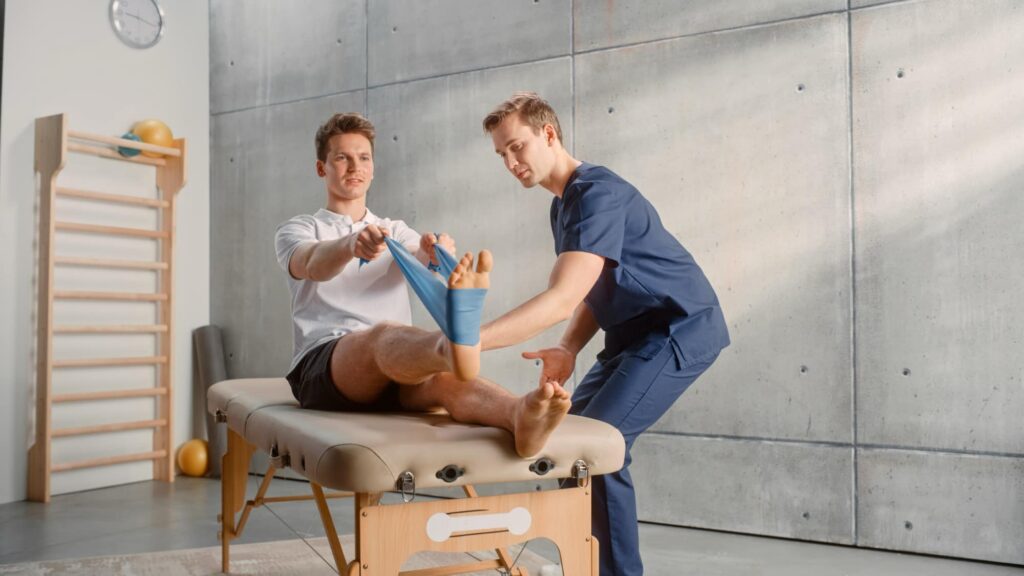
Progressive Tendon Loading Rehab
Isometric and heavy slow calf raises, eccentric work for mid-portion cases, and hopping drills before you return to running. Clinical practice guidelines recommend tendon loading as a primary treatment for Achilles tendinopathy.
Best for: Every patient, matched to mid-portion or insertional type
 Non-invasive
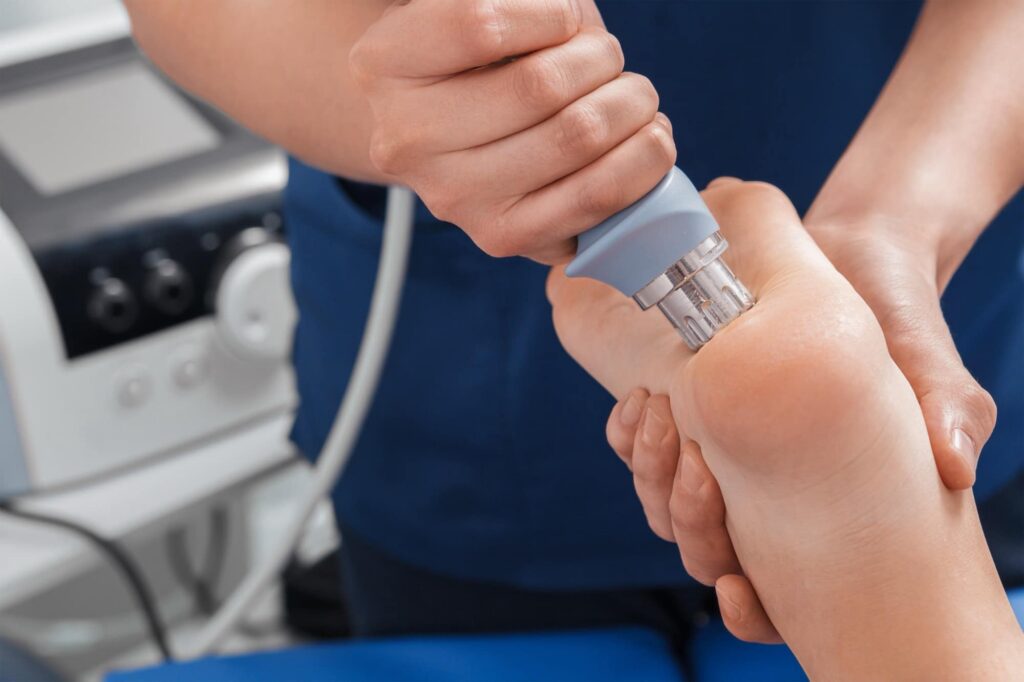
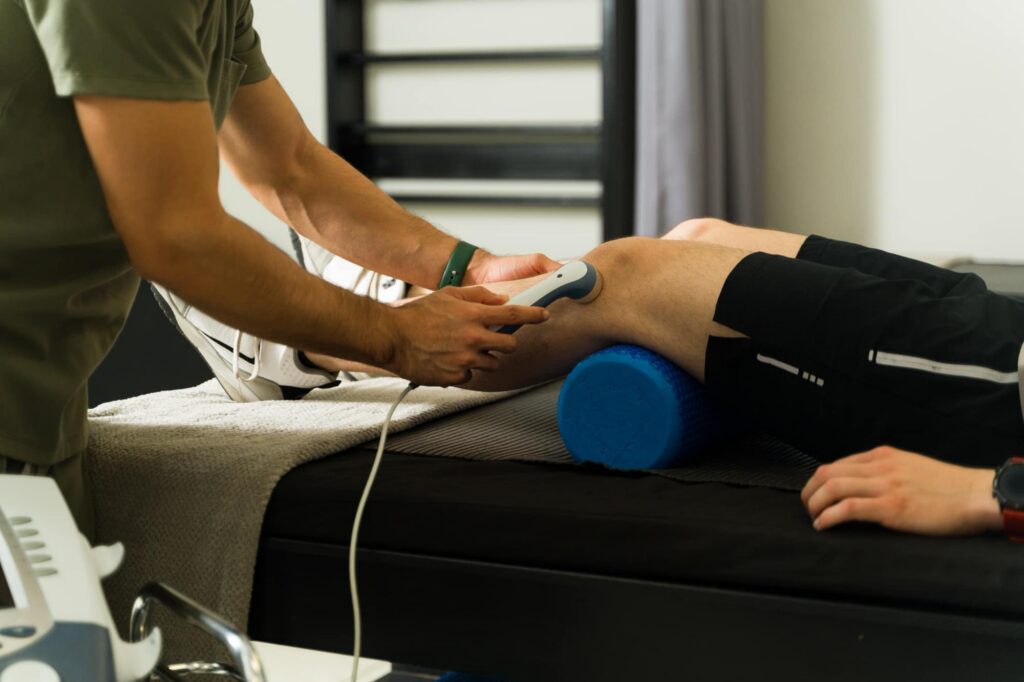
Focused Shockwave Therapy (Wolf Piezowave)
Focused shockwave can be combined with your loading program. In one trial, adding shockwave to eccentric exercise improved outcomes at four months compared with exercise alone.
Best for: Tendons that plateau with exercise alone
 Minimally invasive
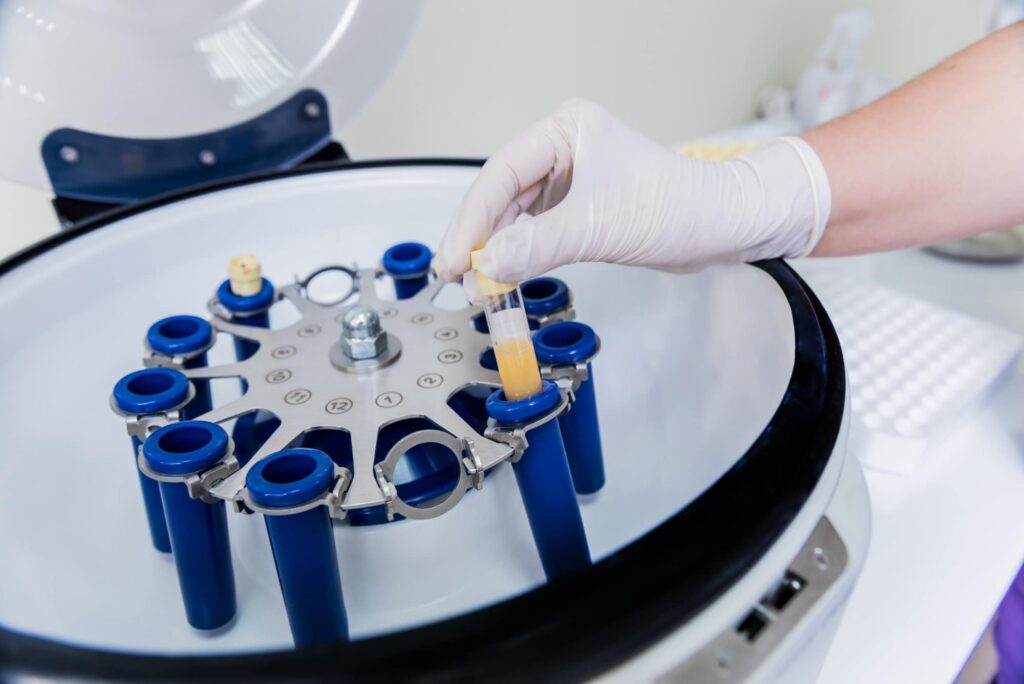
Percutaneous Needle Tenotomy (Tenex, TendoNova)
Ultrasound-guided percutaneous tenotomy removes degenerated tendon tissue through a tiny incision under local anesthetic, offering an alternative to open surgery for chronic cases.
Best for: Chronic tendinopathy after months of good rehab
 Regenerative
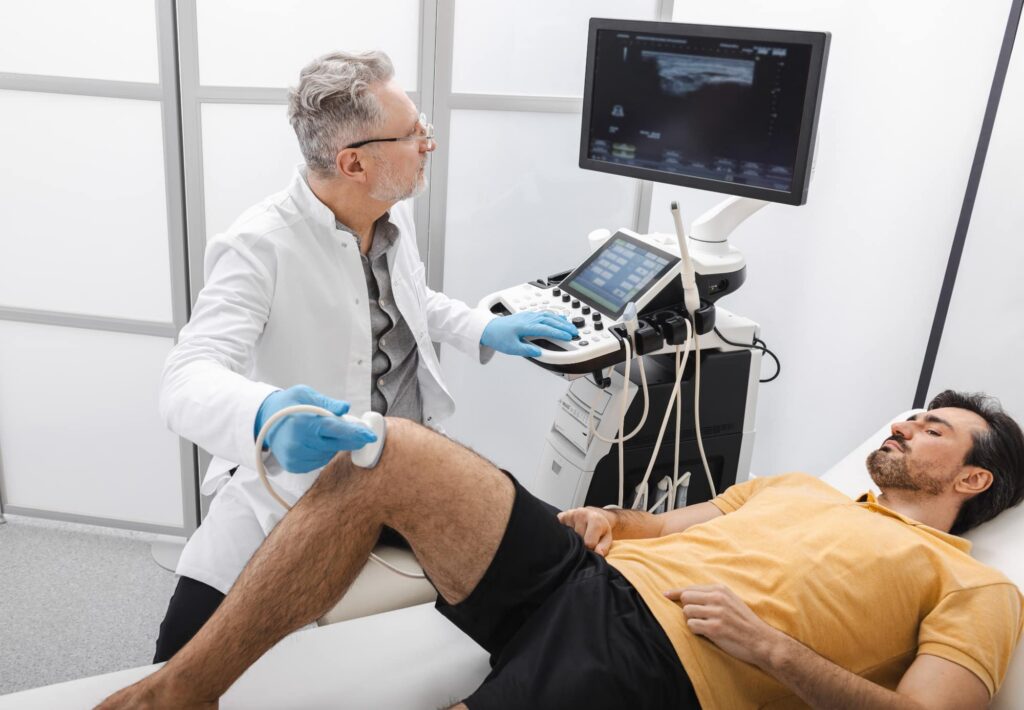
Biologics: PRP, BMAC & MFAT
PRP or other orthobiologics may be considered for stubborn cases. Research on PRP for the Achilles is mixed, so we use it selectively and always alongside loading.
Best for: Partial tears or chronic cases not responding to rehab
 Precision
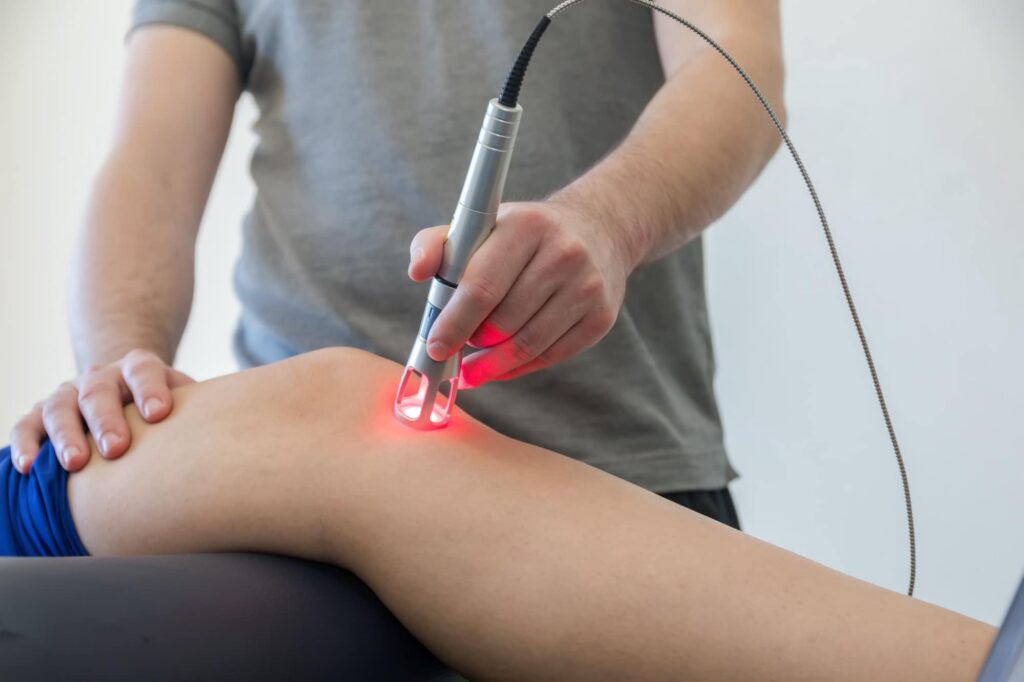
Ultrasound-Guided Diagnosis & Procedures
Ultrasound distinguishes mid-portion from insertional disease, checks for partial tears and bursitis, and guides any procedure precisely.
Best for: Every patient, from first visit to follow-up
 Adjunct
MLS Laser Therapy
MLS laser therapy may help settle pain so you can keep progressing your loading program.
Best for: Calming flare-ups during rehab
Training for a race or a big season? Tell us your goals and we’ll build the plan around them.
Find my best option07 · Recovery
Your Achilles recovery roadmap
Achilles tendons adapt slowly, so recovery is measured in weeks and months. The good news: most people can stay active the whole way through.
- Phase 1
Calm & protect
Weeks 0–2Reduce aggravating running and jumping, use isometric calf holds and keep walking within comfortable limits.
- Phase 2
Build calf strength
Weeks 2–8Progressive heavy calf raises, seated and standing, with pain guidelines that tell you when to progress.
- Phase 3
Restore spring
Weeks 8–12Hopping, skipping and a graded return to running and hills. Advanced options are added if progress stalls.
- Phase 4
Return & resilience
3–6 months +Full return to sport with smarter training load and a maintenance calf routine.
Timelines are typical ranges, not guarantees. Insertional and long-standing cases often take longer, and pain can last beyond three months even with early treatment.
What you can do right now
- Cut back on running volume and hills, but don’t stop moving entirely
- Use a pain-monitoring approach: mild discomfort that settles by the next morning is generally okay
- If pain is right at the heel bone, avoid dropping your heel below a step
- Try a small heel lift in your shoes for a few weeks if it eases pain
- Make footwear and training-surface changes gradually
- Avoid cortisone injections into the tendon, which raise the risk of rupture
Get checked promptly if you notice
- A sudden pop or the feeling of being kicked in the back of the leg
- Inability to push off, walk normally or rise onto your toes
- Sudden swelling and bruising around the ankle
- Calf pain with swelling, warmth or redness (possible blood clot)
- Heel pain with fever, or numbness in the foot
08 · Your physician
Expert tendon care in South Jordan
Meet the physician
Robert Engelen, DO
Physical Medicine & Rehabilitation · Sports Medicine
Dr. Engelen leads every treatment plan at Utah Tendon Institute. After nearly a decade as a non-operative sports medicine physician, he focuses on finding why a tendon keeps failing and fixing that cause, with imaging, targeted procedures and structured rehab.
- Residency in Physical Medicine & Rehabilitation, University of Utah
- Doctor of Osteopathic Medicine, Kansas City University
- Former U.S. Navy medical officer, 1st Battalion, 6th Marines
- Team physician experience with the Utah Royals and Real Salt Lake
Serving the Salt Lake Valley
Utah Tendon Institute913 Baxter Dr., Suite 100
South Jordan, UT 84095385-419-0692
Patients visit us for Achilles tendinopathy care from:
- South Jordan
- Salt Lake City
- Sandy
- Draper
- Riverton
- Herriman
- West Jordan
- Murray
- Midvale
09 · FAQs
Achilles Tendinopathy FAQs
Straight answers to the questions we hear most. Still unsure? Ask us directly.
What’s the difference between insertional and mid-portion Achilles tendinopathy?
Location and treatment. Mid-portion tendinopathy affects the middle of the tendon, a few centimeters above the heel, and is common in runners. Insertional tendinopathy affects the spot where the tendon attaches to the heel bone and often involves a bone spur. Some exercises that help mid-portion cases, such as heel drops off a step, can aggravate insertional pain, so the diagnosis shapes your whole plan.
Should I stop running with Achilles tendinopathy?
Not necessarily. A randomized trial found that people who kept running and jumping within a pain-monitoring model recovered as well as those who rested from those activities. We’ll set clear guidelines for how much you can run while the tendon rebuilds.
Are cortisone shots safe for the Achilles tendon?
Cortisone injections into the Achilles tendon are generally not recommended because they may increase the risk of rupture, according to the American Academy of Orthopaedic Surgeons. We focus on treatments that strengthen the tendon instead.
How long does Achilles tendinopathy take to heal?
Most people need at least three months of consistent loading, and insertional or long-standing cases can take six months or more. Surgery is generally considered only after six months of good non-surgical treatment hasn’t worked.
Does shockwave therapy work for Achilles tendinopathy?
It can help, especially combined with exercise. In a randomized trial, 82% of patients who received eccentric loading plus shockwave reported being recovered or much improved at four months, compared with 56% with loading alone.
When is Achilles pain an emergency?
A sudden pop, the feeling of being kicked in the back of the leg, or being unable to push off or walk normally can signal a rupture. Seek care right away. Calf pain with swelling, warmth or redness also needs prompt evaluation to rule out a blood clot.
Do you treat Achilles tendinopathy near Salt Lake City?
Yes. Utah Tendon Institute is at 913 Baxter Dr., Suite 100 in South Jordan, serving Salt Lake City, Sandy, Draper, Riverton, Herriman, West Jordan, Murray and Midvale. Call 385-419-0692 or request an evaluation online.
10 · Get started
Schedule an Achilles evaluation
Stiff, sore Achilles every morning? Get a precise diagnosis and a plan that keeps you moving, before a nagging tendon turns into a lost season.
- 1A real diagnosis History, hands-on exam and musculoskeletal ultrasound of the painful tendon.
- 2The why behind the pain We look at load, strength and movement patterns that keep irritating the tissue.
- 3A clear, staged plan You leave knowing your options, your timeline and what to do next.
Prefer to talk? 385-419-0692
Request your evaluation
Tell us where it hurts and how we can reach you. Our team will follow up to schedule.
Your information stays private and is only used to contact you.
More conditions
Other tendon conditions we treat
Tendon pain rarely lives in just one place. Explore the other conditions our South Jordan team evaluates and treats every week.
 Tennis Elbow
- Golfer’s Elbow
 Rotator Cuff Tendinopathy
 Plantar Fasciitis
 Patellar Tendinopathy
 Hamstring Tendinopathy
- Gluteal Tendinopathy
- Not sure what’s causing your pain?Get a precise diagnosis
Sources & further reading
- American Academy of Orthopaedic Surgeons (OrthoInfo). Achilles Tendinitis.
- Martin RL, et al. Achilles Pain, Stiffness, and Muscle Power Deficits: Midportion Achilles Tendinopathy Revision 2018. J Orthop Sports Phys Ther. 2018.
- Silbernagel KG, et al. Current Clinical Concepts: Conservative Management of Achilles Tendinopathy. J Athl Train. 2020.
- Silbernagel KG, et al. Continued sports activity, using a pain-monitoring model, during rehabilitation in patients with Achilles tendinopathy. Am J Sports Med. 2007.
- Beyer R, et al. Heavy Slow Resistance Versus Eccentric Training as Treatment for Achilles Tendinopathy. Am J Sports Med. 2015.
- Alfredson H, et al. Heavy-load eccentric calf muscle training for the treatment of chronic Achilles tendinosis. Am J Sports Med. 1998.
- Rompe JD, et al. Eccentric loading versus eccentric loading plus shock-wave treatment for midportion Achilles tendinopathy. Am J Sports Med. 2009.
- Scott A, et al. ICON 2019: International Scientific Tendinopathy Symposium Consensus: Clinical Terminology. Br J Sports Med. 2020.
This page is for general education and is not a substitute for medical advice. Every tendon problem is different; your diagnosis and treatment plan should come from a qualified clinician who has examined you. Results vary, and no treatment is guaranteed to work for every patient.