
Patellar Tendinopathy Treatment in Salt Lake City & South Jordan
You Don’t Need More Rest. You Need the Right Plan.
Pain just below the kneecap when you jump, land, squat or take the stairs? We confirm the tendon is the problem with ultrasound, then rebuild its strength and spring with a staged, non-surgical plan that keeps you training.
- Non-surgical first
- Ultrasound-guided precision
- Physician-led care
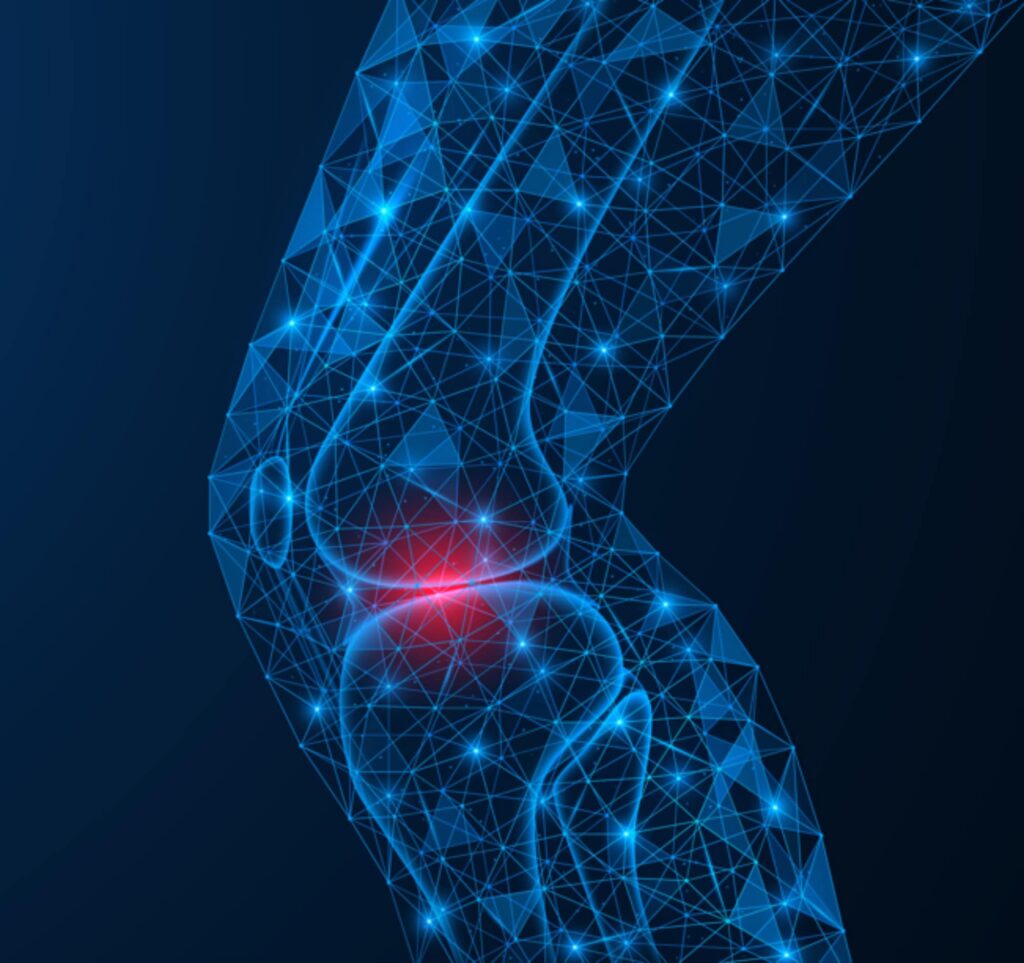
- Diagnosis first Musculoskeletal ultrasound pinpoints the tissue behind your pain.
- Evidence-based Loading, shockwave, biologics and tenotomy, matched to your tendon.
- Physician-led Care directed by sports medicine physician Robert Engelen, DO.
- South Jordan clinic Serving Salt Lake City and the entire Salt Lake Valley.
01 · Overview
What is patellar tendinopathy?

Utah Tendon Institute · Care led by Robert Engelen, DO
Updated November 2026
Patellar tendinopathy, often called jumper’s knee or patellar tendinitis, is an overload condition of the tendon that connects your kneecap to your shinbone. That tendon works with your quadriceps to straighten the knee, absorb landings and power every jump, sprint and squat. When the load on it outpaces its ability to adapt, the tendon, usually right at the bottom edge of the kneecap, becomes painful and less able to store and release energy, as the Cleveland Clinic describes.
It’s especially common in jumping sports. In a study of 613 elite athletes, about 14% had current jumper’s knee, rising to nearly 45% of volleyball players and 32% of basketball players. Here in Utah, we also see it in skiers, trail runners, CrossFit athletes and anyone who does a lot of stairs, squats or downhill work.
Easy to play through, until it isn’t
Patellar tendinopathy often warms up and feels better during activity, then hurts more afterward. That pattern tempts athletes to keep playing, and in the same study, symptoms had lasted nearly three years on average. Catching it early and managing load well makes a big difference.
Pain around or behind the kneecap can come from other sources, such as patellofemoral pain, cartilage problems or arthritis, and our sister practice treats other causes of knee pain. Jumping athletes also commonly deal with Achilles tendinopathy.
02 · Symptoms
Patellar tendinopathy symptoms
Jumper’s knee pain is usually easy to point to with one finger, right below the kneecap. These are the patterns we see most.
- 01
Pain just below the kneecap
A sharp or aching spot at the bottom edge of the kneecap that’s tender to the touch.
- 02
Pain with jumping and landing
Takeoffs, landings and quick stops send pain into the front of the knee.
- 03
Pain with stairs and squats
Going down stairs, squatting, lunging or kneeling is uncomfortable.
- 04
A warm-up pattern
Pain may ease once you’re warmed up, then return stronger after activity or the next morning.
- 05
Stiffness after activity
The knee feels stiff and sore when you cool down or first get up in the morning.
- 06
Less power
Jumping, sprinting and explosive lifts feel weaker or more hesitant.
Not all front-of-knee pain is jumper’s knee
Patellofemoral pain, fat pad irritation, cartilage injury, Osgood-Schlatter disease in teens and partial tendon tears can all cause pain around the kneecap. Ultrasound helps confirm whether the patellar tendon is the problem and how much of it is affected.
03 · Causes & risk factors
What causes patellar tendinopathy?
The patellar tendon is built to store and release energy, like a spring. Repeated jumping, landing and changing direction load it heavily. When training volume or intensity climbs faster than the tendon can adapt, or recovery between sessions is too short, the tendon becomes painful and loses capacity.
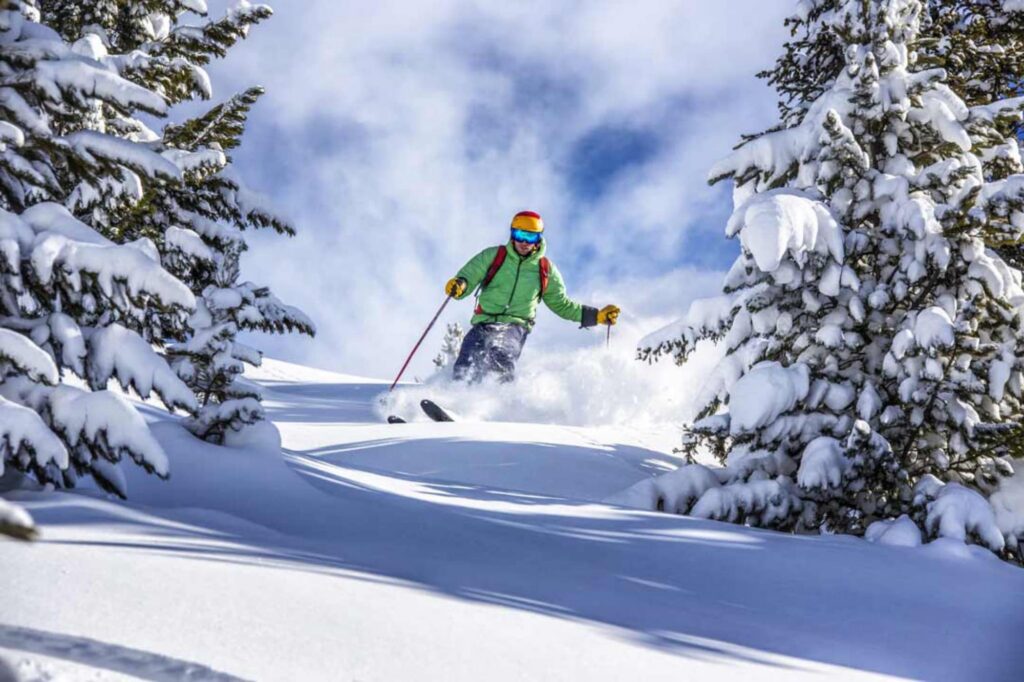
Classic triggers include preseason ramp-ups, tournament weekends, a new plyometric or CrossFit program, more time on hard courts, or a ski season heavy on moguls and steeps. Quad and hip strength, landing mechanics and ankle mobility all influence how much load reaches the tendon.
Common risk factors
- Jumping and landing sports such as volleyball, basketball and track and field
- Sudden increases in training volume, plyometrics or game time
- Too little recovery between hard sessions
- Hard playing surfaces and frequent stops and cuts
- Weak quads, hips or calves, and stiff landing mechanics
- Being male or a high-volume athlete, both linked to higher rates
Who we see for patellar tendinopathy
- Volleyball players
- Basketball players
- Skiers & snowboarders
- Runners
- Track & field athletes
- Soccer players
- CrossFit athletes
- Olympic lifters
- Pickleball players
- Dancers
Many jumpers keep playing through knee pain for months. Earlier, smarter load management usually means less time away from your sport.
04 · Why it lingers
Why jumper’s knee keeps coming back
Rest lets the pain settle, but the tendon’s spring and strength fade along with it. Returning to full jumping on a deconditioned tendon is the most common reason symptoms come right back.
| Topic | The usual cycle | Utah Tendon Institute plan |
|---|---|---|
| Diagnosis | Generic “knee pain”; the tendon is never imaged | Ultrasound confirms tendon involvement, thickness and partial tears |
| Pain relief | Cortisone injections and complete rest | Isometric holds and load changes that ease pain while you train |
| The tendon itself | Stretching and light band work | Heavy slow resistance that rebuilds tendon capacity |
| Root cause | Landing mechanics and training load overlooked | Jump volume, landing pattern, hip and calf strength assessed |
| Stubborn cases | Surgery as the next option | Shockwave, biologics or tenotomy added to your program |
Heavy slow resistance training produced good short- and long-term results in patellar tendinopathy, while cortisone gave good short-term but poor long-term results.
Kongsgaard et al., Scand J Med Sci Sports 2009 · View studyIsometric (static hold) quad exercise produced immediate pain relief in athletes with patellar tendinopathy, a useful tool for managing pain in season.
Rio et al., Br J Sports Med 2015 · View studyThinking about a cortisone shot for your knee? Read why Dr. Engelen avoids them for tendon pain in his Tendon Journal article.
05 · Our approach
Our 4-step plan for jumper’s knee
Our clinical algorithm, built to restore both strength and spring in the tendon you jump, land and ski on.
- 1
Accurate diagnosis
Ultrasound shows tendon thickening, blood-flow changes and partial tears, and helps rule out patellofemoral pain, fat pad irritation and cartilage problems.
Visit one - 2
Load & movement analysis
We assess quad, hip and calf strength, single-leg control and landing mechanics, and review your jump volume and training schedule.
Find the why - 3
Targeted treatment plan
Isometrics for pain relief, then heavy slow resistance, then energy-storage drills like hops and jumps before a full return to sport.
Staged & specific - 4
Regenerative + rehab integration
If the tendon stalls, shockwave, PRP or percutaneous tenotomy is layered onto your strength program.
Prevent recurrence
06 · Treatment options
Patellar tendinopathy treatment options
Progressive loading is the backbone of jumper’s knee treatment. Advanced therapies help tendons that have stalled, always paired with continued strength work.
 Foundation
Progressive Tendon Loading Rehab
Isometric holds for pain relief, heavy slow resistance such as slow leg presses and split squats, then progressive jumping and landing drills. Staged loading and smart load management are the cornerstones of care.
Best for: Every athlete, as the foundation of care
 Non-invasive
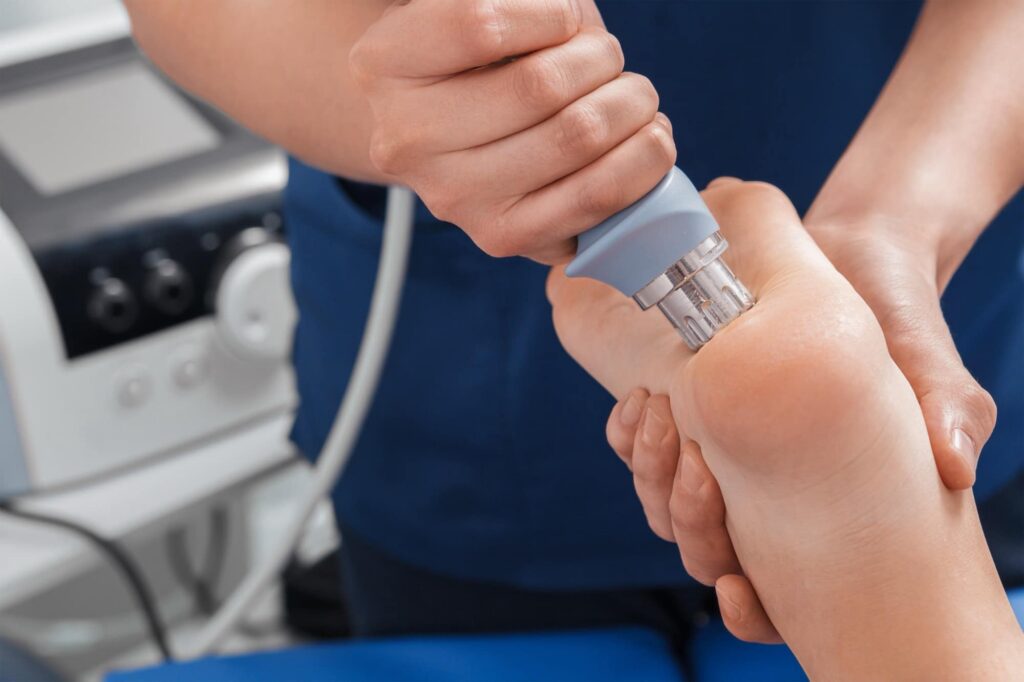
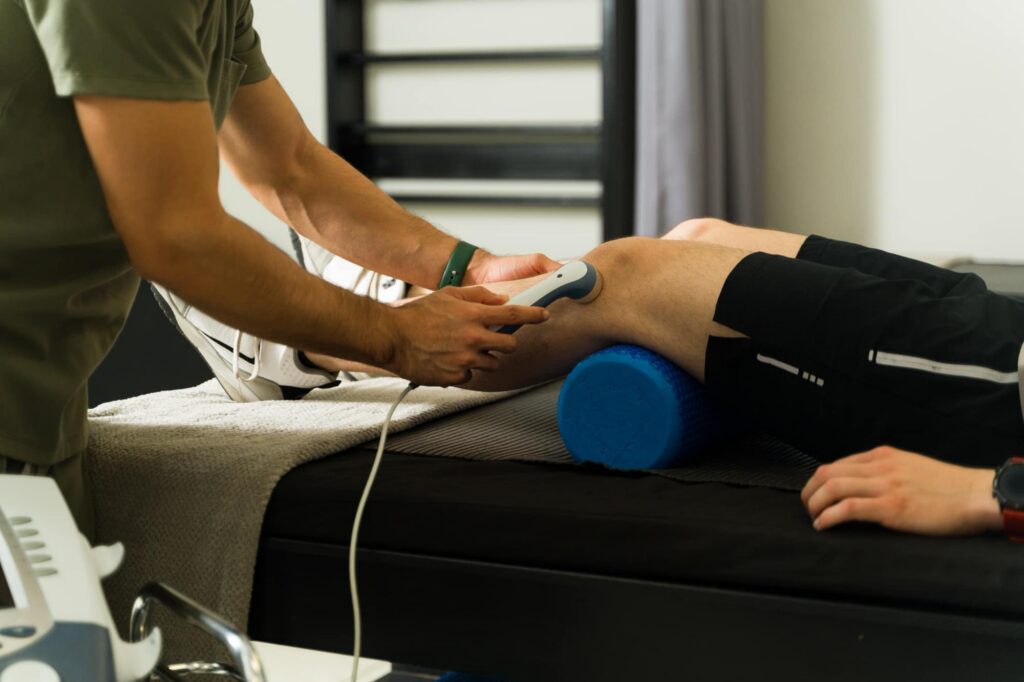
Focused Shockwave Therapy (Wolf Piezowave)
Focused shockwave can help some stubborn cases, but research in patellar tendinopathy is mixed, so we use it alongside loading rather than instead of it.
Best for: Chronic cases that plateau with strength work
 Minimally invasive
Percutaneous Needle Tenotomy (Tenex, TendoNova)
Ultrasound-guided percutaneous tenotomy can remove degenerated tissue in the tendon through a tiny incision under local anesthetic, as an alternative to open surgery.
Best for: Long-standing pain with clear degeneration on ultrasound
 Regenerative
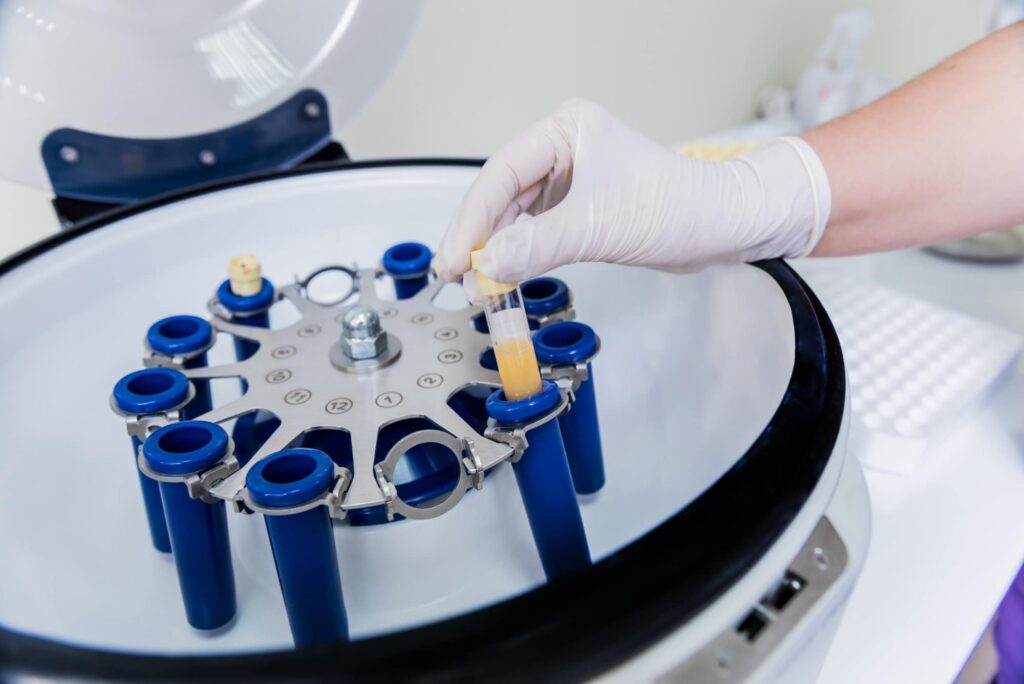
Biologics: PRP, BMAC & MFAT
PRP or other orthobiologics may be considered for stubborn tendons or partial tears. Evidence is mixed, so we use them selectively and always alongside loading.
Best for: Partial tears or tendons not responding to rehab
 Precision
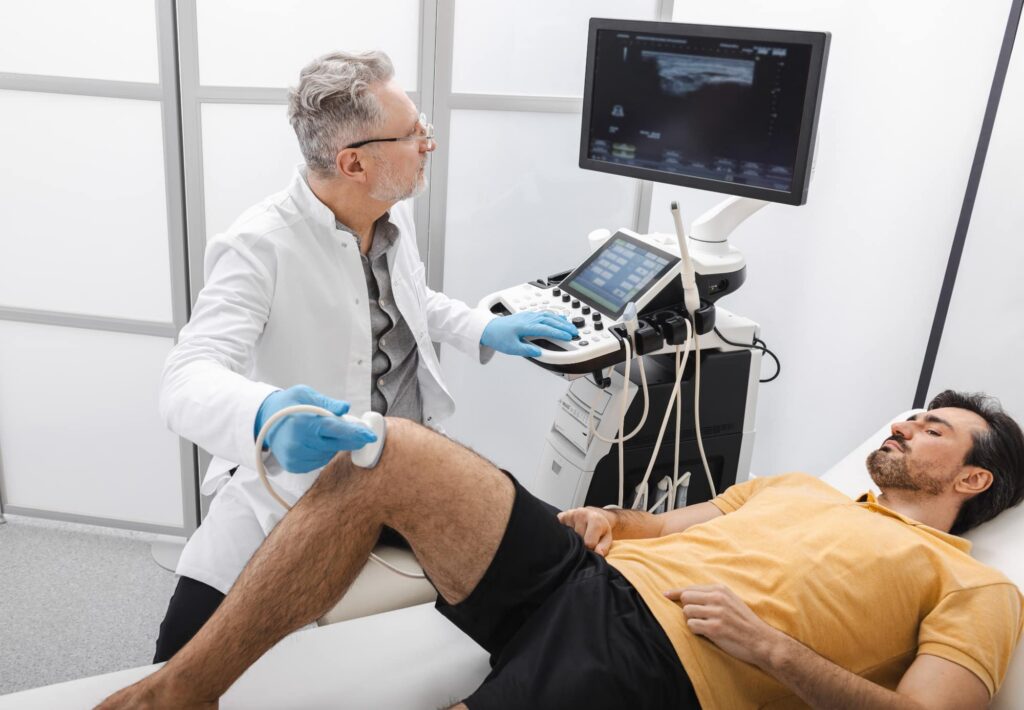
Ultrasound-Guided Diagnosis & Procedures
Ultrasound shows exactly where and how much of the tendon is affected, tracks changes over time and guides any procedure precisely.
Best for: Every patient, from first visit to return to play
 Adjunct
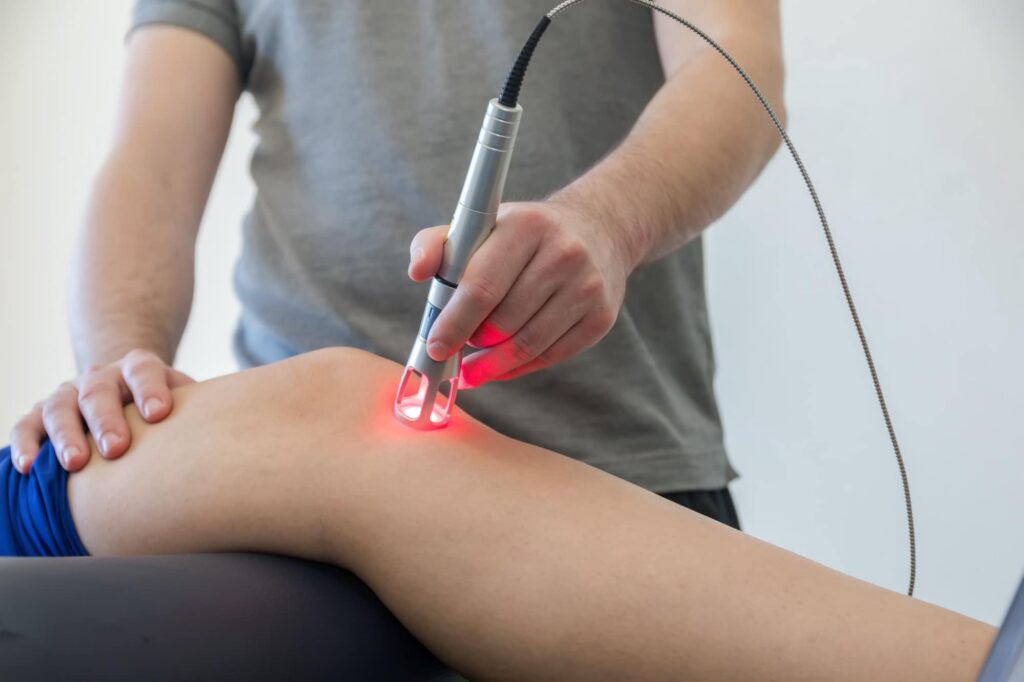
MLS Laser Therapy
MLS laser therapy may help settle pain so you can keep up your strength program during the season.
Best for: Managing pain during a competitive season
In season and can’t take time off? We’ll build a plan that manages pain while you keep competing.
Find my best option07 · Recovery
Your jumper’s knee recovery roadmap
Patellar tendons respond slowly but reliably to the right progression. Our goal is to keep you training in some form the whole way through.
- Phase 1
Settle pain
Weeks 0–2Isometric quad holds, reduced jumping volume and modified training to calm the tendon.
- Phase 2
Build strength
Weeks 2–8Heavy slow resistance with slow leg presses, split squats and similar lifts, progressing load week by week.
- Phase 3
Restore spring
Weeks 8–12Progressive hops, jumps and landing drills that retrain the tendon’s energy storage. Advanced options are added if needed.
- Phase 4
Return to play
3 months +Sport-specific drills and a full return, with a maintenance plan for in-season and off-season.
Timelines are typical ranges, not guarantees. Long-standing tendinopathy and in-season demands can extend recovery.
What you can do right now
- Reduce jumping and sprint volume, but keep training other qualities
- Try pain-relieving isometric holds, such as a wall sit, a few times a day
- Avoid deep, painful squats and kneeling while the tendon is irritable
- Add recovery days between hard jumping or skiing sessions
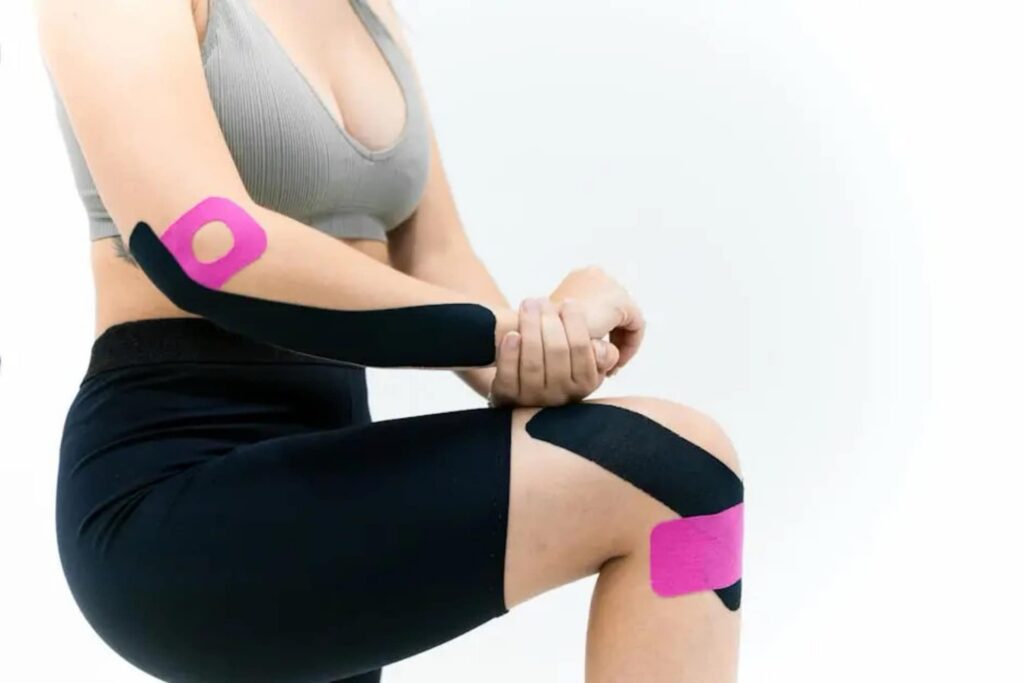
- Use a patellar strap if it helps during activity, but don’t rely on it alone
- Skip cortisone shots, which have shown poor long-term results
Get checked promptly if you notice
- A pop or sudden sharp pain below the kneecap, especially if you can’t straighten your leg
- Major swelling, locking or the knee giving way
- Pain after a fall or a direct blow to the kneecap
- Fever, redness or a hot, swollen knee
- Pain that wakes you at night or keeps getting worse
08 · Your physician
Expert tendon care in South Jordan
Meet the physician
Robert Engelen, DO
Physical Medicine & Rehabilitation · Sports Medicine
Dr. Engelen leads every treatment plan at Utah Tendon Institute. After nearly a decade as a non-operative sports medicine physician, he focuses on finding why a tendon keeps failing and fixing that cause, with imaging, targeted procedures and structured rehab.
- Residency in Physical Medicine & Rehabilitation, University of Utah
- Doctor of Osteopathic Medicine, Kansas City University
- Former U.S. Navy medical officer, 1st Battalion, 6th Marines
- Team physician experience with the Utah Royals and Real Salt Lake
Serving the Salt Lake Valley
Utah Tendon Institute913 Baxter Dr., Suite 100
South Jordan, UT 84095385-419-0692
Patients visit us for patellar tendinopathy care from:
- South Jordan
- Salt Lake City
- Sandy
- Draper
- Riverton
- Herriman
- West Jordan
- Murray
- Midvale
09 · FAQs
Patellar Tendinopathy FAQs
Straight answers to the questions we hear most. Still unsure? Ask us directly.
What is jumper’s knee?
Jumper’s knee is the common name for patellar tendinopathy, an overload condition of the tendon just below the kneecap. It’s especially common in volleyball, basketball and other jumping sports, but runners, skiers and lifters get it too.
Can I keep playing with patellar tendinopathy?
Often, yes, with smart load management. Many athletes can keep training or competing at a reduced volume while they strengthen the tendon. We’ll help you decide what to keep, what to modify and how to tell when you’re doing too much.
Why does my knee hurt on stairs and squats?
Going down stairs and squatting put high load on the patellar tendon as it controls your body weight. A painful tendon is less able to handle that load, so these movements are often the first to hurt and the last to feel normal.
Does a patellar strap help?
A strap can reduce pain during activity for some people, but it doesn’t rebuild the tendon. Use it as a short-term tool while you follow a progressive strength program.
What exercises help jumper’s knee?
Programs usually start with isometric holds, which can ease tendon pain right away, then progress to heavy slow resistance exercise, which showed lasting results in a randomized trial, and finally jumping and landing drills. The key is gradual progression matched to your symptoms.
Do cortisone shots help patellar tendinopathy?
They may ease pain briefly, but in a randomized trial cortisone had good short-term and poor long-term results, while heavy slow resistance training produced lasting improvement. We focus on rebuilding the tendon.
Do you treat jumper’s knee near Salt Lake City?
Yes. Utah Tendon Institute is at 913 Baxter Dr., Suite 100 in South Jordan, serving Salt Lake City, Sandy, Draper, Riverton, Herriman, West Jordan, Murray and Midvale. Call 385-419-0692 or request an evaluation online.
10 · Get started
Schedule a knee evaluation
Knee pain holding back your jumping, skiing or squats? Get a precise diagnosis and a plan that keeps you in the game while your tendon gets stronger.
- 1A real diagnosis History, hands-on exam and musculoskeletal ultrasound of the painful tendon.
- 2The why behind the pain We look at load, strength and movement patterns that keep irritating the tissue.
- 3A clear, staged plan You leave knowing your options, your timeline and what to do next.
Prefer to talk? 385-419-0692
Request your evaluation
Tell us where it hurts and how we can reach you. Our team will follow up to schedule.
Your information stays private and is only used to contact you.
More conditions
Other tendon conditions we treat
Tendon pain rarely lives in just one place. Explore the other conditions our South Jordan team evaluates and treats every week.
 Tennis Elbow
- Golfer’s Elbow
 Rotator Cuff Tendinopathy
 Achilles Tendinopathy
 Plantar Fasciitis
 Hamstring Tendinopathy
- Gluteal Tendinopathy
- Not sure what’s causing your pain?Get a precise diagnosis
Sources & further reading
- Cleveland Clinic. Patellar Tendonitis (Jumper’s Knee).
- Malliaras P, et al. Patellar Tendinopathy: Clinical Diagnosis, Load Management, and Advice for Challenging Case Presentations. J Orthop Sports Phys Ther. 2015.
- Kongsgaard M, et al. Corticosteroid injections, eccentric decline squat training and heavy slow resistance training in patellar tendinopathy. Scand J Med Sci Sports. 2009.
- Rio E, et al. Isometric exercise induces analgesia and reduces inhibition in patellar tendinopathy. Br J Sports Med. 2015.
- Lian OB, et al. Prevalence of jumper’s knee among elite athletes from different sports. Am J Sports Med. 2005.
- Scott A, et al. ICON 2019: International Scientific Tendinopathy Symposium Consensus: Clinical Terminology. Br J Sports Med. 2020.
This page is for general education and is not a substitute for medical advice. Every tendon problem is different; your diagnosis and treatment plan should come from a qualified clinician who has examined you. Results vary, and no treatment is guaranteed to work for every patient.