
Gluteal Tendinopathy Treatment in Salt Lake City & South Jordan
You Don’t Need More Rest. You Need the Right Plan.
Pain on the outside of your hip that wakes you at night or flares on stairs? Often labeled “bursitis,” it’s usually the gluteal tendons. We confirm the cause with ultrasound and treat it with a proven, non-surgical plan.
- Non-surgical first
- Ultrasound-guided precision
- Physician-led care
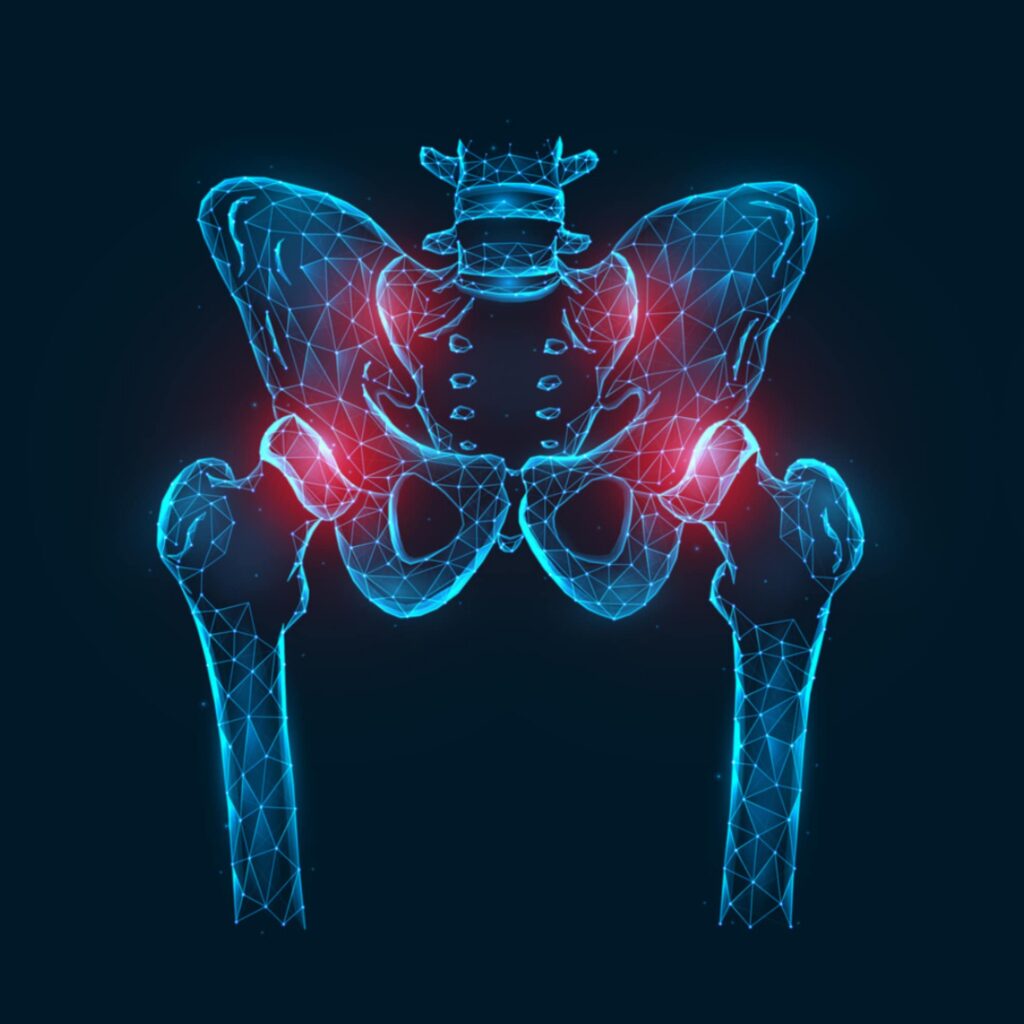
- Diagnosis first Musculoskeletal ultrasound pinpoints the tissue behind your pain.
- Evidence-based Loading, shockwave, biologics and tenotomy, matched to your tendon.
- Physician-led Care directed by sports medicine physician Robert Engelen, DO.
- South Jordan clinic Serving Salt Lake City and the entire Salt Lake Valley.
01 · Overview
What is gluteal tendinopathy?

Utah Tendon Institute · Care led by Robert Engelen, DO
Updated November 2026
Gluteal tendinopathy is one of the most common causes of pain on the outside of the hip. It affects the tendons of the gluteus medius and gluteus minimus, the muscles that keep your pelvis level when you walk, climb stairs or stand on one leg, where they attach to the bony point on the side of your hip called the greater trochanter. As the Cleveland Clinic explains, the tendons break down and become painful when they’re overloaded.
For years this pain was usually called trochanteric bursitis, or hip bursitis, and treated with rest and cortisone shots. Research now recognizes the gluteal tendons as a primary source of lateral hip pain, with the bursa often irritated alongside them. The umbrella term today is greater trochanteric pain syndrome (GTPS), and gluteal tendinopathy is a leading driver of it.
Who gets it
Gluteal tendinopathy is most common in mid-life and affects women more often than men, particularly around and after menopause. It also shows up in runners, hikers, skiers and dancers, and in anyone who has recently ramped up walking or stair climbing. It often disrupts sleep, because lying on the painful side compresses the tendons.
Outer hip pain can also come from the lower back or the hip joint itself. If your pain is deep in the buttock at the sit bone, read about hamstring tendinopathy. Our sister practice also treats other causes of hip pain.
02 · Symptoms
Gluteal tendinopathy symptoms
Gluteal tendinopathy has a recognizable pattern: outer hip pain that flares with side-lying, stairs and single-leg tasks. Here’s what we see most.
- 01
Pain on the outside of the hip
An ache over the bony point on the side of the hip that’s tender to the touch.
- 02
Pain lying on your side
Sleeping on the painful side, and sometimes the other side too, wakes you up.
- 03
Pain on stairs and hills
Climbing stairs, walking uphill and getting in and out of the car are uncomfortable.
- 04
Pain standing on one leg
Putting on pants, balancing on one leg or carrying a child on your hip triggers pain.
- 05
Pain after crossing your legs
Crossing your legs or sitting in low chairs makes the hip ache.
- 06
Pain down the outer thigh
Discomfort can travel down the outside of the thigh toward the knee.
Is it the hip joint, the back or the tendons?
Hip arthritis, pain referred from the lower back and IT band problems can all cause pain on the outside of the hip. Our exam and ultrasound pinpoint whether the gluteal tendons are the source, and whether there’s a tear.
03 · Causes & risk factors
What causes gluteal tendinopathy?
Gluteal tendinopathy develops from a combination of load and compression. The gluteal tendons work hard every time you stand on one leg, and they get squeezed against the greater trochanter whenever your hip drifts inward, such as when you cross your legs, hang on one hip or lie on your side. Researchers believe that mix of compression and high tension is especially damaging to these tendons.
Common triggers include a jump in walking, hiking or running, a new stair-heavy routine, a trip with lots of standing, or months of sleeping on one side. Hormonal changes around menopause, weak hip muscles and the shape of your hip and pelvis may also contribute.
Common risk factors
- Being a woman in mid-life, especially around and after menopause
- Sudden increases in walking, hiking, running or stair climbing
- Habits that let the hip drop inward, like crossing your legs or hanging on one hip
- Side sleeping, especially on a firm mattress
- Weak glutes and reduced single-leg control
- Low back pain or hip arthritis, which change how the hip is loaded
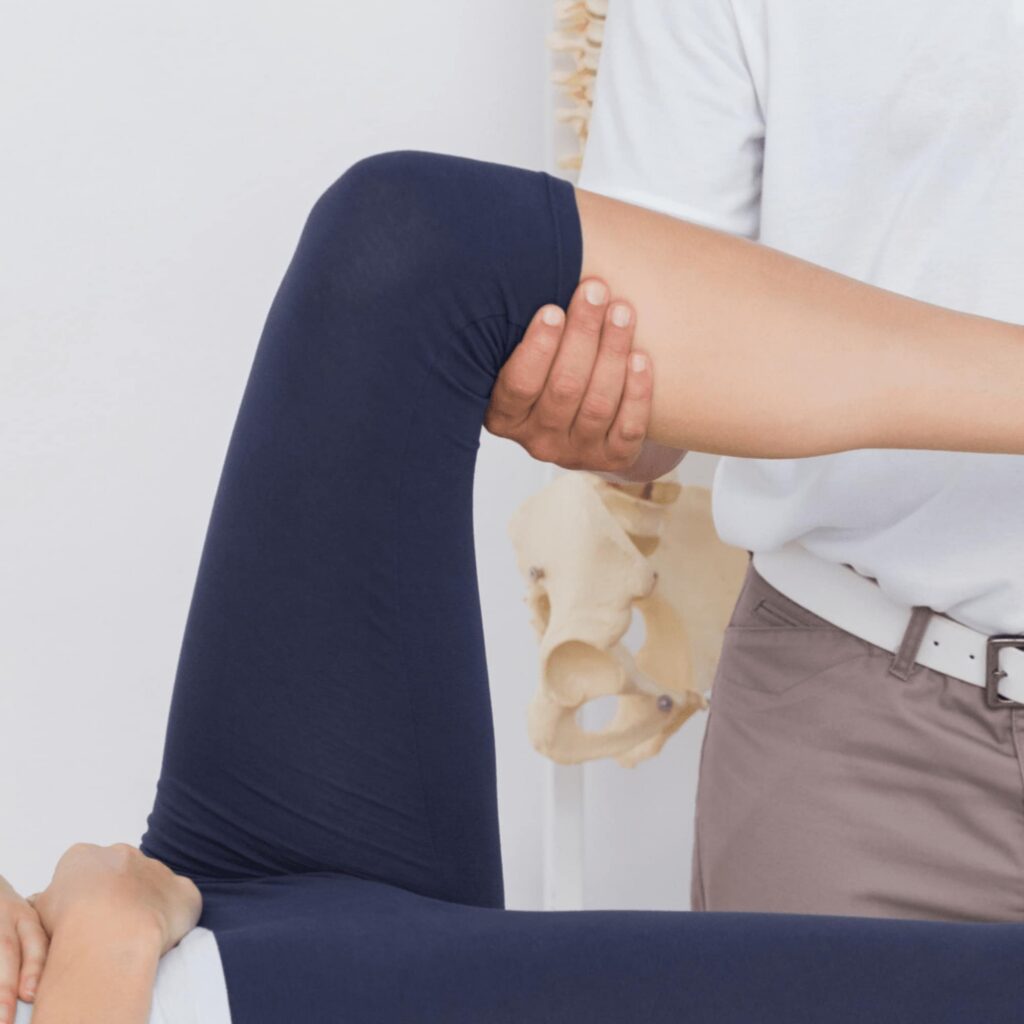
Who we see for gluteal tendinopathy
- Women 40+
- Runners
- Hikers
- Skiers
- Pickleball players
- Dancers
- Mountain bikers
- Teachers & nurses
- Retail workers
- New walkers
Many patients have been told they have “bursitis” and have had one or more cortisone shots before they see us. The tendons usually need a different plan.
04 · Why it lingers
Why “hip bursitis” keeps coming back
Cortisone and rest can quiet outer hip pain for a while, but they don’t change how the tendons are loaded. Here’s how our plan targets the real problem.
| Topic | The usual cycle | Utah Tendon Institute plan |
|---|---|---|
| Diagnosis | Labeled bursitis; the tendons are never imaged | Ultrasound of the gluteal tendons, bursa and any tears |
| Pain relief | Repeated cortisone shots into the bursa | Education on positions that compress the tendons, plus targeted relief |
| The tendon itself | Rest, or IT band stretching that adds compression | Progressive hip abductor strengthening |
| Root cause | Sleeping, sitting and standing habits ignored | Daily postures, single-leg control and activity load reviewed |
| Stubborn cases | More injections, or surgery | Shockwave, PRP or tenotomy layered onto rehab |
In a randomized trial of greater trochanteric pain syndrome, shockwave outperformed both cortisone and home training at four months; cortisone’s early advantage faded after the first month.
Rompe et al., AJSM 2009 · View studyA single ultrasound-guided PRP injection improved pain and function more than cortisone in chronic gluteal tendinopathy, with benefits sustained at two years.
Fitzpatrick et al., AJSM 2019 · View studyHad several cortisone shots for hip pain? Read why Dr. Engelen moved away from them in his Tendon Journal article.
05 · Our approach
Our 4-step plan for gluteal tendinopathy
Our clinical algorithm, focused on the tendons that hold your pelvis steady with every step.
- 1
Accurate diagnosis
Ultrasound shows the gluteus medius and minimus tendons, the bursa and any partial tears, while our exam screens the hip joint and lower back.
Visit one - 2
Load & movement analysis
We assess hip strength and single-leg control, and the everyday positions, like sleeping, sitting and standing, that compress the tendons.
Find the why - 3
Targeted treatment plan
Education to reduce compression plus progressive hip strengthening, starting with isometrics and building to single-leg work.
Staged & specific - 4
Regenerative + rehab integration
For stubborn tendons or partial tears, shockwave, PRP or tenotomy is added while your strength program continues.
Prevent recurrence
06 · Treatment options
Gluteal tendinopathy treatment options
Education and targeted exercise are the proven first step for gluteal tendinopathy. For tendons that need more, shockwave and PRP both have encouraging research behind them.
 Foundation
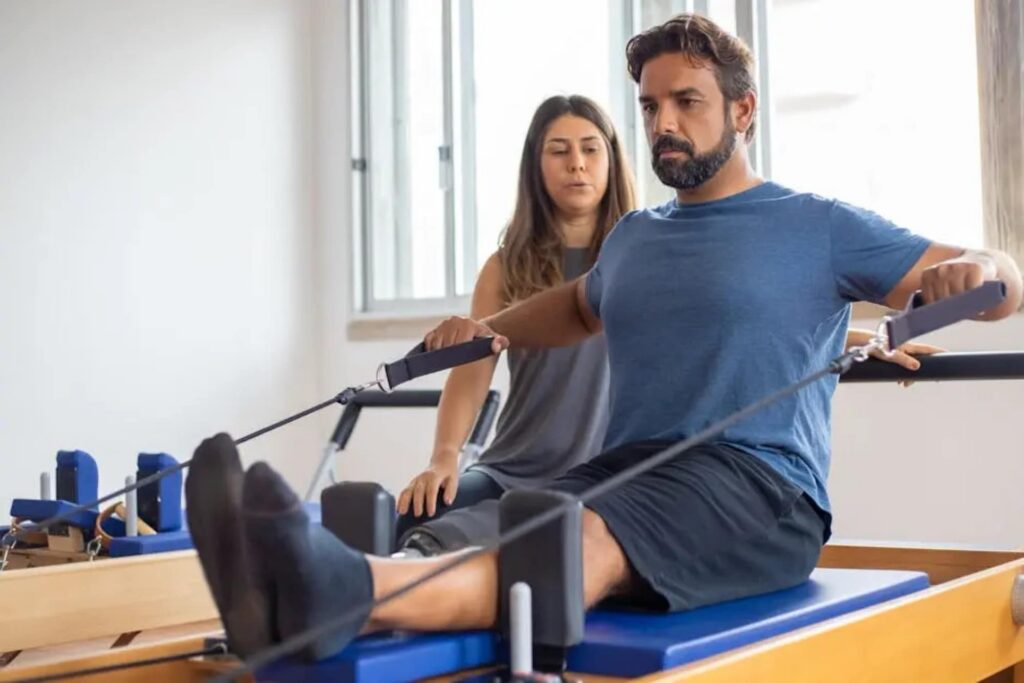
Progressive Tendon Loading Rehab
Education on positions to avoid, isometric hip abduction for pain relief, then progressive glute strengthening and single-leg control. In a randomized trial, this approach beat both cortisone and wait-and-see.
Best for: Every patient, as the foundation of care
 Non-invasive
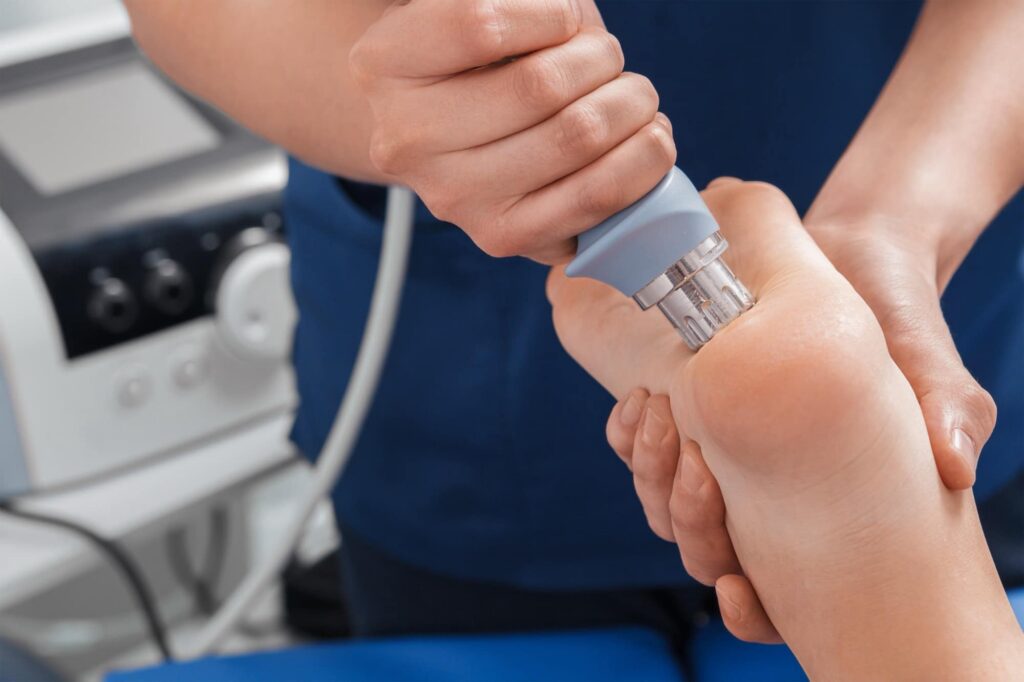
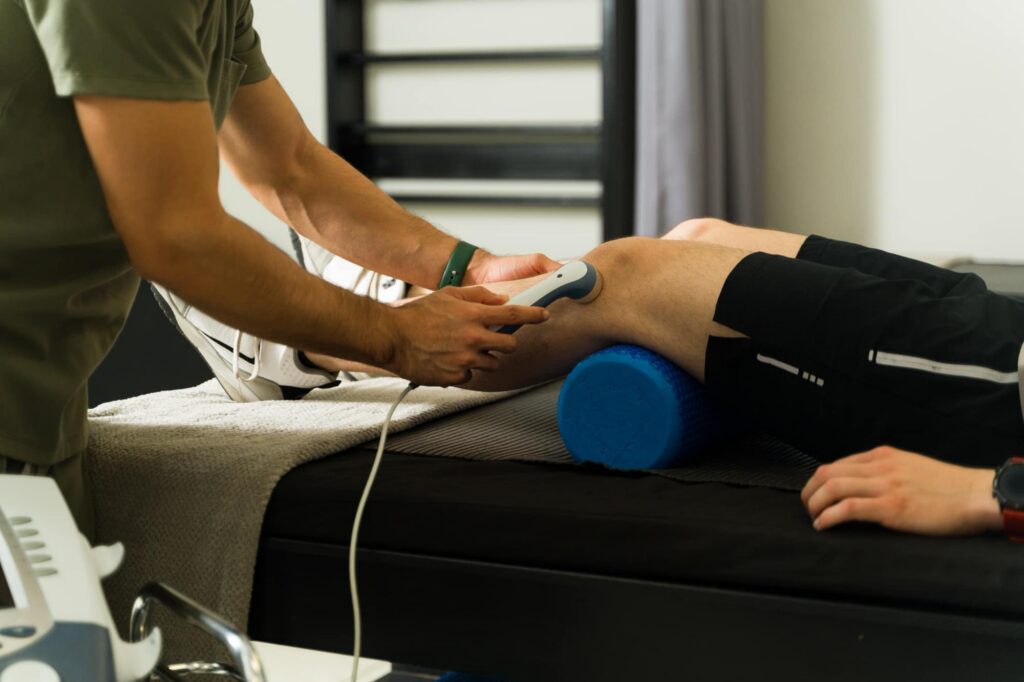
Focused Shockwave Therapy (Wolf Piezowave)
Shockwave can help stubborn lateral hip pain. In a randomized trial, it outperformed both cortisone and home training at four months.
Best for: Persistent pain after several weeks of rehab
 Minimally invasive
Percutaneous Needle Tenotomy (Tenex, TendoNova)
For chronic degeneration, ultrasound-guided percutaneous tenotomy can treat the damaged area of the gluteal tendon through a tiny incision under local anesthetic.
Best for: Long-standing cases with clear findings on ultrasound
 Regenerative
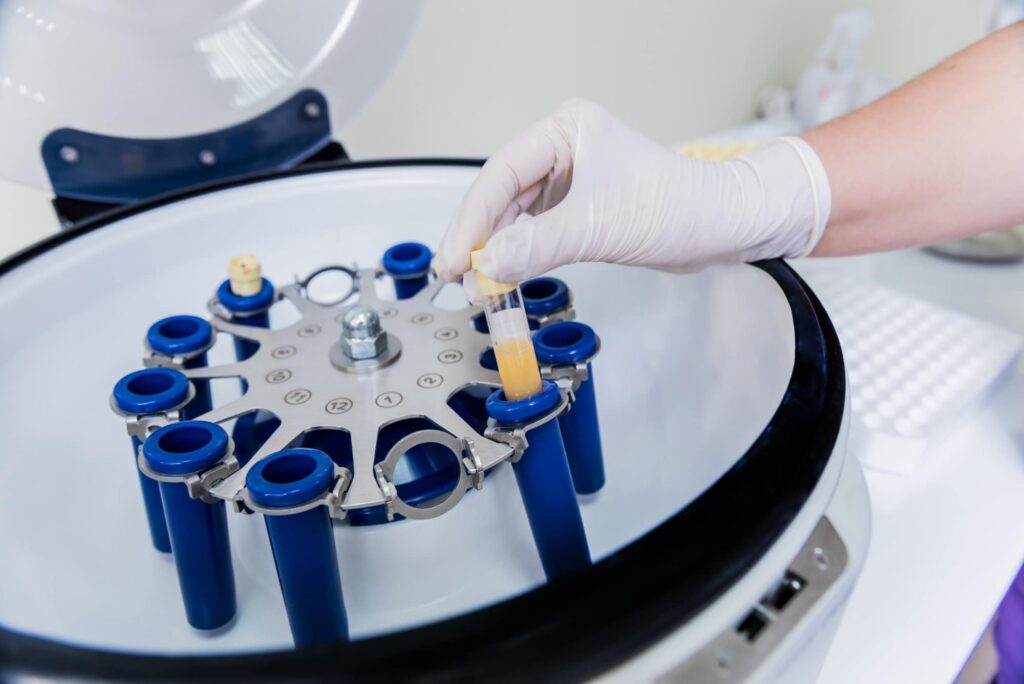
Biologics: PRP, BMAC & MFAT
A single ultrasound-guided PRP injection improved pain and function more than cortisone in a randomized trial of chronic gluteal tendinopathy, with benefits lasting two years.
Best for: Chronic cases and partial-thickness tears
 Precision
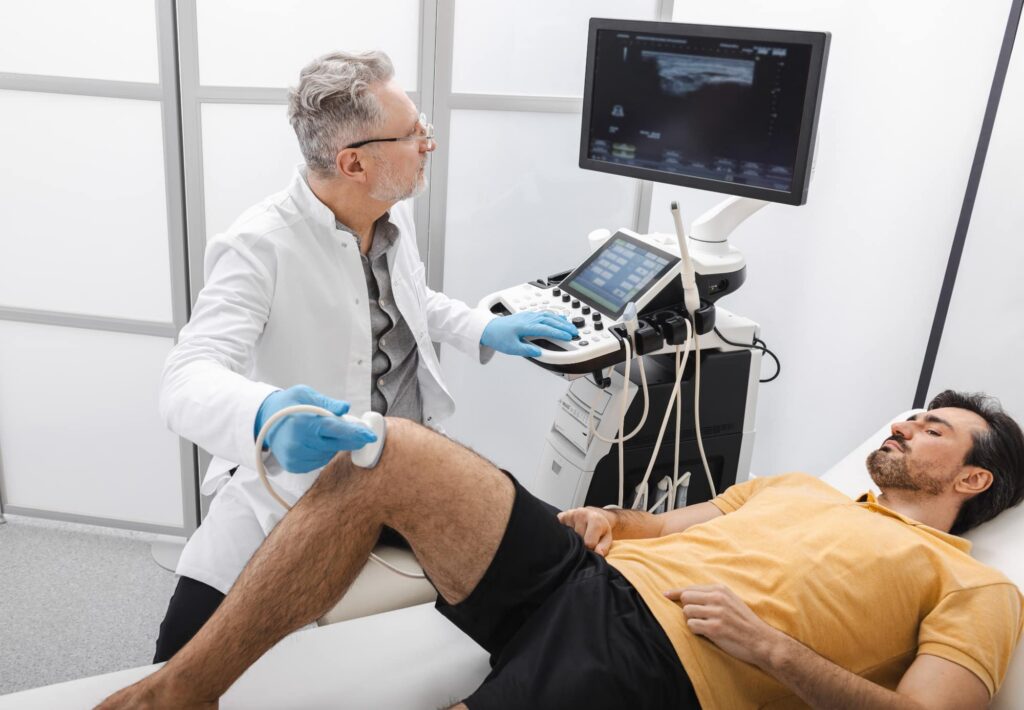
Ultrasound-Guided Diagnosis & Procedures
Ultrasound separates tendon problems from bursitis and hip joint pain, detects partial tears and guides every injection exactly where it needs to go.
Best for: Every patient, especially after prior injections
 Adjunct
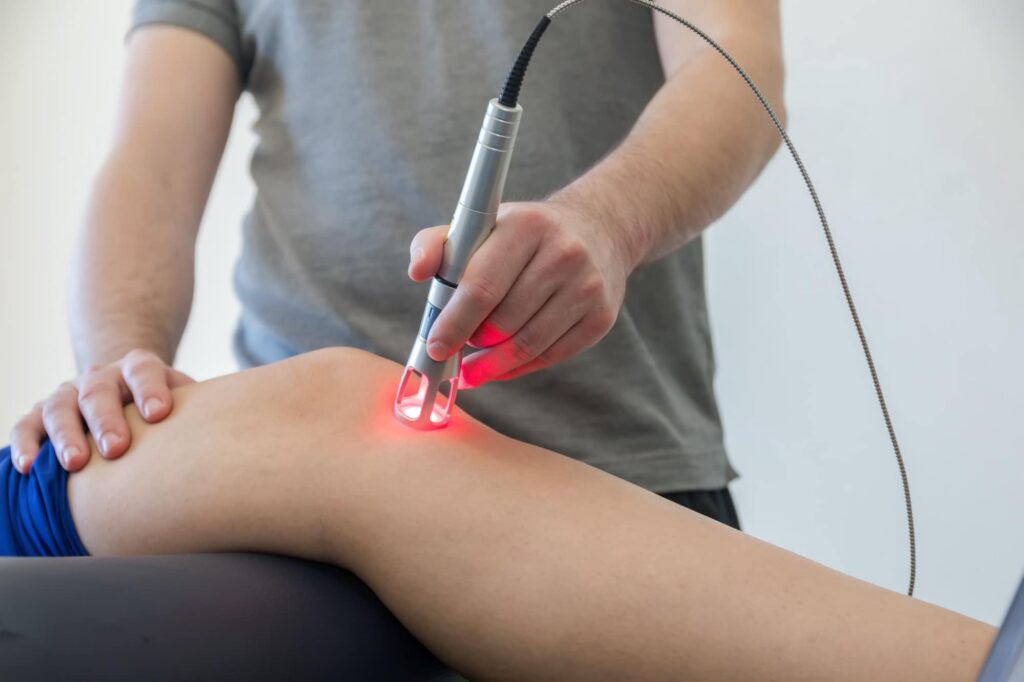
MLS Laser Therapy
MLS laser therapy may help ease pain so you can sleep better and stay consistent with your strengthening.
Best for: Night pain and flare-ups during rehab
Been told it’s “just bursitis”? A precise tendon diagnosis can change the whole plan.
Find my best option07 · Recovery
Your gluteal tendinopathy recovery roadmap
Gluteal tendinopathy improves steadily with the right daily habits and a progressive strength program. Small changes, like how you sleep and sit, often make a noticeable difference early on.
- Phase 1
Reduce compression
Weeks 0–2Change the sleeping, sitting and standing habits that squeeze the tendons, and start isometric hip holds.
- Phase 2
Build strength
Weeks 2–8Progressive hip and glute strengthening, moving from lying and standing exercises to single-leg work.
- Phase 3
Functional loading
Weeks 8–12Stairs, hills, longer walks or runs and sport-specific movement. Advanced options are added if progress stalls.
- Phase 4
Maintain
3 months +A short strength routine and smart habits that keep the tendons healthy for the long term.
Timelines are typical ranges, not guarantees. In one major trial, most patients following education plus exercise reported meaningful improvement by eight weeks.
What you can do right now
- Sleep on your back, or on your side with a pillow between your knees
- Avoid crossing your legs and standing with your weight sunk into one hip
- Choose higher chairs and avoid deep, low seats
- Pause IT band and outer-hip stretches, which compress the tendons
- Break up long walks or hikes, and limit stairs and hills for now
- Ask about the evidence before another cortisone shot
Get checked promptly if you notice
- Hip or groin pain after a fall, or inability to bear weight
- Sudden weakness or a pop on the outside of the hip
- Fever, redness or warmth over the hip
- Numbness or tingling down the leg, or new back pain with leg weakness
- Deep groin pain that limits hip motion
08 · Your physician
Expert tendon care in South Jordan
Meet the physician
Robert Engelen, DO
Physical Medicine & Rehabilitation · Sports Medicine
Dr. Engelen leads every treatment plan at Utah Tendon Institute. After nearly a decade as a non-operative sports medicine physician, he focuses on finding why a tendon keeps failing and fixing that cause, with imaging, targeted procedures and structured rehab.
- Residency in Physical Medicine & Rehabilitation, University of Utah
- Doctor of Osteopathic Medicine, Kansas City University
- Former U.S. Navy medical officer, 1st Battalion, 6th Marines
- Team physician experience with the Utah Royals and Real Salt Lake
Serving the Salt Lake Valley
Utah Tendon Institute913 Baxter Dr., Suite 100
South Jordan, UT 84095385-419-0692
Patients visit us for gluteal tendinopathy care from:
- South Jordan
- Salt Lake City
- Sandy
- Draper
- Riverton
- Herriman
- West Jordan
- Murray
- Midvale
09 · FAQs
Gluteal Tendinopathy FAQs
Straight answers to the questions we hear most. Still unsure? Ask us directly.
Is it hip bursitis or gluteal tendinopathy?
Often both, but the tendons are usually the main problem. Research now recognizes the gluteus medius and minimus tendons as a primary source of the outer hip pain once labeled “trochanteric bursitis,” with the bursa irritated alongside them. Ultrasound shows which structures are involved, which matters because tendons need the right loading, not just rest.
Why does it hurt to lie on my side?
Lying on the painful side presses the tendons directly against the bone. Lying on the other side can hurt too, because the top leg drops inward and pulls the tendons tight over the hip. Sleeping on your back, or with a pillow between your knees, usually helps.
Do cortisone shots help gluteal tendinopathy?
They can provide short-term relief, but in a randomized trial in the BMJ, education plus exercise outperformed a cortisone injection at eight weeks and led to better global improvement at one year. Another randomized trial found PRP outperformed cortisone, with benefits lasting two years.
What exercises help gluteal tendinopathy, and which should I avoid?
Programs usually start with isometric hip abduction and progress to standing and single-leg strength work. While symptoms are active, avoid IT band stretches, crossing your legs and exercises that pull the leg across your body, because they compress the tendons.
Is gluteal tendinopathy related to menopause?
It’s most common in women in mid-life, especially around and after menopause, and hormonal changes are thought to play a role. That said, it affects men and younger athletes too, and the treatment principles are the same.
How long does gluteal tendinopathy take to get better?
Many people improve meaningfully within about eight weeks of education plus targeted exercise, based on the LEAP trial. Long-standing cases or partial tears can take longer, and we’ll add advanced options if your progress stalls.
Do you treat hip pain near Salt Lake City?
Yes. Utah Tendon Institute is at 913 Baxter Dr., Suite 100 in South Jordan, serving Salt Lake City, Sandy, Draper, Riverton, Herriman, West Jordan, Murray and Midvale. Call 385-419-0692 or request an evaluation online.
10 · Get started
Schedule a hip pain evaluation
Outer hip pain keeping you up at night or making stairs a chore? Let’s find the real source and build a plan that lets you sleep, walk and move comfortably again.
- 1A real diagnosis History, hands-on exam and musculoskeletal ultrasound of the painful tendon.
- 2The why behind the pain We look at load, strength and movement patterns that keep irritating the tissue.
- 3A clear, staged plan You leave knowing your options, your timeline and what to do next.
Prefer to talk? 385-419-0692
Request your evaluation
Tell us where it hurts and how we can reach you. Our team will follow up to schedule.
Your information stays private and is only used to contact you.
More conditions
Other tendon conditions we treat
Tendon pain rarely lives in just one place. Explore the other conditions our South Jordan team evaluates and treats every week.
 Tennis Elbow
- Golfer’s Elbow
 Rotator Cuff Tendinopathy
 Achilles Tendinopathy
 Plantar Fasciitis
 Patellar Tendinopathy
- Hamstring Tendinopathy
- Not sure what’s causing your pain?Get a precise diagnosis
Sources & further reading
- Cleveland Clinic. Gluteal Tendinopathy.
- American Academy of Orthopaedic Surgeons (OrthoInfo). Hip Bursitis.
- Grimaldi A, et al. Gluteal Tendinopathy: A Review of Mechanisms, Assessment and Management. Sports Med. 2015.
- Mellor R, et al. Education plus exercise versus corticosteroid injection use versus a wait and see approach on global outcome and pain from gluteal tendinopathy. BMJ. 2018.
- Rompe JD, et al. Home training, local corticosteroid injection, or radial shock wave therapy for greater trochanter pain syndrome. Am J Sports Med. 2009.
- Fitzpatrick J, et al. Leucocyte-rich platelet-rich plasma treatment of gluteus medius and minimus tendinopathy: a double-blind randomized controlled trial with 2-year follow-up. Am J Sports Med. 2019.
This page is for general education and is not a substitute for medical advice. Every tendon problem is different; your diagnosis and treatment plan should come from a qualified clinician who has examined you. Results vary, and no treatment is guaranteed to work for every patient.