
Plantar Fasciitis Treatment in Salt Lake City & South Jordan
You Don’t Need More Rest. You Need the Right Plan.
Sharp heel pain with your first steps every morning? We confirm what’s really causing it with ultrasound, then combine foot strengthening with advanced options like focused shockwave so you can walk, hike and run comfortably again.
- Non-surgical first
- Ultrasound-guided precision
- Physician-led care
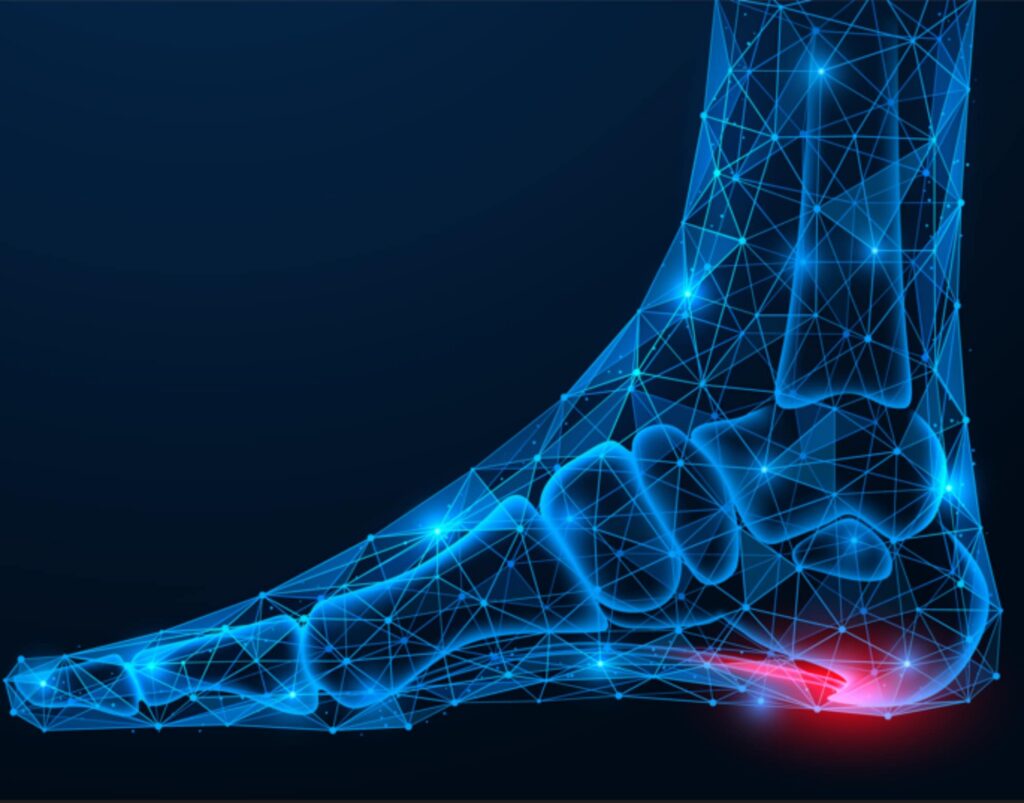
- Diagnosis first Musculoskeletal ultrasound pinpoints the tissue behind your pain.
- Evidence-based Loading, shockwave, biologics and tenotomy, matched to your tendon.
- Physician-led Care directed by sports medicine physician Robert Engelen, DO.
- South Jordan clinic Serving Salt Lake City and the entire Salt Lake Valley.
01 · Overview
What is plantar fasciitis?

Utah Tendon Institute · Care led by Robert Engelen, DO
Updated November 2026
Plantar fasciitis is one of the most common causes of heel pain. The plantar fascia is a thick band of tissue that runs along the sole of your foot from the heel to the toes, supporting your arch and acting like a spring every time you push off. When it’s overloaded, the tissue near its attachment on the heel becomes irritated, thickened and painful. According to the American Academy of Orthopaedic Surgeons, about 2 million patients are treated for it every year.
Like tendinopathy, long-standing plantar fasciitis is usually more about tissue breakdown and reduced load tolerance than inflammation, which is why some researchers prefer the term plantar fasciopathy. It most often affects adults between 40 and 60, runners, and people who spend long days on their feet.
What about heel spurs?
Heel spurs often show up on X-rays, but most people with spurs have no heel pain, and spurs don’t cause plantar fasciitis pain. Treatment targets the fascia and the forces acting on it, not the spur.
If your pain is at the back of the heel instead of underneath, it may be Achilles tendinopathy. Our sister practice, Engelen Sports & Orthobiologics, also treats other causes of heel pain.
02 · Symptoms
Plantar fasciitis symptoms
Plantar fasciitis has a signature pattern: pain that’s worst after rest and with the first steps of the day. Here’s what we hear most often.
- 01
First-step pain
Sharp heel pain with your first steps out of bed or after sitting, easing after a few minutes of walking.
- 02
Pain on the bottom of the heel
A tender spot on the inside of the heel, often described as a deep bruise or a stone in your shoe.
- 03
Pain after, not during, activity
Symptoms may settle while you’re moving, then flare afterward or the next morning.
- 04
Aching after long shifts
Long hours on hard floors leave the heel throbbing by the end of the day.
- 05
Tight arch and calf
The arch and calf feel tight, especially first thing in the morning.
- 06
Changing how you walk
You start walking on your toes or the outside of your foot to avoid the painful heel.
Heel pain isn’t always plantar fasciitis
Heel stress fractures, nerve entrapment, fat pad irritation, insertional Achilles tendinopathy and arthritis can all mimic plantar fasciitis. A hands-on exam and ultrasound measurement of the fascia help confirm what’s really going on.
03 · Causes & risk factors
What causes plantar fasciitis?
Plantar fasciitis develops when repeated stress on the fascia exceeds its ability to recover. Most cases have no single cause. It’s usually a combination of load, foot mechanics and calf flexibility working against you.
We often see it after a big jump in walking or running, a new job on hard floors, a summer of hiking Utah’s canyons, or a switch to unsupportive shoes. Weight changes, tight calves and foot shape can all add stress to the heel.
Common risk factors
- A sudden increase in walking, running, hiking or standing time
- Repetitive high-impact activity such as running, dancing and court sports
- Long days on hard surfaces in healthcare, teaching, retail and factory work
- Tight calf muscles and limited ankle flexibility
- Flat feet or high arches
- Being between 40 and 60, or carrying extra body weight
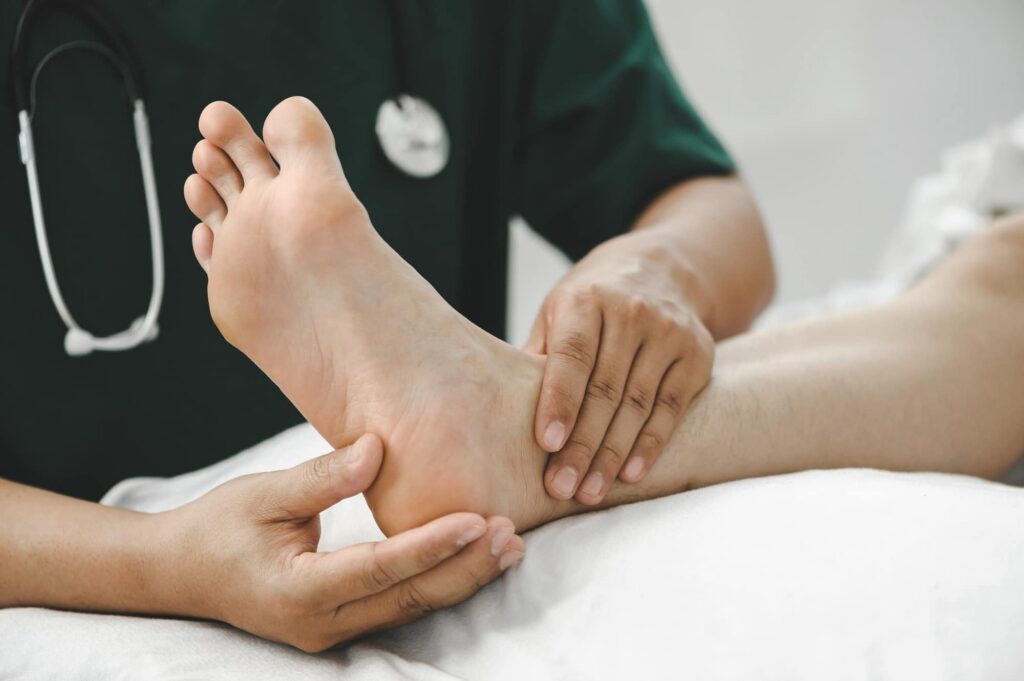
Who we see for plantar fasciitis
- Runners
- Hikers
- Nurses & healthcare workers
- Teachers
- Retail & warehouse staff
- Pickleball players
- Dancers
- New walkers & exercisers
- First responders
- Busy parents
Many plantar fasciitis patients have already tried inserts, stretching and new shoes. The next step is a precise diagnosis and a plan that strengthens the foot.
04 · Why it lingers
Why plantar fasciitis lingers
Stretching, inserts and rest help many people. Stubborn plantar fasciitis needs more: a stronger foot and calf, and the right advanced treatment when the tissue is slow to heal.
| Topic | The usual cycle | Utah Tendon Institute plan |
|---|---|---|
| Diagnosis | Assumed from symptoms; the heel spur gets the blame | Exam plus ultrasound to measure the fascia and rule out mimics |
| Pain relief | Repeated cortisone shots that may weaken the fascia | Shockwave and biologic options that support healing |
| The tissue itself | Passive stretching and rest only | Progressive, high-load foot and calf strengthening |
| Root cause | Footwear and work demands rarely addressed | Footwear, standing time, training load and calf capacity reviewed |
| Stubborn cases | Surgery after months of frustration | Shockwave, PRP or ultrasonic tenotomy considered first |
Reduction in heel pain at 12 weeks with focused shockwave compared with placebo, in a 250-patient randomized trial of chronic plantar fasciitis.
Gollwitzer et al., JBJS 2015 · View studyAt one year, patients with chronic plantar fasciitis treated with PRP had significantly less pain than those who received a cortisone injection.
Peerbooms et al., AJSM 2019 · View studyConsidering a cortisone shot? Read why Dr. Engelen avoids them for tendon and fascia pain in his Tendon Journal article.
05 · Our approach
Our 4-step plan for plantar fasciitis
Our clinical algorithm, applied to the tissue that takes the force of every step you take.
- 1
Accurate diagnosis
A hands-on exam plus ultrasound measurement of the plantar fascia confirms the diagnosis and rules out stress fractures, nerve entrapment and fat pad problems.
Visit one - 2
Load & movement analysis
We assess calf strength and flexibility, foot shape, footwear, standing time and training load to find what keeps overloading the heel.
Find the why - 3
Targeted treatment plan
Progressive foot and calf strengthening plus footwear and activity changes, staged to how irritable your heel is.
Staged & specific - 4
Regenerative + rehab integration
For stubborn heels, focused shockwave or PRP is added while strengthening continues, so the tissue heals and stays healthy.
Prevent recurrence
06 · Treatment options
Plantar fasciitis treatment options
Most heels improve with the right mix of strengthening, footwear and load changes. For stubborn plantar fasciitis, focused shockwave has some of the strongest research support of any non-surgical option.
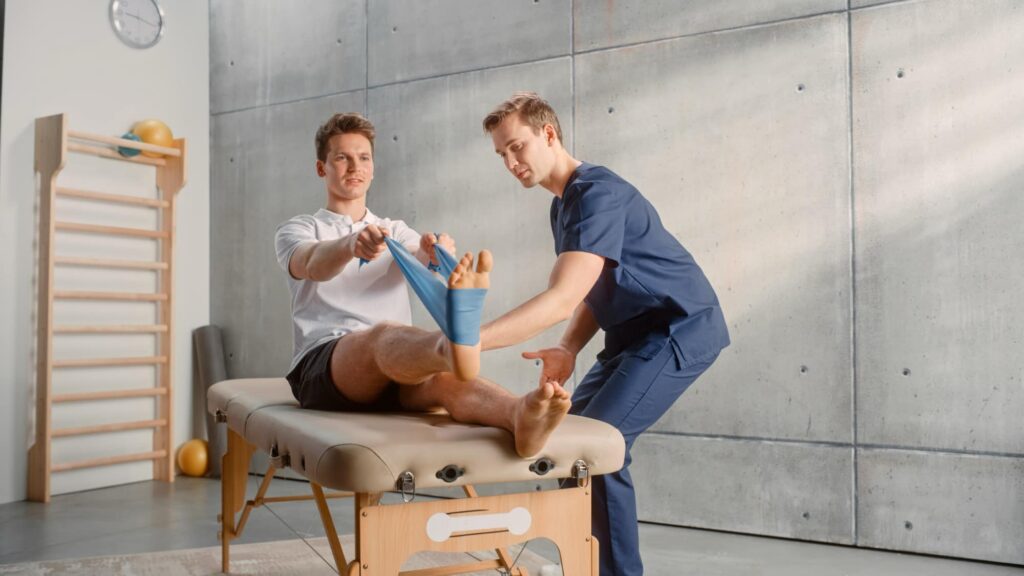 Foundation
Progressive Tendon Loading Rehab
Plantar fascia stretching, calf strengthening and high-load heel raises with the toes lifted. In a randomized trial, a simple high-load strength program improved foot function faster than stretching alone.
Best for: Every patient, as the foundation of care
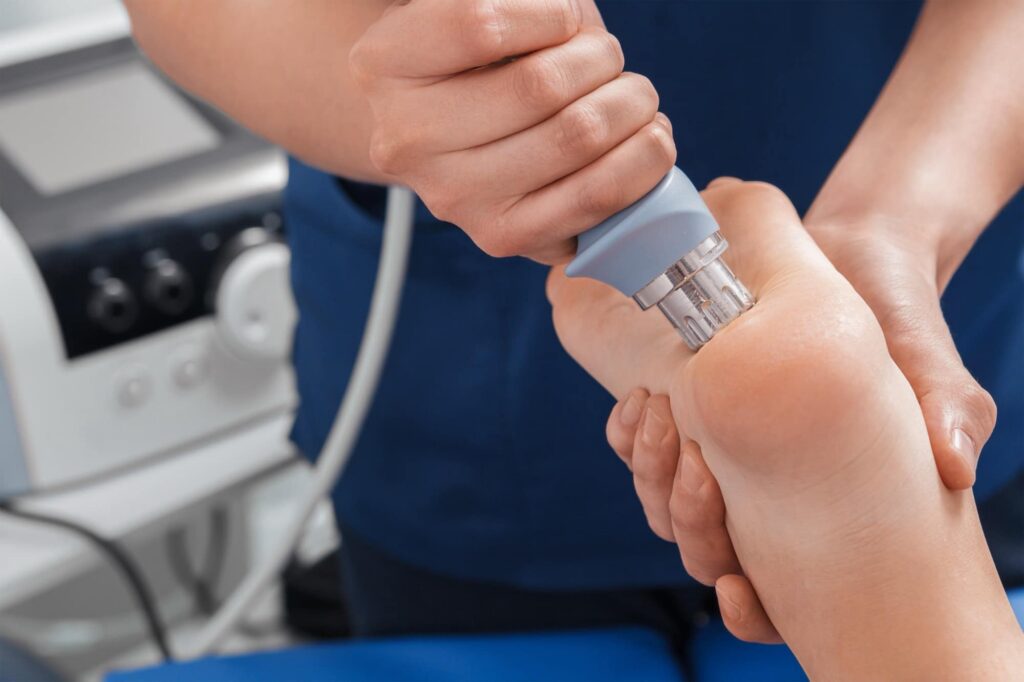 Non-invasive
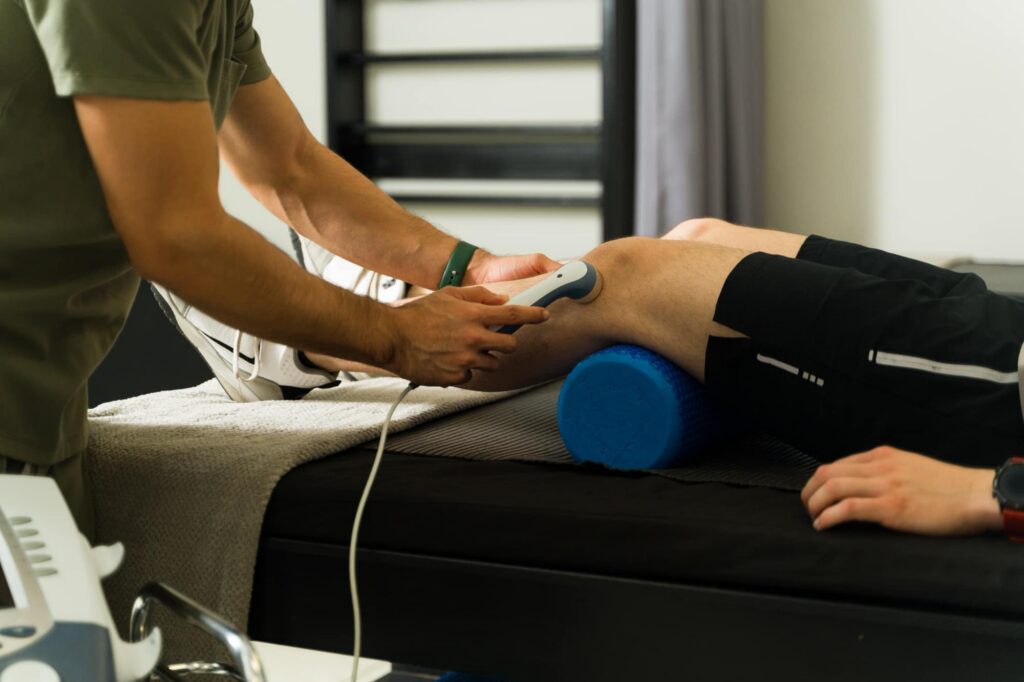
Focused Shockwave Therapy (Wolf Piezowave)
Focused shockwave is one of the best-studied non-surgical treatments for chronic plantar fasciitis. In a large placebo-controlled trial, it reduced heel pain about twice as much as placebo at 12 weeks.
Best for: Heel pain lasting more than a few months
 Minimally invasive
Percutaneous Needle Tenotomy (Tenex, TendoNova)
For chronic cases, ultrasound-guided percutaneous tenotomy can remove degenerated tissue where the fascia attaches to the heel through a tiny incision, as an alternative to open surgery.
Best for: Persistent pain despite months of comprehensive care
 Regenerative
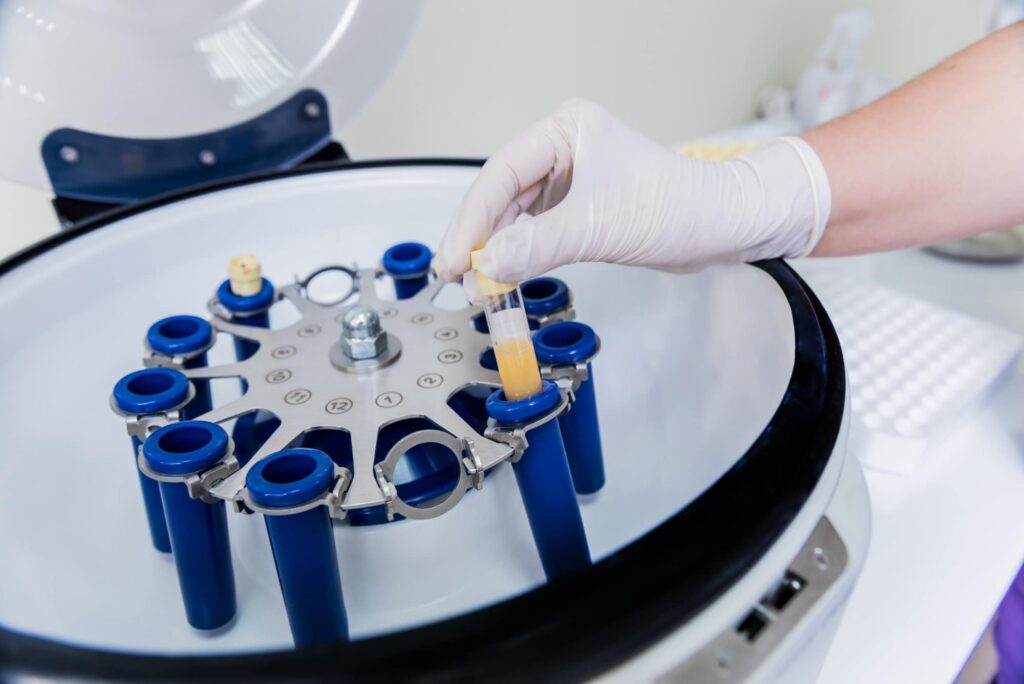
Biologics: PRP, BMAC & MFAT
PRP may be considered for chronic cases. In a randomized trial, PRP led to less pain at one year than a cortisone injection, without cortisone’s risk of weakening the fascia.
Best for: Chronic cases, or patients who want to avoid cortisone
 Precision
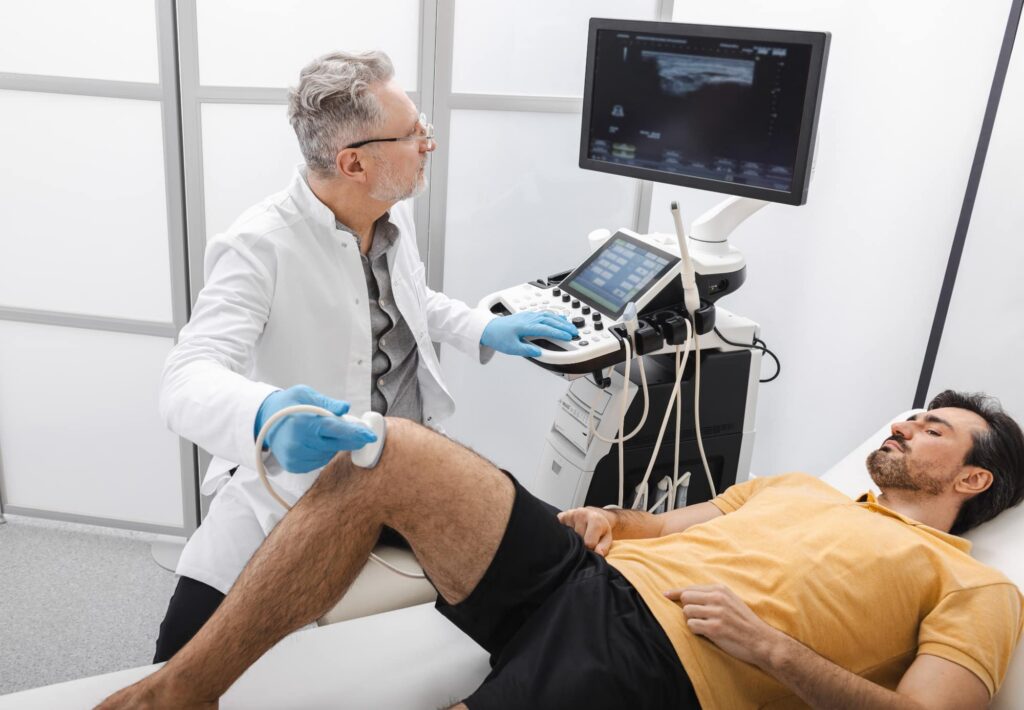
Ultrasound-Guided Diagnosis & Procedures
Ultrasound measures plantar fascia thickness, checks for tears and look-alike conditions, tracks healing over time and guides any injection precisely.
Best for: Confirming the diagnosis and monitoring recovery
 Adjunct
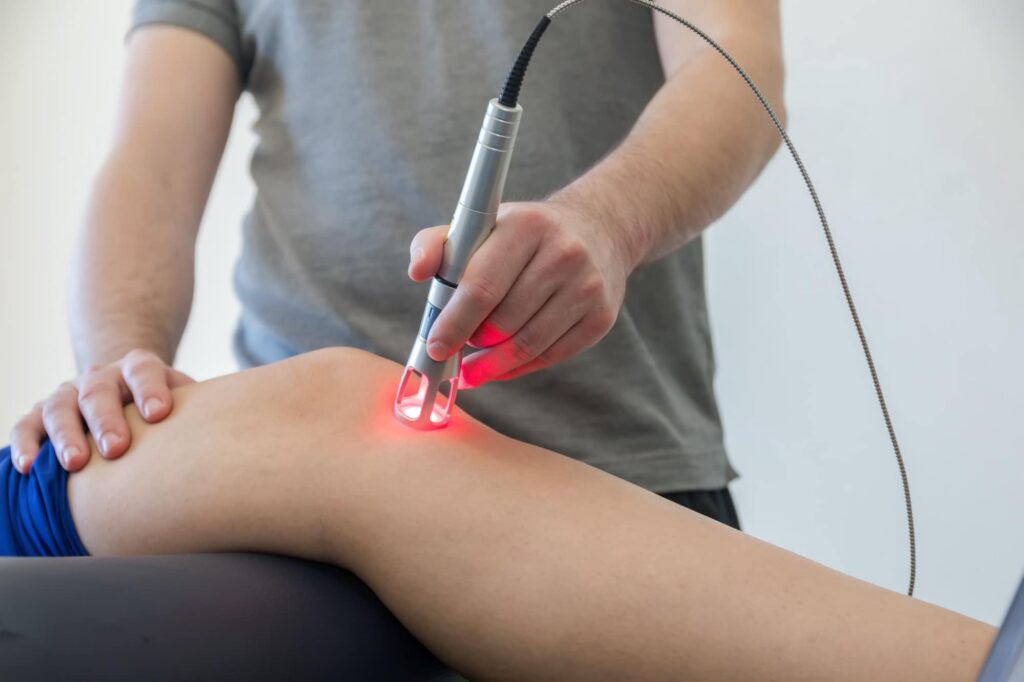
MLS Laser Therapy
MLS laser therapy may help calm heel pain so you can stay on your feet and keep progressing your program.
Best for: Calming painful flare-ups
Already tried inserts, stretching and new shoes? That’s exactly when a precise, staged plan makes the biggest difference.
Find my best option07 · Recovery
Your plantar fasciitis recovery roadmap
Plantar fasciitis can be slow to settle, so it helps to know what each phase looks like and what progress should feel like along the way.
- Phase 1
Calm the heel
Weeks 0–2Reduce aggravating standing and impact, wear supportive footwear and start gentle fascia and calf work.
- Phase 2
Strengthen
Weeks 2–8Progressive calf and foot strengthening, including high-load heel raises, plus footwear and insole tweaks.
- Phase 3
Return to impact
Weeks 8–12Graded walking, hiking and running progressions. Shockwave or PRP is added if progress stalls.
- Phase 4
Prevent relapse
3 months +Keep a short strength routine, rotate footwear and manage big jumps in standing or training.
Timelines are typical ranges, not guarantees. Long-standing heel pain may need more time; more than 90% of patients improve within 10 months of starting simple treatments.
What you can do right now
- Wear supportive shoes, even around the house, especially first thing in the morning
- Stretch your calf and the arch of your foot before your first steps of the day
- Cut back on long stretches of standing or impact while the heel is irritable
- Swap some runs or walks for cycling or swimming for a few weeks
- Replace worn-out shoes and consider a cushioned heel cup or insole
- Avoid repeated cortisone injections, which may weaken the fascia
Get checked promptly if you notice
- Heel pain after a fall or jump, or pain that worsens with every step (possible stress fracture)
- A sudden pop in the arch followed by bruising
- Numbness, tingling or burning in the heel or sole
- Heel pain with swelling, warmth, redness or fever
- Pain in both heels along with joint pain elsewhere
08 · Your physician
Expert tendon care in South Jordan
Meet the physician
Robert Engelen, DO
Physical Medicine & Rehabilitation · Sports Medicine
Dr. Engelen leads every treatment plan at Utah Tendon Institute. After nearly a decade as a non-operative sports medicine physician, he focuses on finding why a tendon keeps failing and fixing that cause, with imaging, targeted procedures and structured rehab.
- Residency in Physical Medicine & Rehabilitation, University of Utah
- Doctor of Osteopathic Medicine, Kansas City University
- Former U.S. Navy medical officer, 1st Battalion, 6th Marines
- Team physician experience with the Utah Royals and Real Salt Lake
Serving the Salt Lake Valley
Utah Tendon Institute913 Baxter Dr., Suite 100
South Jordan, UT 84095385-419-0692
Patients visit us for plantar fasciitis care from:
- South Jordan
- Salt Lake City
- Sandy
- Draper
- Riverton
- Herriman
- West Jordan
- Murray
- Midvale
09 · FAQs
Plantar Fasciitis FAQs
Straight answers to the questions we hear most. Still unsure? Ask us directly.
Why does my heel hurt most with the first steps in the morning?
Overnight, the plantar fascia and calf tighten while you rest. Your first steps stretch the irritated tissue suddenly, which causes that sharp pain. It usually eases after a few minutes as the tissue warms up, though it often returns after long periods of sitting or standing.
Do heel spurs cause plantar fasciitis?
No. Heel spurs are common on X-rays, but most people with spurs have no heel pain, and the American Academy of Orthopaedic Surgeons notes that spurs don’t cause plantar fasciitis pain. Treatment targets the fascia, so the spur usually doesn’t need to be removed.
How long does plantar fasciitis last?
It varies. More than 90% of patients improve within 10 months of starting simple treatments, but that can feel like forever when every step hurts. For heel pain that has lasted months, advanced options like focused shockwave can help move things along.
Does shockwave therapy work for plantar fasciitis?
For chronic plantar fasciitis, focused shockwave has strong research support. In a 250-patient placebo-controlled trial, it reduced heel pain by 69% at 12 weeks, compared with 35% for placebo, without anesthesia.
Should I get a cortisone shot for plantar fasciitis?
Cortisone can calm pain in the short term, but it may weaken the plantar fascia and raise the risk of rupture. In a randomized trial, PRP produced less pain at one year than cortisone. We’ll walk you through the trade-offs for your situation.
What shoes or insoles help plantar fasciitis?
Supportive, cushioned shoes with a slightly raised heel usually feel best, and over-the-counter heel cups or insoles help many people. Avoid going barefoot on hard floors while symptoms are active. We’ll review your footwear at your visit.
Do you treat plantar fasciitis near Salt Lake City?
Yes. Utah Tendon Institute is at 913 Baxter Dr., Suite 100 in South Jordan, serving Salt Lake City, Sandy, Draper, Riverton, Herriman, West Jordan, Murray and Midvale. Call 385-419-0692 or request an evaluation online.
10 · Get started
Schedule a heel pain evaluation
Dreading your first steps every morning? Let’s confirm what’s causing your heel pain and start a plan that gets you walking, hiking and running comfortably again.
- 1A real diagnosis History, hands-on exam and musculoskeletal ultrasound of the painful tendon.
- 2The why behind the pain We look at load, strength and movement patterns that keep irritating the tissue.
- 3A clear, staged plan You leave knowing your options, your timeline and what to do next.
Prefer to talk? 385-419-0692
Request your evaluation
Tell us where it hurts and how we can reach you. Our team will follow up to schedule.
Your information stays private and is only used to contact you.
More conditions
Other tendon conditions we treat
Tendon pain rarely lives in just one place. Explore the other conditions our South Jordan team evaluates and treats every week.
 Tennis Elbow
- Golfer’s Elbow
 Rotator Cuff Tendinopathy
 Achilles Tendinopathy
 Patellar Tendinopathy
 Hamstring Tendinopathy
- Gluteal Tendinopathy
- Not sure what’s causing your pain?Get a precise diagnosis
Sources & further reading
- American Academy of Orthopaedic Surgeons (OrthoInfo). Plantar Fasciitis and Bone Spurs.
- Koc TA Jr, et al. Heel Pain – Plantar Fasciitis: Revision 2023. Clinical Practice Guidelines. J Orthop Sports Phys Ther. 2023.
- Rathleff MS, et al. High-load strength training improves outcome in patients with plantar fasciitis: a randomized controlled trial. Scand J Med Sci Sports. 2015.
- Gollwitzer H, et al. Clinically relevant effectiveness of focused extracorporeal shock wave therapy in the treatment of chronic plantar fasciitis. J Bone Joint Surg Am. 2015.
- Peerbooms JC, et al. Positive effect of platelet-rich plasma on pain in plantar fasciitis: a double-blind multicenter randomized controlled trial. Am J Sports Med. 2019.
This page is for general education and is not a substitute for medical advice. Every tendon problem is different; your diagnosis and treatment plan should come from a qualified clinician who has examined you. Results vary, and no treatment is guaranteed to work for every patient.