
Hamstring Tendinopathy Treatment in Salt Lake City & South Jordan
You Don’t Need More Rest. You Need the Right Plan.
Deep pain at the sit bone when you run, sit or bend forward? We confirm the hamstring tendon is the culprit with ultrasound, not a guess at “sciatica,” then rebuild it with a staged, non-surgical plan.
- Non-surgical first
- Ultrasound-guided precision
- Physician-led care
- Diagnosis first Musculoskeletal ultrasound pinpoints the tissue behind your pain.
- Evidence-based Loading, shockwave, biologics and tenotomy, matched to your tendon.
- Physician-led Care directed by sports medicine physician Robert Engelen, DO.
- South Jordan clinic Serving Salt Lake City and the entire Salt Lake Valley.
01 · Overview
What is hamstring tendinopathy?

Utah Tendon Institute · Care led by Robert Engelen, DO
Updated November 2026
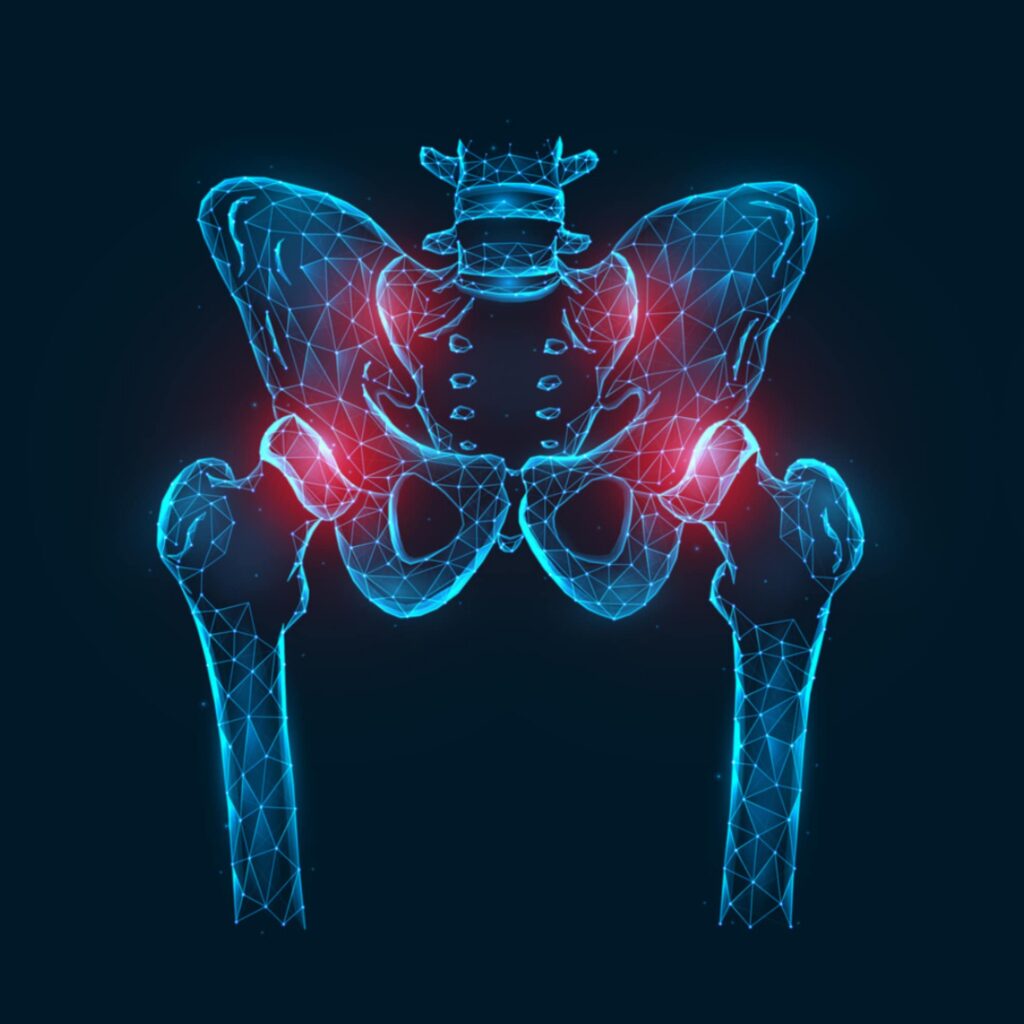
Your three hamstring muscles run down the back of the thigh and attach by a common tendon to the ischial tuberosity, the “sit bone” at the bottom of your pelvis, as the American Academy of Orthopaedic Surgeons explains. Proximal hamstring tendinopathy is an overload condition of that tendon where it anchors to the bone. It causes deep, focused pain in the lower buttock that’s often worse with sitting, running and bending forward.
Unlike a sudden hamstring strain, tendinopathy usually builds gradually. It’s common in distance runners, sprinters, dancers, skiers and lifters, and in people who sit for long periods while training hard. It can be stubborn: many patients have lived with it for months before getting a clear diagnosis.
Why sitting hurts
When your hip is bent, as in sitting, driving or the bottom of a lunge, the hamstring tendon wraps around the sit bone and gets compressed. An irritated tendon doesn’t tolerate that compression well, which is why long drives and hard chairs can feel worse than running, and why aggressive hamstring stretching can make things worse.
Hamstring tendinopathy is often mistaken for sciatica or low back pain. If your pain is on the outside of the hip instead, read about gluteal tendinopathy. For other hip problems, our sister practice treats a full range of hip conditions.
02 · Symptoms
Hamstring tendinopathy symptoms
Proximal hamstring tendinopathy has a distinctive pattern: deep, localized pain that loves to flare when you sit. Here’s what patients describe.
- 01
Deep pain at the sit bone
A focused ache in the lower buttock, right where you sit, sometimes spreading into the back of the thigh.
- 02
Pain when sitting
Long drives, hard chairs and desk days make it build, and standing up can be sore.
- 03
Pain with running
Especially uphill running, sprinting, accelerating and long strides.
- 04
Pain bending forward
Deadlifts, toe touches, lunges and deep squats aggravate the tendon.
- 05
Stiffness after rest
The back of the upper thigh feels tight in the morning or after sitting, then eases as you move.
- 06
A shorter, cautious stride
Your stride shortens and the hamstring feels like it can’t produce full power.
Sciatica or hamstring tendinopathy?
Pain from the lower back, sciatic nerve irritation, deep gluteal syndrome and ischial bursitis can all feel similar. A careful exam and ultrasound of the tendon at the sit bone help tell them apart, and that difference changes the whole treatment plan.
03 · Causes & risk factors
What causes hamstring tendinopathy?
Proximal hamstring tendinopathy develops when the tendon is asked to handle more load, or more compression, than it’s ready for. The combination is especially irritating: high tension from running and lifting, plus compression from deep hip bending and prolonged sitting.
Typical triggers include a jump in hill running or speed work, a new deadlift or kettlebell program, a long road trip after a race, a return to running after time off, or a desk job paired with hard training. Weak glutes and hamstrings and changes in running form add to the load.
Common risk factors
- Distance running, especially hills, speed work and rising mileage
- Sprinting, hurdling, dance and sports with long strides or high kicks
- Heavy hip-hinge training such as deadlifts and kettlebell swings
- Long periods of sitting, especially on hard surfaces
- Weak glutes, hamstrings or trunk muscles
- A previous hamstring strain or injury
Who we see for hamstring tendinopathy
- Distance runners
- Trail runners
- Sprinters & hurdlers
- Dancers & yoga lovers
- CrossFit athletes & lifters
- Skiers
- Soccer players
- Cyclists
- Desk workers who train
- Weekend warriors
Hamstring tendinopathy often gets labeled as sciatica or a “tight hamstring.” A precise diagnosis is the first step toward the right plan.
04 · Why it lingers
Why sit-bone pain keeps coming back
Rest and stretching are the two most common strategies, and both can backfire. Rest weakens the tendon, and stretching compresses it against the sit bone. Here’s how our plan is different.
| Topic | The usual cycle | Utah Tendon Institute plan |
|---|---|---|
| Diagnosis | Labeled sciatica or a pulled hamstring | Exam plus ultrasound of the tendon at the sit bone |
| Pain relief | Hamstring stretching and cortisone shots | Fewer compressive positions and isometrics for relief |
| The tendon itself | Weeks of rest, then straight back to running | Progressive loading from isometrics to heavy and fast work |
| Root cause | Running form, sitting habits and glute strength ignored | Training load, sitting, running mechanics and hip strength reviewed |
| Stubborn cases | Surgery or repeated injections | Shockwave, biologics or tenotomy layered onto rehab |
Expert clinical guidance recommends limiting compressive positions, such as prolonged sitting and deep stretching, while progressively loading the tendon.
Goom et al., JOSPT 2016 · View studyProfessional athletes with chronic proximal hamstring tendinopathy who received shockwave were far more likely to cut their pain in half at three months than those given traditional conservative care.
Cacchio et al., AJSM 2011 · View studyConsidering an injection? Read why Dr. Engelen avoids steroid shots for tendon pain in his Tendon Journal article.
05 · Our approach
Our 4-step plan for hamstring tendinopathy
Our clinical algorithm, adapted for a deep tendon that sits right next to the sciatic nerve.
- 1
Accurate diagnosis
Ultrasound of the proximal hamstring tendon shows thickening, tears and bursitis, and our exam screens the low back and sciatic nerve so we treat the right source.
Visit one - 2
Load & movement analysis
We assess glute and hamstring strength, trunk control and running mechanics, and review your sitting habits and training load.
Find the why - 3
Targeted treatment plan
Isometrics and load changes calm the tendon, progressive strength builds capacity, then speed and hill work return.
Staged & specific - 4
Regenerative + rehab integration
For stubborn cases, shockwave, ultrasound-guided biologics or tenotomy is added while your loading program continues.
Prevent recurrence
06 · Treatment options
Hamstring tendinopathy treatment options
Proximal hamstring tendinopathy responds to progressive loading and smart load management. When it stalls, shockwave has encouraging research support.
 Foundation
Progressive Tendon Loading Rehab
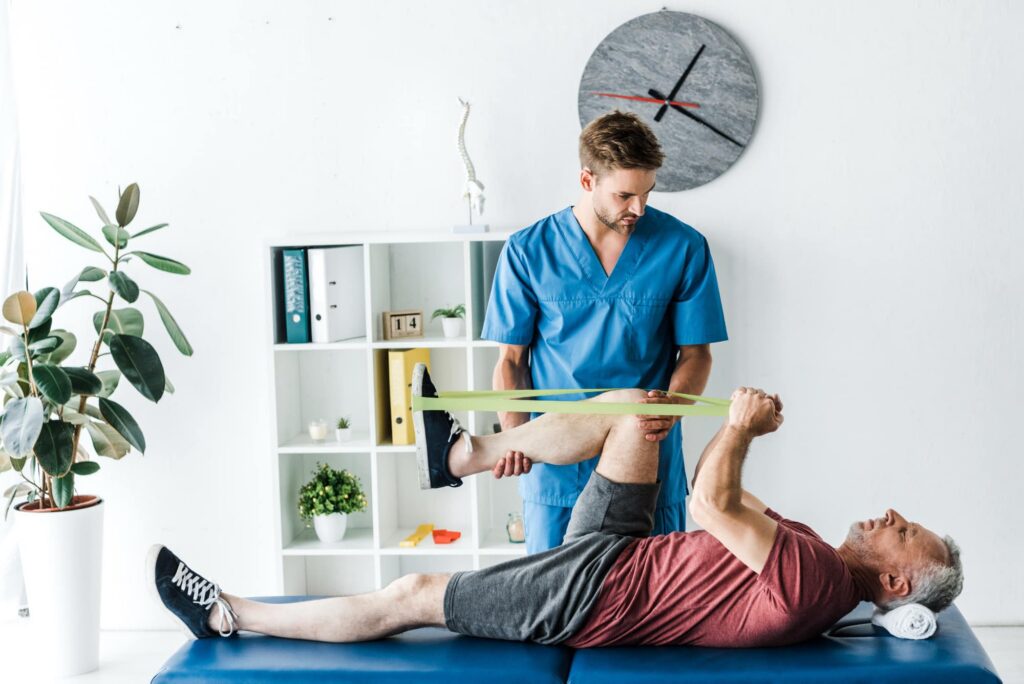
Isometric bridges and holds for pain relief, then progressive hamstring and glute strengthening such as bridges, hip hinges and hamstring curls, and finally speed and hill running. Expert guidance emphasizes staged loading while limiting compression.
Best for: Every patient, as the foundation of care
 Non-invasive
Focused Shockwave Therapy (Wolf Piezowave)
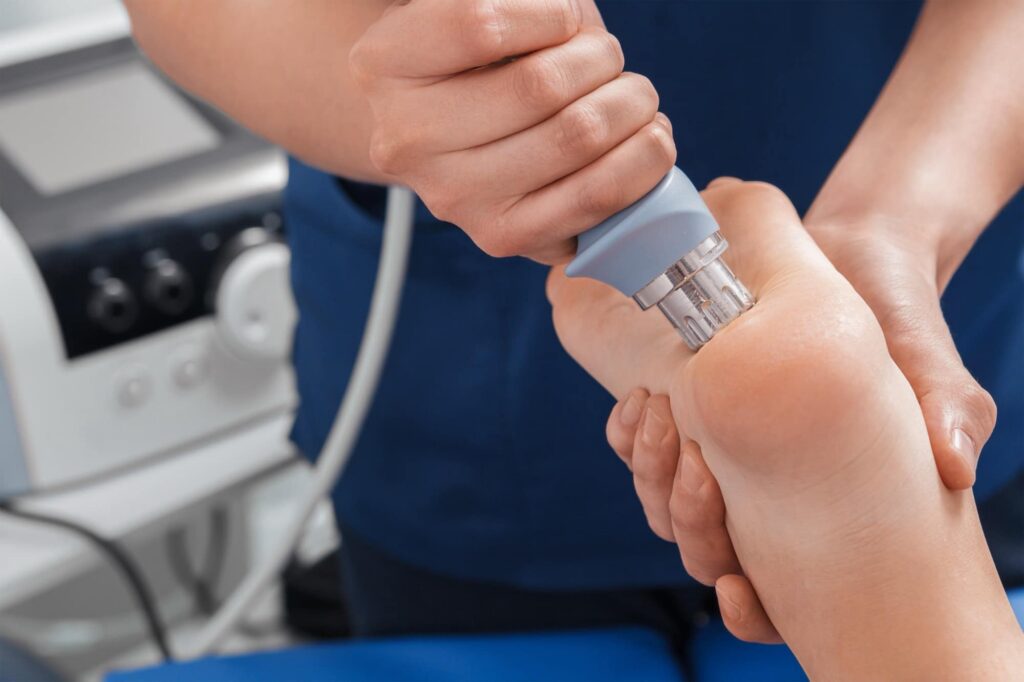
Shockwave has some of its most encouraging results in proximal hamstring tendinopathy, including a trial in professional athletes where it outperformed traditional conservative care at three months.
Best for: Chronic sit-bone pain that has plateaued
 Minimally invasive
Percutaneous Needle Tenotomy (Tenex, TendoNova)
For degenerated tissue that won’t respond, ultrasound-guided percutaneous tenotomy can treat the diseased part of the tendon through a tiny incision under local anesthetic.
Best for: Long-standing cases with clear findings on ultrasound
 Regenerative
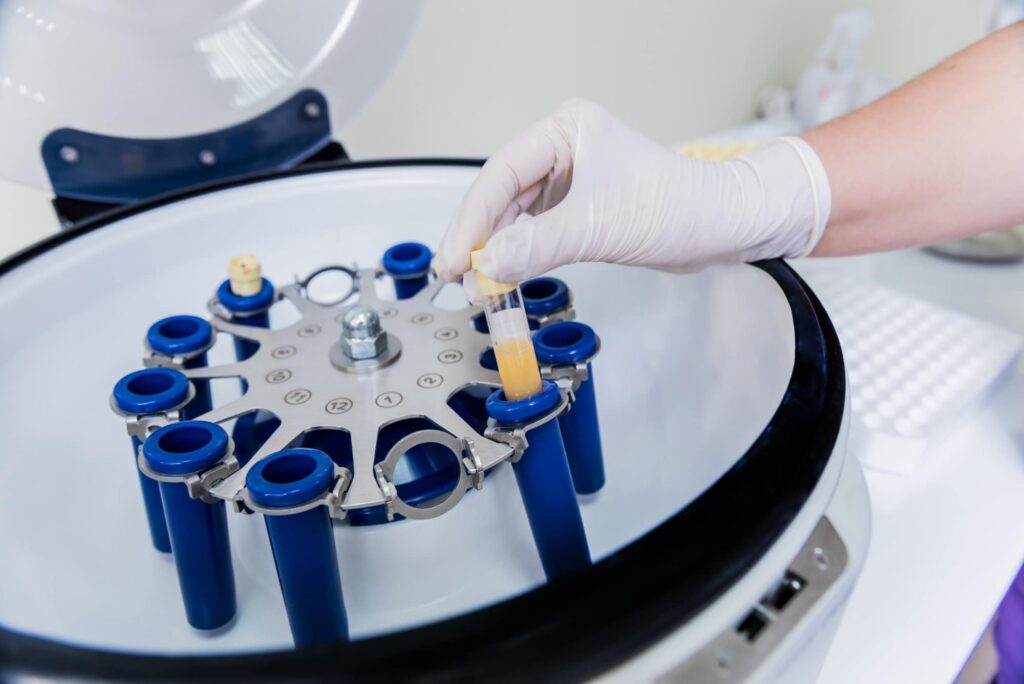
Biologics: PRP, BMAC & MFAT
PRP or other orthobiologics can be placed precisely into the tendon at the sit bone under ultrasound guidance. Evidence is still developing, so we recommend them selectively.
Best for: Partial tears or tendons not responding to rehab
 Precision
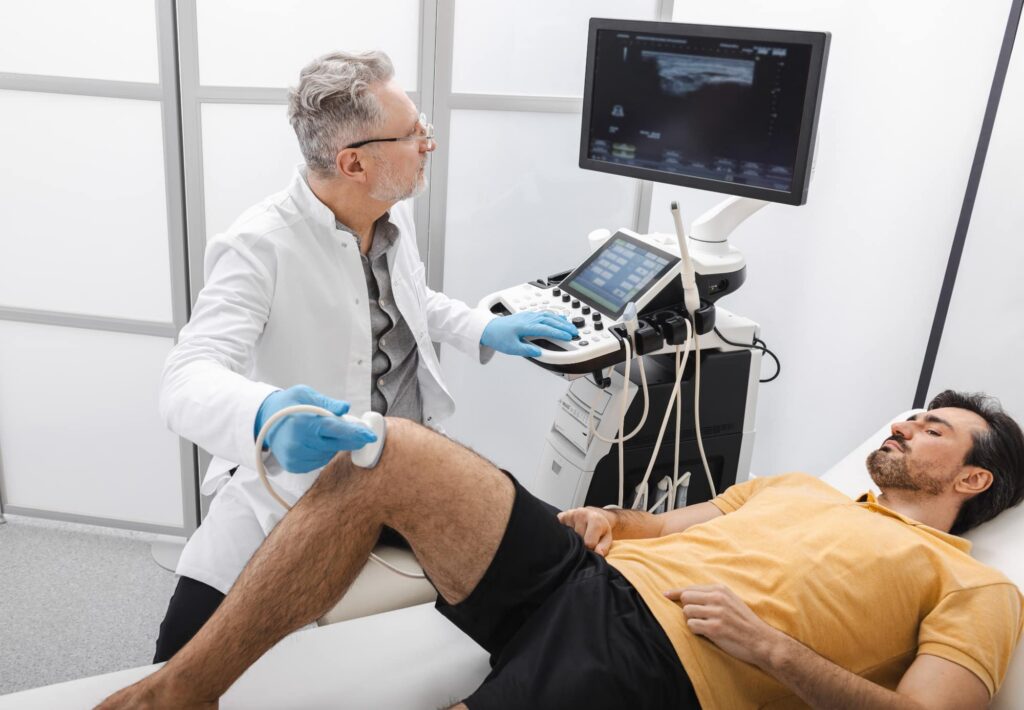
Ultrasound-Guided Diagnosis & Procedures
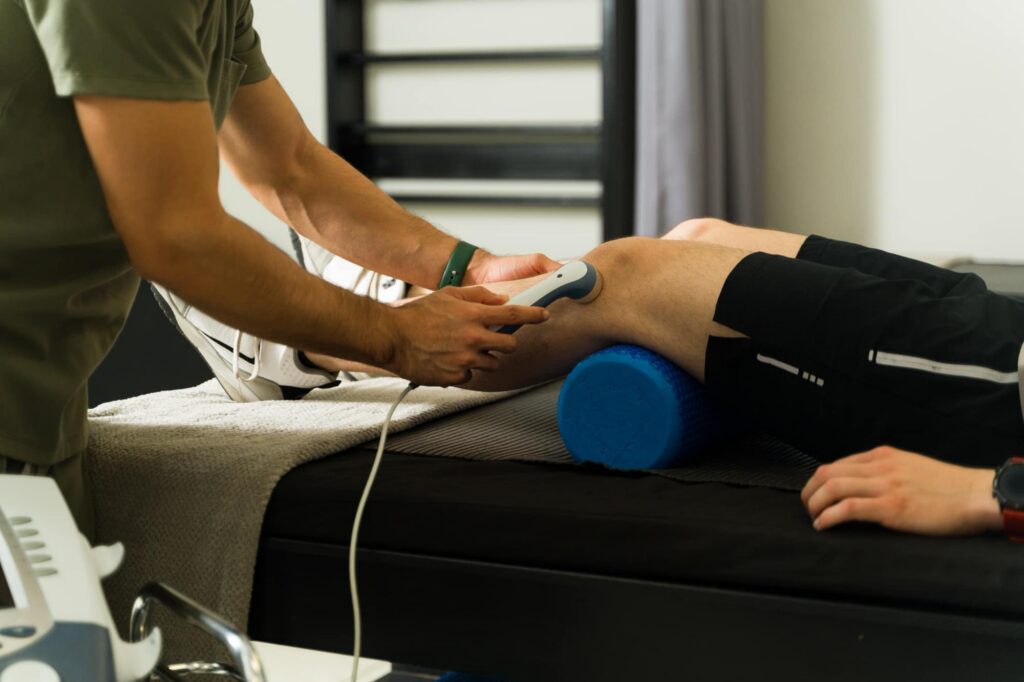
The proximal hamstring tendon sits deep under the glutes. Ultrasound lets us see it clearly, rule out look-alike problems and guide every needle safely around the sciatic nerve.
Best for: Every patient, especially for injections near the nerve
 Adjunct
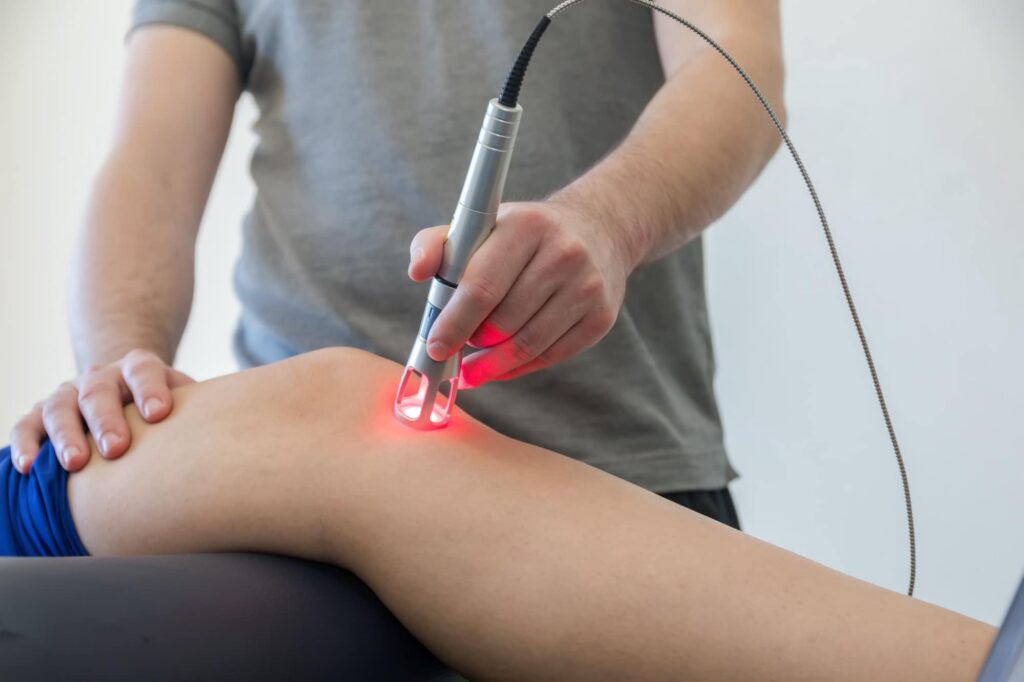
MLS Laser Therapy
MLS laser therapy may help settle deep buttock pain so you can tolerate your loading program.
Best for: Easing flare-ups during rehab
Told it’s “just sciatica” or a tight hamstring? Let’s get a clear answer and a plan that fits your training.
Find my best option07 · Recovery
Your hamstring tendinopathy recovery roadmap
Proximal hamstring tendinopathy is known for being slow, so a clear plan matters. Expect gradual, steady progress measured in weeks and months.
- Phase 1
Calm compression
Weeks 0–2Limit long sitting and deep hip bending, pause hamstring stretching and use isometric holds for relief.
- Phase 2
Build strength
Weeks 2–8Progressive bridges, hip hinges and hamstring curls, gradually adding load and range.
- Phase 3
Add speed & hills
Weeks 8–12Faster strength work, strides and hill running. Advanced options are added if progress stalls.
- Phase 4
Return & resilience
3–6 months +Full return to running and sport, with a maintenance strength routine.
Timelines are typical ranges, not guarantees. Proximal hamstring tendinopathy can take longer than other tendon problems, especially when symptoms have lasted many months.
What you can do right now
- Break up long periods of sitting, and use a cushion that takes pressure off the sit bone
- Pause hamstring stretching, which compresses the irritated tendon
- Cut back on hills, speed work and long strides for now
- Try pain-free isometric bridges or hamstring holds
- Avoid deep hip-hinge lifts and deep lunges while symptoms are high
- Avoid repeated cortisone injections near the tendon
Get checked promptly if you notice
- A sudden pop or sharp pain at the sit bone while sprinting or slipping
- Large bruising down the back of the thigh after an injury
- Numbness, tingling or weakness in the leg or foot
- Loss of bladder or bowel control, or numbness in the groin (call 911)
- Fever, night sweats or pain that wakes you every night
08 · Your physician
Expert tendon care in South Jordan
Meet the physician
Robert Engelen, DO
Physical Medicine & Rehabilitation · Sports Medicine
Dr. Engelen leads every treatment plan at Utah Tendon Institute. After nearly a decade as a non-operative sports medicine physician, he focuses on finding why a tendon keeps failing and fixing that cause, with imaging, targeted procedures and structured rehab.
- Residency in Physical Medicine & Rehabilitation, University of Utah
- Doctor of Osteopathic Medicine, Kansas City University
- Former U.S. Navy medical officer, 1st Battalion, 6th Marines
- Team physician experience with the Utah Royals and Real Salt Lake
Serving the Salt Lake Valley
Utah Tendon Institute913 Baxter Dr., Suite 100
South Jordan, UT 84095385-419-0692
Patients visit us for hamstring tendinopathy care from:
- South Jordan
- Salt Lake City
- Sandy
- Draper
- Riverton
- Herriman
- West Jordan
- Murray
- Midvale
09 · FAQs
Hamstring Tendinopathy FAQs
Straight answers to the questions we hear most. Still unsure? Ask us directly.
Why does it hurt to sit with hamstring tendinopathy?
Sitting bends your hip, which wraps the hamstring tendon around the sit bone and compresses it. An irritated tendon doesn’t tolerate that compression well, so long drives and hard chairs often make symptoms worse. Breaking up sitting and using a cushion can help while you treat the tendon.
Is it sciatica or hamstring tendinopathy?
They can feel similar, since both cause pain in the buttock and the back of the thigh. Hamstring tendinopathy is usually focused right at the sit bone and tender there, while sciatica more often travels down the leg with tingling or numbness. An exam and ultrasound help tell them apart.
Should I stretch my hamstrings?
Usually not while the tendon is irritable. Stretching pulls the tendon against the sit bone and adds compression. Expert clinical guidance favors progressive strengthening and limiting compressive positions instead.
How long does hamstring tendinopathy take to heal?
It’s often slower than other tendon problems. Many people need three to six months of consistent loading, and long-standing cases can take longer. We track your progress and adjust the plan, or add advanced options, if you plateau.
Does shockwave work for proximal hamstring tendinopathy?
Research is encouraging. In a trial of professional athletes, 85% of those treated with shockwave cut their pain by at least half at three months, compared with 10% of those given traditional conservative care.
When is a hamstring injury an emergency?
A sudden pop or sharp pain at the sit bone, especially with large bruising down the thigh or trouble walking, can mean the tendon has torn away from the bone. Get evaluated promptly, because some of these tears are best repaired early.
Do you treat hamstring tendinopathy near Salt Lake City?
Yes. Utah Tendon Institute is at 913 Baxter Dr., Suite 100 in South Jordan, serving Salt Lake City, Sandy, Draper, Riverton, Herriman, West Jordan, Murray and Midvale. Call 385-419-0692 or request an evaluation online.
10 · Get started
Schedule a hamstring evaluation
Deep sit-bone pain wrecking your runs, your workouts or your workday? Get a clear diagnosis and a plan that rebuilds the tendon.
- 1A real diagnosis History, hands-on exam and musculoskeletal ultrasound of the painful tendon.
- 2The why behind the pain We look at load, strength and movement patterns that keep irritating the tissue.
- 3A clear, staged plan You leave knowing your options, your timeline and what to do next.
Prefer to talk? 385-419-0692
Request your evaluation
Tell us where it hurts and how we can reach you. Our team will follow up to schedule.
Your information stays private and is only used to contact you.
More conditions
Other tendon conditions we treat
Tendon pain rarely lives in just one place. Explore the other conditions our South Jordan team evaluates and treats every week.
 Tennis Elbow
- Golfer’s Elbow
 Rotator Cuff Tendinopathy
 Achilles Tendinopathy
 Plantar Fasciitis
 Patellar Tendinopathy
- Gluteal Tendinopathy
- Not sure what’s causing your pain?Get a precise diagnosis
Sources & further reading
- American Academy of Orthopaedic Surgeons (OrthoInfo). Hamstring Muscle Injuries.
- Cleveland Clinic. Hamstring Tendonitis.
- Goom TS, et al. Proximal Hamstring Tendinopathy: Clinical Aspects of Assessment and Management. J Orthop Sports Phys Ther. 2016.
- Cacchio A, et al. Shockwave therapy for the treatment of chronic proximal hamstring tendinopathy in professional athletes. Am J Sports Med. 2011.
- Cook JL, Purdam CR. Is tendon pathology a continuum? A pathology model to explain the clinical presentation of load-induced tendinopathy. Br J Sports Med. 2009.
- Scott A, et al. ICON 2019: International Scientific Tendinopathy Symposium Consensus: Clinical Terminology. Br J Sports Med. 2020.
This page is for general education and is not a substitute for medical advice. Every tendon problem is different; your diagnosis and treatment plan should come from a qualified clinician who has examined you. Results vary, and no treatment is guaranteed to work for every patient.